
Small businesses often rely on loans to fuel growth and sustain operations. Navigating the world of small business loans can be complex and overwhelming, but understanding your options is crucial to making informed decisions that will benefit your business in the long run. In this comprehensive guide, we will break down the different types of small business loans available, the eligibility requirements, and what you need to consider before applying. By arming yourself with the necessary knowledge, you can confidently navigate the small business loan landscape and secure the funding your business needs to thrive.
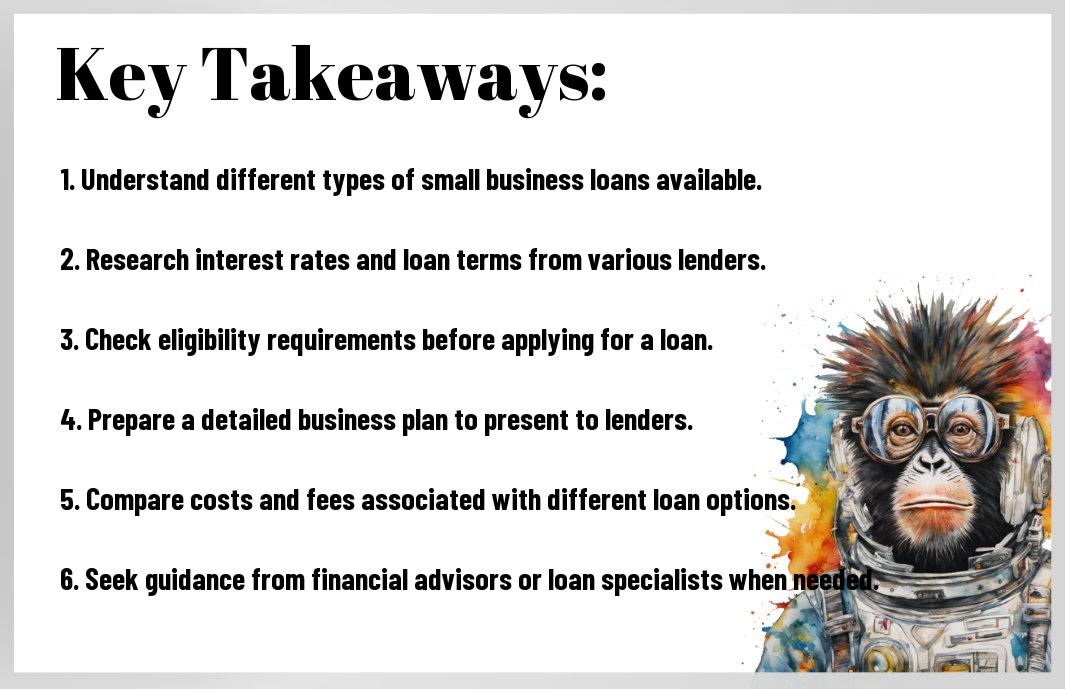
Key Takeaways:
- Understand Your Needs: Before applying for a small business loan, make sure you understand how much funding you need and what you will use it for.
- Research Various Lenders: Take the time to research different lenders and loan options to find the best fit for your business.
- Consider Different Loan Types: Explore different small business loan types such as SBA loans, traditional bank loans, and online lenders to see which one suits your needs.
- Review Interest Rates and Terms: Look closely at the interest rates, repayment terms, and fees associated with each loan option to ensure you can afford it.
- Prepare Your Documents: Be ready to provide detailed financial documents, business plans, and credit history when applying for a small business loan.
- Build Your Credit Score: A higher credit score can increase your chances of securing a business loan with favorable terms and interest rates.
- Seek Expert Advice: Consider consulting with financial advisors or small business consultants to get guidance on choosing the right small business loan option for your specific situation.
Understanding the Landscape of Small Business Loans
Definition and Importance of Small Business Loans
The availability of small business loans can be a lifeline for entrepreneurs looking to start or expand their businesses. Small business loans are a form of financial assistance provided by lenders to help small businesses meet various needs such as working capital, equipment purchase, or expansion projects. These loans are imperative for small business owners who may not have access to other forms of financing.
Types of Small Business Loans Available
Small business owners have several options when it comes to choosing the right type of loan for their specific needs. Some common types of small business loans include term loans, SBA loans, business lines of credit, equipment loans, and merchant cash advances. Each type of loan has its own terms, requirements, and repayment structures, so it’s crucial for business owners to understand the differences to make an informed decision.
| Loan Type | Description |
| Term Loans | Provide a lump sum of capital that is repaid over a set term with a fixed or variable interest rate. |
| SBA Loans | Government-guaranteed loans that offer flexible terms and low-interest rates for qualifying businesses. |
| Business Lines of Credit | Revolving credit lines that allow business owners to borrow up to a set limit as needed. |
| Equipment Loans | Specific loans designed for purchasing equipment or machinery for the business. |
| Merchant Cash Advances | Advance on future credit card sales, repaid with a percentage of daily credit card transactions. |
Understanding the differences among these types of small business loans is crucial for selecting the most suitable option. Each type has its own eligibility criteria, repayment terms, and interest rates, so it’s imperative for business owners to assess their needs and financial condition before applying.
- Assume that the repayment terms will vary based on the type of loan and lender.
- Importantly, business owners should compare offers from multiple lenders to find the best terms and rates.
Preparing to Apply for a Small Business Loan
Assessing Your Financial Needs
The first step in preparing to apply for a small business loan is assessing your financial needs. Little oversights in this stage can lead to significant challenges down the road when it comes to repayment. Take the time to thoroughly evaluate your funding requirements and create a detailed budget outlining how the funds will be used.
Gathering Necessary Documentation
The next crucial step is gathering necessary documentation to support your loan application. Any reputable lender will require a variety of financial documents, such as tax returns, bank statements, business financial statements, and a business plan. Make sure to have these documents organized and up-to-date to streamline the application process.
When gathering necessary documentation for your small business loan application, it’s important to be thorough and organized. Lenders will want to see a clear picture of your business’s financial health and trajectory, so providing accurate and comprehensive information is necessary.
Business owners should also be prepared to provide personal financial information, such as credit reports and personal tax returns. This information helps lenders evaluate your personal financial stability and ability to repay the loan.
Evaluating Lenders and Loan Terms
Comparing Traditional Banks and Alternative Lenders
With the diverse range of small business loan options available, it’s crucial to weigh the pros and cons of traditional banks versus alternative lenders. Here’s a breakdown comparing the two:
| Traditional Banks | Alternative Lenders |
| Strict eligibility criteria | Flexible eligibility requirements |
| Long approval process | Quick approval and funding |
| Lower interest rates | Higher interest rates |
Analyzing Interest Rates, Fees, and Loan Terms
Loan terms, interest rates, and fees can vary significantly between lenders, impacting the total cost of your loan. When analyzing these factors, consider the following:
Loan terms play a crucial role in determining your monthly payments and overall cost of borrowing. Be sure to review the repayment period, any prepayment penalties, and the potential impact on your cash flow before committing to a loan.
Evaluating Lenders and Loan Terms
When evaluating lenders and loan terms, it’s crucial to do your research and compare multiple offers to find the best fit for your small business. Look beyond just interest rates and consider factors like repayment terms, fees, and customer reviews to make an informed decision that aligns with your financial goals.
The Application Process
Unlike How to Choose a Small Business Loan, the application process for a small business loan can be rigorous but is vital for securing the capital needed to grow your business.
Step-by-step Guide to Applying for a Loan
| Step | Description |
| 1 | Gather necessary documents such as financial statements, business plans, and tax returns. |
| 2 | Research and compare lenders to find the best fit for your business needs. |
| 3 | Fill out the loan application completely and accurately. |
| 4 | Submit the application along with all required documents to the lender. |
| 5 | Wait for the lender to review your application and provide a decision. |
Tips for a Successful Loan Application
An vital step in the loan application process is to ensure that your financial documents are up to date and accurately reflect the financial health of your business. Additionally, it is crucial to have a clear understanding of your business needs and how the loan will help you achieve your goals.
- Provide complete and accurate information on your application.
- Be prepared to answer any additional questions from the lender promptly.
- Demonstrate a strong business plan and a clear strategy for repaying the loan.
Process your loan application with confidence by following these tips for a successful small business loan application. Any missing or inaccurate information could delay the approval process, so it is vital to be thorough and proactive in your approach.
Applying for a small business loan can seem daunting, but with careful preparation and attention to detail, you can increase your chances of securing the funding you need to take your business to the next level.

Managing Your Small Business Loan
Strategies for Using Loan Funds Efficiently
Not approaching the management of your small business loan strategically can lead to unnecessary financial strain. When utilizing loan funds, it is crucial to have a clear plan in place to ensure efficient use. Make sure to allocate the funds to areas that will directly contribute to business growth, such as purchasing inventory, equipment, or investing in marketing and advertising strategies that will generate a return on investment.
Plan for Repayment and Avoiding Common Pitfalls
Repayment of a small business loan should be a top priority for any business owner. Avoiding common pitfalls such as missing payments, procrastinating on repayment, or neglecting to budget for monthly installments can lead to financial instability and potential damage to your credit score. Create a detailed repayment plan that accounts for your cash flow and budget, ensuring that you allocate funds towards loan repayment on time.
With careful planning and a proactive approach towards loan repayment, you can maintain financial stability and keep your business on track towards growth and success. Stay updated on your loan terms and conditions, stay in communication with your lender, and seek professional guidance if needed to ensure a smooth repayment process.
Final Words
Summing up, navigating through small business loan options can be a daunting task, but with the right knowledge and preparation, you can make informed decisions that will benefit your business in the long run. Understanding the various types of loans available, their requirements, and terms is crucial in finding the best financing option for your specific needs. By assessing your financial situation, planning your budget, and comparing offers from different lenders, you can confidently select the loan that aligns with your goals and sets your business up for success. Remember to always read the fine print, seek advice from financial experts if needed, and stay proactive in managing your loan to ensure smooth sailing for your small business.
FAQ
Q: What are the different types of small business loans available?
A: Small business owners can access various types of loans, including SBA loans, business lines of credit, term loans, equipment financing, and business credit cards.
Q: How can a small business owner determine the right type of loan for their needs?
A: It is imperative for small business owners to assess their financing needs, repayment capabilities, and the purpose of the loan to determine the most suitable option.
Q: What is the typical eligibility criteria for small business loans?
A: Eligibility criteria for small business loans may vary depending on the lender and loan type, but common requirements include a good credit score, business financials, and a solid business plan.
Q: How can a small business owner improve their chances of getting approved for a loan?
A: Small business owners can improve their chances of loan approval by maintaining a good credit score, preparing a detailed business plan, and having all necessary financial documents in order.
Q: What are the key factors to consider when comparing loan options?
A: When comparing loan options, small business owners should consider interest rates, fees, repayment terms, loan amounts, and the speed of funding to make an informed decision.
Q: What are the common mistakes to avoid when applying for a small business loan?
A: Common mistakes to avoid when applying for a small business loan include applying for a loan without a clear purpose, overestimating the amount needed, neglecting to review the terms and conditions, and ignoring the impact on cash flow.
Q: How can small business owners ensure successful repayment of a loan?
A: Small business owners can ensure successful repayment of a loan by creating a realistic budget, monitoring cash flow, setting aside funds for loan payments, and communicating with the lender in case of financial difficulties.