Just setting up a small business is not enough – financial planning is crucial for long-term success. Small businesses often face challenges due to financial uncertainties, and without a solid plan in place, the future can be at risk. Expert financial planning can provide small business owners with the tools and strategies needed to secure their financial future. To learn more about the importance of Financial planning for business owners: securing your future, read on.

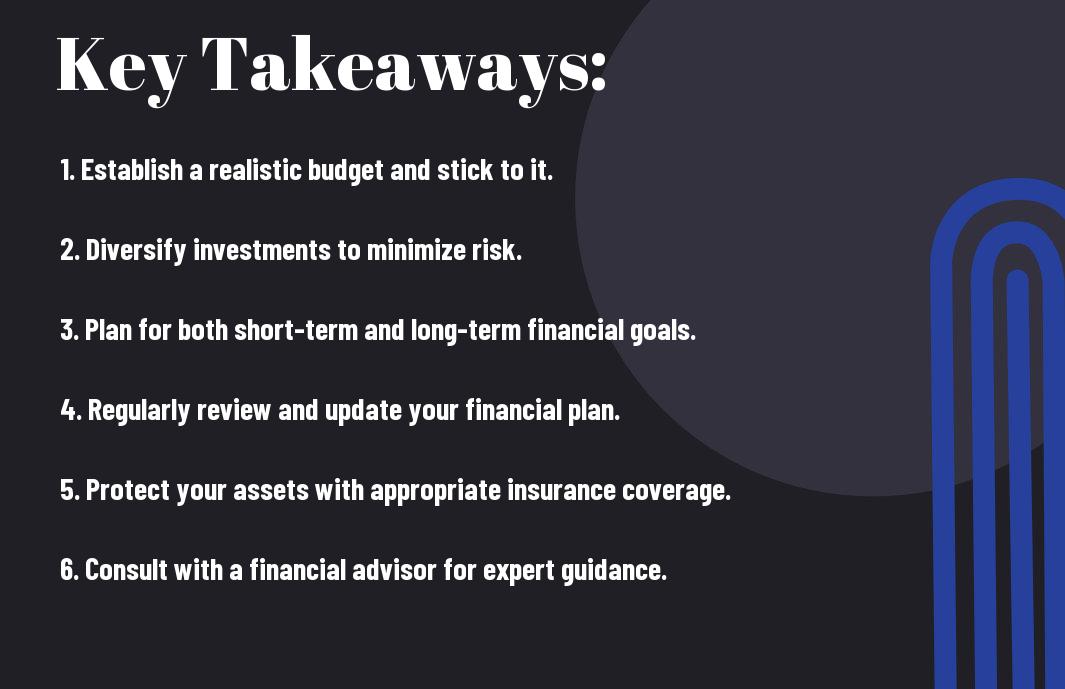
Key Takeaways:
- Understand your business financials: It is crucial to have a deep understanding of your company’s financial situation, including cash flow, expenses, and profitability.
- Develop a solid financial plan: Create a detailed financial plan that includes short-term and long-term goals, as well as strategies for achieving them.
- Monitor and review regularly: Stay on top of your finances by monitoring and reviewing your financial plan regularly to make necessary adjustments.
- Invest in professional advice: Consider hiring a financial planner or advisor to help you navigate complex financial decisions and ensure your business’s financial stability.
- Protect your business and personal assets: Implement measures to protect both your business and personal assets, such as securing insurance coverage and establishing emergency funds.
- Diversify your investments: Spread out your investments across different asset classes to reduce risk and maximize potential returns for your business’s financial future.
- Plan for retirement: Don’t neglect planning for your own retirement. Allocate funds towards retirement accounts and explore options such as setting up a 401(k) plan for your small business.
Building a Strong Financial Foundation
Establishing Your Financial Goals
Even the smallest of businesses need to have a clear vision of their financial goals. Establishing these goals is crucial to creating a roadmap for your business’s financial future. Determine what you want to achieve in terms of revenue, profits, and growth. Make sure your goals are realistic yet ambitious to drive your business forward.
Managing Cash Flow for Business Stability
To ensure the stability of your small business, it is paramount to manage your cash flow effectively. With proper cash flow management, you can anticipate periods of low cash reserves and plan accordingly. Monitor your cash flow regularly by tracking incoming and outgoing funds, and always have a contingency plan in place for unexpected expenses or dips in revenue.
Establishing a cash reserve for emergencies is a smart practice that can help your business weather financial storms. This fund should be easily accessible and separate from your operating funds. By proactively managing your cash flow, you can maintain stability and keep your business on track towards achieving its financial goals.
Investment Strategies for Small Businesses
Types of Investments for Diversification
Some small businesses choose to invest their profits to secure their financial future. Investment options can include stocks, bonds, real estate, and mutual funds. Diversifying your investment portfolio can help spread risk and maximize returns. After carefully assessing your risk tolerance and financial goals, you can choose the right mix of investments to achieve diversification.
| Stocks | Bonds |
| Real Estate | Mutual Funds |
| Commodities | ETFs |
| Cryptocurrency | REITs |
Risk Management and Asset Allocation
The risk management and asset allocation are crucial components of an effective investment strategy for small businesses. By diversifying your investment portfolio across different asset classes and sectors, you can reduce overall risk exposure. Additionally, regularly reviewing and adjusting your asset allocation based on market conditions and your financial goals is crucial for long-term success.
Protecting Your Business
Insurance: Types and Considerations
Now, let’s talk about insurance. As a small business owner, it is crucial to protect your enterprise from unforeseen circumstances. There are various types of insurances to consider, such as general liability, professional liability, property, and business interruption insurance. Before choosing an insurance policy, assess your business needs and risks to determine the coverage that is right for you.
| General Liability Insurance | Protects your business from claims of bodily injury, property damage, and advertising injury |
| Professional Liability Insurance | Also known as errors and omissions insurance, it protects your business from claims of negligence or inadequate work |
| Property Insurance | Protects your business property from damage or loss due to theft, fire, or other covered events |
| Business Interruption Insurance | Helps cover lost income and expenses when your business is unable to operate due to a covered peril |
| Recognizing | the importance of having adequate insurance coverage can safeguard your business’s financial stability in times of crisis. |
Contingency Planning and Emergency Funds
Business contingency planning and emergency funds are crucial components of ensuring your business’s resilience. Having a contingency plan in place can help you navigate unforeseen events such as natural disasters, economic downturns, or supply chain disruptions. Additionally, setting aside emergency funds can provide a financial cushion to cover unexpected expenses and keep your business afloat during tough times.
Plus, establishing a solid contingency plan and building up emergency funds demonstrate prudent financial management and preparedness, which can enhance your business’s credibility and sustainability in the long run. It is a proactive approach that can protect your business from potential risks and uncertainties, allowing you to focus on growth and success.
Growth and Expansion
Financing Growth: Options and Strategies
Despite the numerous benefits of growth and expansion for small businesses, one of the biggest challenges often faced is securing adequate financing. Strategies to consider include reinvesting profits back into the business, seeking funding from investors or venture capitalists, applying for loans from financial institutions, or exploring government grants or subsidies.
Planning for Long-Term Business Success
On the path to long-term success, small businesses must prioritize strategic planning to ensure sustained growth and expansion. This involves setting clear goals, creating a detailed business plan, and regularly reviewing and adjusting strategies to adapt to market changes and opportunities. Financing plays a crucial role in this planning process, as securing the necessary funds to support growth initiatives is imperative for long-term viability and success.
Tax Planning and Compliance
For Securing Your Financial Future: Complete Personal Guide, understanding tax planning and compliance is crucial for small businesses. Proper tax planning can help businesses save money and ensure compliance with the law.
Understanding Tax Obligations
Understanding your tax obligations as a small business owner is vital to avoid costly penalties or audits. Small businesses are responsible for various taxes, including income tax, sales tax, payroll tax, and more. It’s important to stay up-to-date with tax laws and regulations to ensure full compliance and avoid any legal issues.
Strategies for Tax Efficiency
The key to tax efficiency lies in strategic planning and utilizing available tax deductions and credits. Maximizing deductions and credits can lower your tax liability and free up cash flow for business growth. Small businesses can benefit from retirement plans, health savings accounts, tax-deferred investments, and other strategies to minimize tax burdens.
Consulting with a tax professional can provide valuable insights and help identify opportunities for tax savings. By implementing sound tax strategies, small businesses can maximize profits and secure their financial future.
Retirement Planning for Small Business Owners
Once again, retirement planning is a crucial aspect of securing your financial future, especially for small business owners. With careful and strategic planning, you can ensure a comfortable retirement that rewards you for your hard work and dedication to your business.
Retirement Saving Options
Business owners have a variety of retirement saving options to choose from, such as setting up a Simplified Employee Pension (SEP) IRA, a Solo 401(k), or a Defined Benefit Plan. Each option has its own benefits and considerations, so it’s important to consult with a financial advisor to determine the best fit for your specific situation.
Integrating Personal and Business Retirement Goals
The key to successfully planning for retirement as a small business owner is to integrate your personal and business retirement goals. This means considering how your business’s financial health can support your retirement savings and vice versa. By aligning these goals, you can maximize your retirement savings potential and ensure a smooth transition into retirement.
Another important aspect to consider is the tax implications of your retirement savings strategy. By strategically combining personal and business retirement accounts, you can potentially benefit from tax advantages and optimize your savings. It’s crucial to carefully plan and monitor these accounts to ensure you’re taking full advantage of any available tax benefits.
Succession Planning
Preparing for Business Ownership Transfer
After years of hard work and dedication, it’s important for small business owners to consider the future of their business through succession planning. Ownership transfer involves strategic preparation to ensure a smooth transfer of ownership and leadership, whether to family members, employees, or external parties.
Creating a Seamless Transition Plan
Succession planning goes beyond mere ownership transfer; it involves creating a comprehensive transition plan to maintain business continuity. Business owners must carefully outline key roles, responsibilities, and processes to ensure a seamless transition that minimizes disruptions and maintains the company’s stability.
Plus, it’s crucial to identify and address potential challenges and risks that may arise during the transition process. By having a well-thought-out succession plan in place, businesses can secure their financial future and ensure long-term success.
Conclusion
Presently, securing your financial future through expert financial planning for small businesses is crucial for long-term success and sustainability. By implementing effective financial strategies, such as managing cash flow, minimizing expenses, and investing wisely, small business owners can navigate economic uncertainties and achieve their financial goals. With the help of financial experts, small businesses can create a solid foundation for growth, prepare for unexpected challenges, and maximize profitability. By prioritizing financial planning and seeking professional guidance, small business owners can ensure a stable and prosperous future for their ventures.
FAQ
Q: What is financial planning for small businesses?
A: Financial planning for small businesses involves creating a roadmap to help ensure the long-term financial success of the business. It includes budgeting, saving, investing, and risk management.
Q: Why is financial planning important for small businesses?
A: Financial planning is necessary for small businesses to monitor cash flow, make informed business decisions, save for future growth, and protect against financial risks.
Q: What are the key components of financial planning for small businesses?
A: The key components of financial planning for small businesses include budgeting, cash flow management, investment planning, risk management, retirement planning, tax planning, and succession planning.
Q: How can small businesses start with financial planning?
A: Small businesses can start with financial planning by setting financial goals, creating a budget, tracking expenses, building an emergency fund, and seeking the help of a financial advisor or planner.
Q: What are the benefits of professional financial planning for small businesses?
A: Professional financial planning for small businesses can help optimize cash flow, maximize profits, minimize taxes, identify growth opportunities, and secure the financial future of the business.
Q: How often should small businesses review their financial plans?
A: Small businesses should ideally review their financial plans regularly, at least once a year, to ensure they are on track to meet their financial goals and make any necessary adjustments based on changing circumstances.
Q: What are some common financial mistakes small businesses should avoid?
A: Common financial mistakes small businesses should avoid include ignoring cash flow management, not having a contingency plan, overspending, not diversifying investments, and not seeking professional financial advice when needed.
Related posts: