Utilizing SMS marketing can be an effective tool in reaching your target audience directly on their mobile devices. With an impressive open rate compared to email marketing, SMS campaigns have the potential to drastically increase customer engagement and drive sales. By sending personalized promotions and updates straight to customers’ phones, businesses can instantly connect with their audience in a direct and impactful way. However, it is important to be mindful of regulatory guidelines and ensure that SMS campaigns are not viewed as spam, as this can have legal consequences.
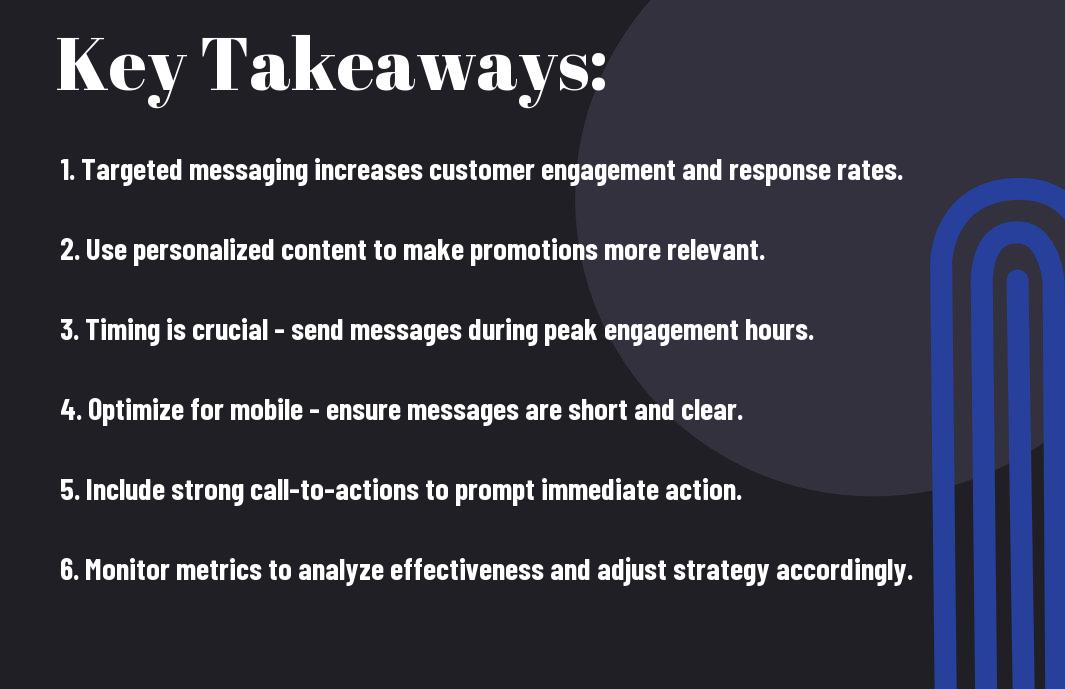
Key Takeaways:
- High Open Rates: SMS marketing boasts a significantly higher open rate compared to email marketing, making it a powerful tool to reach customers directly.
- Effective and Immediate: SMS messages have a high read rate and are usually read within minutes of being received, making them great for time-sensitive promotions.
- Targeted Marketing: Use data segmentation to send personalized messages based on customer behavior, interests, and preferences to increase engagement and conversion rates.
- Opt-In is Key: Ensure that customers have opted in to receive SMS messages to avoid being seen as intrusive and to comply with anti-spam regulations.
- Clear Call-to-Actions: Keep SMS messages concise and include a clear call-to-action to prompt customers to take the desired action, such as making a purchase or visiting a store.
- Track and Analyze Results: Use analytics to track the performance of your SMS campaigns, measure conversion rates, and make informed decisions for future marketing strategies.
- Integrate with Other Channels: Combine SMS marketing with other channels like email and social media to create a cohesive marketing strategy and maximize reach across different platforms.
Understanding SMS Marketing
Defining SMS Marketing
Even in today’s digital age, SMS marketing remains a powerful tool for reaching customers directly. SMS marketing involves sending promotional messages or alerts to individuals’ cell phones utilizing short message service (SMS) technology. This form of marketing is highly effective due to the fact that almost everyone carries a mobile phone, making it a great way to connect with a wide audience.
The benefits of SMS marketing are numerous. It allows businesses to engage with customers in a more personal way, delivering time-sensitive promotions, updates, and alerts straight to their pockets. Additionally, SMS marketing boasts a high open rate, with most messages being read within minutes of being received.
How SMS Differs From Other Marketing Channels
The key distinction between SMS marketing and other channels lies in its immediacy and directness. SMS marketing offers a way to communicate with customers instantly, without the need for an internet connection or access to social media platforms. This makes it a valuable tool for time-sensitive promotions or urgent alerts.
To further highlight the differences, consider that email marketing may end up in the spam folder, and social media posts can easily get lost in a sea of content. SMS marketing, on the other hand, delivers messages directly to customers, ensuring they see and read them promptly.
The Benefits of SMS Marketing
High Open and Read Rates
Any successful marketing campaign relies on reaching and engaging with the target audience. SMS marketing offers one of the most effective ways to do just that. Studies show that text messages have a staggering open rate of over 98%, with most messages being read within minutes of receipt. This high level of engagement makes SMS marketing a powerful tool for businesses looking to connect with their customers directly.
With SMS marketing, you can be assured that your message will be seen and read by a large majority of your audience. This direct line of communication allows for immediate engagement and can lead to higher conversion rates compared to other forms of marketing.
Immediate Delivery and Response
Highly responsive SMS promotions empower businesses to deliver time-sensitive information directly to their customers’ pockets. Immediate delivery means that you can reach your audience instantly with promotions, updates, or important alerts. Furthermore, the real-time nature of SMS ensures that customer responses are quick and can drive immediate action.
Rates compared to email marketing are significantly higher when it comes to open rates and response times. By leveraging the immediacy of SMS, businesses can create impactful marketing campaigns that deliver positive results in a short amount of time.
Building a Compliant SMS Marketing List
Understanding Regulations and Compliance
Compliant SMS marketing campaigns start with a solid understanding of regulations and compliance. It is essential to familiarize yourself with the laws that govern SMS marketing to avoid hefty fines and damage to your brand reputation. Regulations such as the Telephone Consumer Protection Act (TCPA) in the United States and the General Data Protection Regulation (GDPR) in Europe set guidelines on how businesses can legally send marketing messages to customers.
Failure to comply with these regulations can result in costly consequences for your business. It is crucial to obtain explicit consent from individuals before adding them to your SMS marketing list. Non-compliance with regulations can lead to legal penalties or being blacklisted by mobile carriers, rendering your SMS marketing efforts ineffective.
Strategies for Collecting Opt-Ins
Understanding the best strategies for collecting opt-ins is key to building a compliant SMS marketing list. One effective method is to use keyword opt-ins, where customers text a specific word to a designated shortcode to subscribe to your marketing messages. Another strategy is to incorporate opt-in checkboxes on your website and other marketing materials, making it clear to customers that by checking the box, they are consenting to receive SMS promotions.
It is important to note that consent must be freely given, specific, informed, and unambiguous. You should also provide clear information about what customers can expect to receive, how often they will receive messages, and include an easy way for them to opt-out if they wish. By implementing these strategies, you can build a high-quality SMS marketing list that is not only compliant but also engaged and receptive to your promotions.
Crafting Effective SMS Messages
The Anatomy of a Successful SMS Campaign
Not all SMS campaigns are created equal. To create an effective SMS message, you need to consider several key elements. First, your message should be concise and to the point. Customers don’t have time to read long paragraphs, so make sure your message is clear and easy to understand. Second, include a strong call to action to encourage customers to take the desired next step, whether it’s making a purchase, visiting your website, or contacting your business.
Personalization and Timing
Personalization is key to a successful SMS campaign. To maximize engagement, use your customer’s name and personalize the message based on their past interactions with your business. Timing is also crucial – send your message at a time when your customers are most likely to see and act on it. Consider factors like time zone and typical daily routines when scheduling your SMS blasts.
Crafting a successful SMS message requires careful consideration of the content, timing, and personalization. By focusing on these key elements, you can maximize the impact of your SMS marketing campaign and reach more customers directly on their phones.
Advanced SMS Marketing Techniques
After mastering the basics of SMS marketing, it’s time to delve into advanced techniques that can help you maximize your reach and engagement with customers. These strategies can take your SMS campaigns to the next level and ensure you are making the most out of this powerful marketing channel.
Segmentation and Targeting
On the forefront of advanced SMS marketing techniques is the practice of segmentation and targeting. By segmenting your audience based on demographics, behavior, or preferences, you can target your messages more effectively. This allows you to send personalized promotions and offers that are tailored to specific groups of customers, increasing the likelihood of conversion.
A/B Testing and Analytics
One of the most powerful tools in the SMS marketer’s arsenal is A/B testing and analytics. By testing different variations of your messages, such as the call-to-action, wording, or timing, you can determine what resonates best with your audience. Analyzing the results of these tests allows you to refine your campaigns and continuously improve your SMS marketing strategy for optimal results.
It’s essential to track key metrics such as open rates, click-through rates, and conversion rates to understand the effectiveness of your SMS campaigns. By leveraging A/B testing and analytics, you can make data-driven decisions to enhance your engagement with customers and drive better outcomes for your business.
Integrating SMS with Other Marketing Efforts
Cross-Channel Marketing Strategies
Not every customer can be reached through a single channel. This is where cross-channel marketing strategies come into play, allowing businesses to connect with customers through various touchpoints. By integrating SMS with other marketing efforts such as social media, email campaigns, and even traditional advertising, businesses can create a cohesive and impactful marketing strategy that maximizes reach and engagement.
Strategies that involve cross-channel marketing can help businesses reinforce their messaging and promotions across multiple platforms, increasing the chances of reaching customers at different stages of the buying journey. By using SMS in conjunction with other marketing channels, businesses can create a more personalized and integrated experience for customers, leading to higher conversion rates and brand loyalty.
SMS and Email: A Synergistic Approach
The key to a successful marketing campaign lies in the synergy between different channels, and SMS and email are a powerful combination. The immediacy of SMS can be used to grab customers’ attention, while email can provide more detailed information and visuals. By strategically timing and coordinating SMS and email campaigns, businesses can create a seamless experience for customers, leading to increased engagement and sales.
Other benefits of combining SMS and email include the ability to track customer interactions more effectively, segmenting audiences based on their preferences, and delivering targeted messages for better results. By utilizing these two channels together, businesses can create a comprehensive marketing strategy that makes the most of each channel’s strengths.
Measuring the Success of Your SMS Marketing Campaigns
Keep SMS marketing overview: What it is and how it can help in mind when evaluating the success of your SMS marketing campaigns. To truly understand the impact of your efforts, it’s essential to measure key performance indicators (KPIs) and metrics that provide valuable insights into the effectiveness of your campaigns.
KPIs and Metrics for SMS Marketing
Any successful SMS marketing strategy relies on tracking and analyzing certain KPIs and metrics to gauge performance. Metrics such as delivery rates, open rates, click-through rates, and conversion rates are essential for evaluating the effectiveness of your campaigns. By closely monitoring these metrics, you can optimize your campaigns to achieve maximum engagement and conversion rates.
Tools for Tracking and Analysis
One of the crucial aspects of successful SMS marketing campaigns is utilizing tools for tracking and analysis. Analyzing tools provide valuable data on customer behavior, allowing you to make informed decisions and adjustments to your campaigns. These tools offer insights into user engagement, demographics, and preferences, enabling you to tailor your messages for maximum impact.
Tracking and analyzing tools also help you measure the ROI of your SMS marketing efforts, ensuring that you are investing your resources wisely. By leveraging these tools effectively, you can enhance the performance of your campaigns and reach your target audience effectively.
Case Studies and Real-World Examples
Despite the constantly evolving landscape of marketing strategies, SMS marketing continues to prove its effectiveness in reaching customers directly. Let’s explore some case studies and real-world examples that showcase the power of SMS marketing:
- Case Study 1: A local bakery in Chicago saw a 40% increase in foot traffic after sending out a text message promotion for their new line of cupcakes.
- Case Study 2: An online clothing retailer experienced a 25% boost in sales by sending out exclusive discounts via SMS to their loyal customer base.
- Case Study 3: A fitness center in Miami achieved a 30% higher retention rate among members who received workout tips and motivation through SMS reminders.
Small Businesses and SMS Marketing
On a smaller scale, small businesses can greatly benefit from utilizing SMS marketing to engage with their customer base. By sending out personalized offers and promotions, small businesses can see a significant increase in foot traffic and sales.
Large-Scale Campaigns and Their Outcomes
Marketing on a larger scale allows businesses to reach a wider audience and generate significant results. Incorporating SMS marketing into large-scale campaigns has been proven to drive customer engagement, increase brand loyalty, and ultimately boost sales.
For instance, a national retail chain implemented an SMS marketing campaign that resulted in a 50% redemption rate for their promotional offers. The convenience and immediacy of SMS communication led to a spike in store visits and online purchases, showcasing the power of direct customer engagement through text messaging.
Avoiding Common SMS Marketing Pitfalls
Over-Messaging and Potential Backlash
Keep in mind that over-messaging can be one of the most detrimental mistakes in SMS marketing. Bombarding your customers with constant promotional messages can lead to irritation and backlash. This can result in a negative perception of your brand and push customers to opt-out or even worse, spread negative word-of-mouth.
To avoid this pitfall, it’s crucial to strike a balance between staying top-of-mind and not overwhelming your subscribers. Segment your audience based on their preferences and behavior to send targeted and relevant messages. Also, be transparent about the frequency of messages upfront so customers know what to expect.
Maintaining Subscribers and Reducing Opt-Out Rates
Pitfalls in maintaining subscribers and reducing opt-out rates can occur when businesses neglect to provide value to their customers through their SMS marketing efforts. It’s essential to continuously engage with your subscribers by offering exclusive discounts, promotions, and valuable content that incentivizes them to stay subscribed.
For instance, utilizing personalized messaging and tailored offers can significantly improve customer retention rates. Additionally, make it easy for subscribers to manage their preferences and opt-out if they choose to, as forcing them to stay can result in a more negative perception of your brand.
The Future of SMS Marketing
To Maximize Reach with Bulk SMS Marketing Solutions, businesses need to stay ahead of the curve when it comes to the future of SMS marketing. As technology continues to evolve, so do the opportunities for reaching customers directly on their mobile phones.
Emerging Trends and Technologies
Emerging technologies such as artificial intelligence and machine learning are revolutionizing the way businesses engage with customers through SMS marketing. AI-powered chatbots are becoming increasingly sophisticated, allowing for personalized interactions and targeted messaging based on customer behavior and preferences. Additionally, advancements in data analytics are enabling businesses to track and analyze campaign performance in real-time, leading to more effective strategies and higher conversion rates.
Mobile wallets and payment integration are also on the rise, allowing businesses to streamline the customer journey and offer convenient payment options directly through SMS. By leveraging these technologies, businesses can create seamless experiences for customers, driving engagement and loyalty in the competitive digital landscape.
Preparing for the Next Wave in Mobile Marketing
Emerging technologies in SMS marketing are reshaping the way businesses connect with customers, requiring proactive adaptation to stay ahead of the competition. As mobile devices continue to dominate consumer preferences, optimizing SMS campaigns for mobile platforms and ensuring compatibility with emerging technologies will be crucial for success in the evolving landscape.
Next generation SMS marketing strategies will focus on enhancing personalization, leveraging data analytics, and integrating new technologies to deliver targeted, relevant messaging to customers. By staying informed about the latest trends and technologies, businesses can position themselves for success in the future of SMS marketing and maximize their reach to customers’ phones.
Final Words
Presently, SMS marketing remains one of the most effective ways to directly promote your products or services to customers. By taking advantage of the high open rates and quick response times of SMS messages, businesses can maximize their reach and engagement with their target audience. With the right strategies and tools in place, businesses can use SMS marketing to drive sales, increase brand awareness, and build customer loyalty.
Remember to always provide value to your customers with each message, personalize your content, and follow the regulations and best practices of SMS marketing to ensure success. By incorporating SMS marketing into your overall marketing strategy, you can create a direct line of communication with your customers and see a significant impact on your business’s bottom line.
FAQ
Q: What is SMS Marketing?
A: SMS Marketing, or text message marketing, is a form of marketing where businesses use text messages to communicate promotional messages and offers to their customers.
Q: How can SMS Marketing help in maximizing reach with customers’ phones?
A: SMS Marketing allows businesses to directly reach customers on their mobile phones, which are almost always within arm’s reach, making it a highly effective channel for promotion and communication.
Q: What are the benefits of using SMS Marketing for direct promotions?
A: Some benefits of SMS Marketing for direct promotions include high open rates, instant delivery, increased engagement, cost-effectiveness, and the ability to reach a large audience quickly.
Q: How can businesses build their subscriber list for SMS Marketing?
A: Businesses can build their subscriber list for SMS Marketing by promoting their SMS campaigns through various channels, such as social media, website pop-ups, in-store signage, and incentivizing subscribers with exclusive offers.
Q: What are some best practices for maximizing the effectiveness of SMS Marketing campaigns?
A: Some best practices for maximizing the effectiveness of SMS Marketing campaigns include personalizing messages, keeping them concise and relevant, including a clear call-to-action, timing messages appropriately, and monitoring and analyzing campaign performance.
Q: How can businesses ensure compliance with regulations when using SMS Marketing?
A: Businesses can ensure compliance with regulations when using SMS Marketing by obtaining explicit consent from customers before sending them promotional messages, providing an easy opt-out option, and following guidelines set by regulatory bodies such as the TCPA and GDPR.
Q: What are some examples of successful SMS Marketing campaigns that have maximized reach with customers’ phones?
A: Some successful examples of SMS Marketing campaigns include flash sales notifications, exclusive offers for loyal customers, product launch announcements, event invitations, and personalized birthday or anniversary messages.
Related posts: