Embark on a journey to master the intricate world of email marketing with our comprehensive guide. In today’s digital age, email marketing remains one of the most powerful tools for businesses to connect with customers. However, with the overwhelming amount of emails flooding inboxes daily, it is crucial to stand out and craft engaging content that resonates with your audience. In this blog post, we will delve into the essential strategies and effective techniques that will help you create impactful campaigns and boost customer engagement.
Key Takeaways:
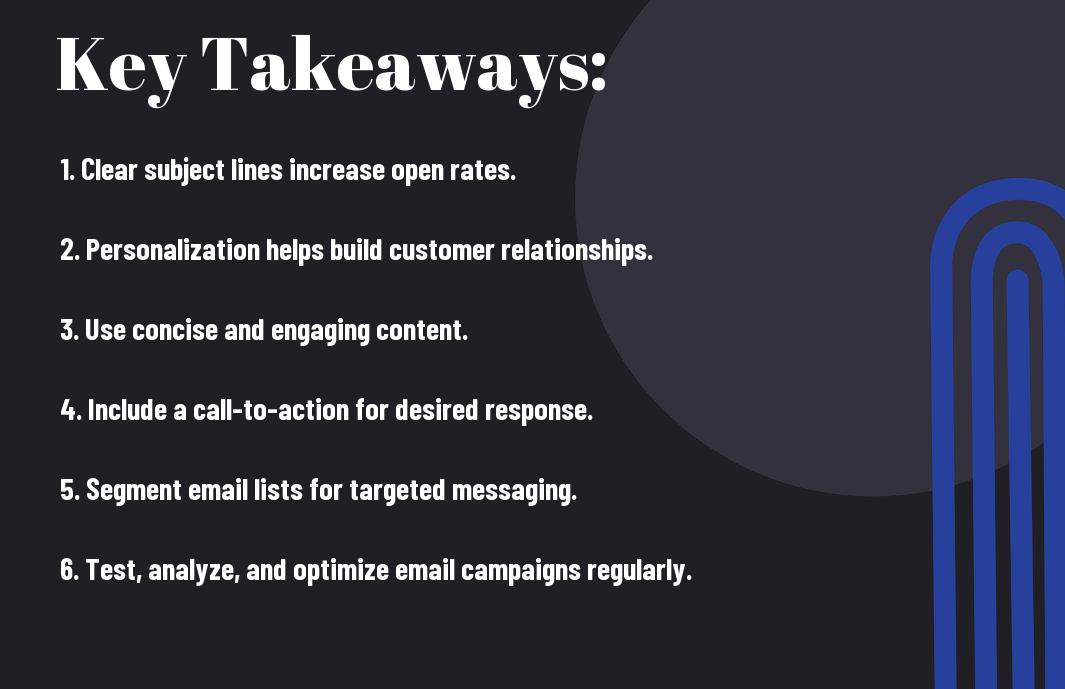
- Personalization is key: Tailoring your emails to specific customers can significantly increase engagement and open rates.
- Mobile optimization is crucial: With the majority of emails now being opened on mobile devices, it’s important to ensure your emails are mobile-friendly.
- Segment your email list: Divide your email list into smaller segments based on demographics, purchase history, or behavior to send more targeted communications.
- Use compelling subject lines: Your subject line is the first thing customers see, so make sure it’s attention-grabbing and relevant to increase open rates.
- Include a clear call to action: Make it easy for customers to know what to do next after reading your email by including a clear and visible call to action.
- Test and analyze your campaigns: Experiment with different email formats, content, and send times to see what resonates best with your audience, and use data to continuously improve your email marketing efforts.
- Provide value to your subscribers: Offer exclusive deals, valuable content, or helpful tips to keep your subscribers engaged and interested in receiving your emails.
Understanding Your Audience
Some of the most successful email marketing campaigns are built on a foundation of understanding the audience they are targeting. By knowing who your subscribers are, what they are interested in, and how they interact with your emails, you can tailor your messages to be more relevant and engaging.
Segmenting Your Email List for Targeted Campaigns
Segmenting your email list involves dividing your subscribers into smaller groups based on specific criteria such as demographics, purchase history, or engagement levels. This allows you to send more personalized content to each segment, increasing the chances of engagement and conversions. By targeting your emails to smaller, more defined groups, you can speak directly to the interests and needs of those subscribers, leading to higher open rates and click-through rates.
Utilizing segmentation can also help you identify trends and preferences among different segments of your audience, giving you valuable insights into what content resonates most with each group. This data can be used to further refine your email marketing strategy and create more targeted campaigns in the future.
Analytics: Interpreting Customer Data to Enhance Engagement
Segmenting your email list is just the first step in understanding your audience. The real magic happens when you start analyzing the data from your campaigns to see how your subscribers are interacting with your emails. By tracking metrics such as open rates, click-through rates, and conversion rates, you can gain valuable insights into what content is most effective and how you can improve future campaigns to increase engagement.
Plus, by leveraging more advanced analytics tools, you can delve even deeper into customer behavior, tracking things like time spent reading an email, devices used to open emails, and even geographical location. This wealth of information can help you create highly targeted and personalized campaigns that are sure to resonate with your audience, leading to greater customer loyalty and increased ROI.
Crafting the Perfect Email
Obviously, email marketing is a powerful tool for businesses to engage with their customers and drive sales. If you want to learn more about the best practices for email marketing, check out the Ultimate Guide to Email Marketing: Boost Your …
The Anatomy of a Compelling Email
The first step in crafting the perfect email is understanding the key components that make up a compelling message. The subject line, content, design, and call-to-action are all essential elements that need to work together seamlessly to captivate your audience. Your subject line should be attention-grabbing, the content should be relevant and engaging, the design should be visually appealing, and the call-to-action should prompt your readers to take the desired action.
Writing Subject Lines That Stand Out in a Crowded Inbox
Compelling subject lines are crucial for getting your emails opened and read. In a crowded inbox, it’s essential to create subject lines that stand out and pique the curiosity of your subscribers. Use personalization, urgency, and creativity to grab attention and entice recipients to click open. A/B testing different subject lines can also help you determine what resonates best with your audience.
Stand out in a crowded inbox by writing subject lines that are concise, relevant, and compelling. Use action words, emojis, and personalization to increase open rates and drive engagement. Remember, your subject line is the first thing your subscribers see, so make it count!
Email Content Strategies
Personalization Techniques for Higher Open Rates
Strategies for personalizing email content can significantly increase open rates and engagement with your audience. Simple techniques such as addressing recipients by their first name or tailoring content based on their past interactions with your brand can make a big difference. Additionally, segmenting your email list and sending targeted content to specific groups of subscribers can lead to higher open rates and more conversions.
Creating Valuable and Relevant Content
Strategies for creating valuable and relevant email content involve understanding your audience’s needs and preferences. Conduct market research to uncover what topics resonate with your subscribers and tailor your content accordingly. Providing exclusive offers, useful tips, and relevant industry news can keep your audience engaged and eager to open your emails.
It is essential to strike a balance between promotional content and valuable information that benefits your subscribers. By delivering high-quality content that addresses their pain points and interests, you can build trust and credibility with your audience, ultimately leading to higher conversion rates and customer loyalty.
Designing Your Email Campaign
After crafting engaging content for your email marketing campaign, it’s time to focus on the design aspect. Designing Your Email Campaign plays a crucial role in capturing the attention of your audience and encouraging them to take action. In this chapter, we will discuss the importance of visuals and responsive design in creating effective email campaigns that resonate with your customers.
The Role of Visuals in Email Marketing
Marketing studies have shown that visuals are key to capturing the attention of your audience in a cluttered digital landscape. Incorporating eye-catching graphics, videos, and images into your emails can significantly increase engagement and click-through rates. Visuals not only make your emails more aesthetically appealing but also help convey your brand message more effectively.
Responsive Design: Ensuring Your Emails Look Great on Any Device
For today’s consumers, checking email on mobile devices has become the norm. Therefore, it is essential to ensure that your emails are optimized for all screen sizes. Responsive design allows your emails to adapt to various devices, providing a seamless and visually appealing experience for all recipients. By prioritizing responsive design, you can increase the chances of your emails being read and acted upon.
Your emails should be designed with a mobile-first approach, ensuring that they look great on smartphones and tablets. Remember to test your emails across different devices and email clients to guarantee a consistent user experience. Investing in responsive design will not only improve engagement with your emails but also enhance your brand’s credibility and reputation.
Timing and Frequency of Emails
Keep in mind that the timing and frequency of your emails play a crucial role in the success of your email marketing campaigns. Sending emails at the right time can significantly impact open and click-through rates, while bombarding your subscribers with too many emails can lead to unsubscribes and a negative perception of your brand.
Discovering the Best Times to Send Emails
The first step in determining the best times to send emails is to understand your target audience. Consider factors such as their time zone, work schedule, and online behavior. Analyzing data from past email campaigns can also provide valuable insights into when your subscribers are most likely to engage with your content.
It’s important to test different send times to see what works best for your specific audience. By experimenting with sending emails at different times and days of the week, you can optimize your sending schedule to maximize engagement and conversions.
The Art of Automating Emails Without Losing a Personal Touch
Emails automation allows you to streamline your email marketing efforts and deliver timely, relevant content to your subscribers. With the right tools and strategies, you can automate emails without sacrificing the personal touch that makes your campaigns effective.
With automation, you can set up trigger-based emails that are sent based on specific actions or behaviors of your subscribers. This allows you to deliver targeted and personalized content at the right time, increasing the chances of engagement and conversion.
Testing and Optimizing Your Email Campaigns
After crafting the perfect email campaign, it’s essential to test and optimize it to ensure maximum engagement with your audience. By constantly refining your approach through testing and monitoring results, you can improve the effectiveness of your email marketing efforts.
A/B Testing: Finding What Works for Your Audience
What better way to determine what resonates with your audience than A/B testing? This method involves sending out two versions of the same email with slight variations to see which one performs better. You can test different subject lines, content layouts, images, or calls to action to identify what drives higher open rates, click-through rates, and conversions.
A/B testing allows you to optimize your email campaigns based on real data and feedback from your audience. By analyzing the results of these tests, you can gain valuable insights into your subscribers’ preferences and tailor future campaigns to better suit their needs and interests.
The Continuous Improvement Cycle: Learn, Apply, and Grow
The key to successful email marketing lies in the continuous improvement cycle of learning, applying, and growing. Monitor the performance of your campaigns, identify areas for improvement, make necessary adjustments, and track the results. This iterative process ensures that your email marketing strategy evolves with the changing needs and preferences of your audience.
The continuous improvement cycle is a crucial component of email marketing success, enabling you to stay ahead of the curve and deliver engaging content that resonates with your subscribers. By embracing a culture of continuous improvement, you can maintain relevance, build strong relationships with your audience, and drive better results for your business.
Email Marketing Ethics and Legal Compliance
Not sure how to navigate the murky waters of email marketing ethics and legal compliance? Dive into our guide to ensure you’re following best practices to engage customers while staying within the lines of the law. For more insights on mastering the art of email marketing, check out Mastering the Art of Email Marketing: Tips for a Winning Strategy.
Consent and Privacy: Building Trust with Your Subscribers
Building trust with your subscribers starts with obtaining explicit consent before sending them marketing emails. Make sure your subscribers have opted in to receive communications from you and clearly outline what type of content they can expect to receive. Respecting privacy is key to maintaining a positive relationship with your audience.
Navigating the Landscape of Email Regulations
The landscape of email regulations can be complex, with laws like the CAN-SPAM Act and GDPR dictating how businesses can engage with customers via email. It’s crucial to stay informed about these regulations to avoid hefty fines and protect your brand’s reputation. Make sure to comply with unsubscribe requests promptly and keep accurate records of consent to demonstrate compliance if needed.
Ethics play a vital role in email marketing, ensuring that businesses engage with their audience in a transparent and respectful manner. By prioritizing trust and compliance, you can build long-lasting relationships with your subscribers and drive success through effective email marketing campaigns.
Advanced Email Marketing Strategies
Now let’s delve into some advanced strategies to take your email marketing campaigns to the next level. These techniques can help you boost engagement, increase conversions, and ultimately drive more revenue for your business.
- Integrating Social Media with Email Campaigns for Amplified Reach
| Strategy | Description |
| Sync Social Media Accounts | Connect your email campaigns to your social media profiles to reach a wider audience. |
| Encourage Social Sharing | Include social sharing buttons in your emails to encourage subscribers to share your content with their networks. |
Integrating Social Media with Email Campaigns for Amplified Reach
To maximize the reach of your email campaigns, it’s essential to integrate your social media efforts. By syncing your social media accounts with your email campaigns, you can create a seamless cross-channel marketing strategy. Encouraging social sharing within your emails can also help extend your reach beyond your subscriber list, tapping into the networks of your audience.
Leveraging AI and Machine Learning for Hyper-Personalization
Email marketing has evolved beyond simple segmentation to hyper-personalization through the use of AI and machine learning technologies. By leveraging these advanced tools, you can deliver targeted content and recommendations that are tailored to each individual subscriber’s preferences and behavior. This level of personalization can significantly enhance the effectiveness of your email campaigns and drive higher engagement and conversions.
Reach your audience on a deeper level by using AI and machine learning to deliver personalized and relevant content. By analyzing customer data and behavior patterns, you can optimize your email campaigns for maximum impact and ROI.
Measuring Success and ROI
Despite the many benefits of email marketing, measuring its success and return on investment (ROI) is crucial to understanding its impact and optimizing future campaigns. By tracking key performance indicators (KPIs) and analyzing data, businesses can gain valuable insights into the effectiveness of their email marketing efforts.
Key Performance Indicators (KPIs) for Email Marketing
Email open rates, click-through rates, conversion rates, and unsubscribe rates are some of the key performance indicators (KPIs) that businesses should closely monitor to gauge the success of their email marketing campaigns. Open rates measure the percentage of recipients who open the email, while click-through rates indicate the number of recipients who click on links within the email. Conversion rates reveal how many recipients take the desired action, such as making a purchase or filling out a form. Unsubscribe rates, though often seen as negative, also provide valuable feedback on the relevance and effectiveness of the content being sent.
Monitoring these KPIs over time can help businesses identify trends, test different strategies, and optimize their email marketing campaigns for better results. By understanding how recipients engage with their emails, businesses can tailor content to better meet the needs and interests of their target audience.
Calculating Return on Investment and Making Data-Driven Decisions
Any successful email marketing campaign should ultimately aim to generate a positive return on investment (ROI). Calculating ROI involves comparing the revenue generated from email marketing efforts to the costs incurred in creating and sending the emails. Businesses can use this data to evaluate the effectiveness of their campaigns and make informed decisions about future strategies.
Decisions based on ROI data can help businesses allocate resources more efficiently, focus on tactics that deliver the best results, and ensure that their email marketing efforts are contributing to overall business growth. By analyzing ROI and other relevant data, businesses can fine-tune their email marketing strategies and achieve measurable success in engaging customers.
Common Email Marketing Challenges and Solutions
Overcoming Low Engagement Rates
Marketing emails not receiving the expected open and click-through rates can be a common issue for businesses. To overcome low engagement rates, it is crucial to focus on creating personalized and relevant content that resonates with your target audience. Conducting A/B testing on subject lines, email copy, and visuals can help in understanding what works best for your subscribers. Additionally, segmenting your email list based on demographics, interests, or previous interactions can improve engagement by delivering more tailored content.
Another effective solution for boosting engagement is to establish a consistent sending schedule. By sending emails regularly and at times when your audience is most likely to be active, you can increase the chances of them engaging with your content. Encouraging feedback and interaction from subscribers through polls, surveys, or calls to action can also help in building a stronger connection with your audience and improving engagement rates.
Dealing with Email Deliverability Issues
Email deliverability issues, such as emails landing in spam or promotions folders, can severely impact the success of your email marketing campaigns. To address this challenge, it is essential to maintain a clean and updated email list by regularly removing inactive or invalid addresses. Implementing double opt-in processes can also help in ensuring that subscribers genuinely want to receive your emails, reducing the chances of them marking your messages as spam.
One common tactic to improve deliverability is to monitor and maintain a good sender reputation. This involves avoiding spam triggers in your email content, using a recognizable “From” name and email address, and adhering to best practices for email authentication. Collaborating with your IT team or email service provider to optimize email infrastructure can also enhance deliverability and ensure that your emails reach the intended recipients.
Final Words
Upon reflecting on the art of email marketing, it is clear that engaging customers through this platform requires a strategic approach. By following the tips and tricks mentioned in this article, businesses can create impactful and personalized email campaigns that resonate with their audience. Implementing techniques such as segmenting the audience, creating compelling subject lines, and optimizing for mobile can significantly increase the success of email marketing efforts. For further insights and evidence of success, check out these 7 Email Marketing Tips (Plus Evidence of Success).
FAQ
Q: What is email marketing?
A: Email marketing is a digital marketing strategy that involves sending emails to customers and prospects to promote products, services, or brand awareness.
Q: Why is email marketing important?
A: Email marketing is important because it is a direct and cost-effective way to communicate with your audience, build relationships, drive sales, and increase brand loyalty.
Q: How can I build an effective email list?
A: You can build an effective email list by offering valuable content or incentives in exchange for email sign-ups, optimizing your website for email capture, and using social media to promote sign-ups.
Q: What are some tips for creating engaging email content?
A: Some tips for creating engaging email content include personalizing your emails, using eye-catching subject lines, providing valuable and relevant information, and incorporating visual elements such as images or videos.
Q: How often should I send marketing emails?
A: The frequency of marketing emails depends on your audience and the content you are sharing. It is recommended to test different frequencies to see what works best for your subscribers, but generally, sending 1-2 emails per week is a good starting point.
Q: How can I measure the success of my email marketing campaigns?
A: You can measure the success of your email marketing campaigns by tracking metrics such as open rates, click-through rates, conversion rates, and overall ROI. Use these metrics to analyze the performance of your campaigns and make data-driven decisions for improvement.
Q: What are some best practices for email marketing compliance?
A: Some best practices for email marketing compliance include obtaining permission before sending emails, providing an easy way for subscribers to unsubscribe, including your physical mailing address in the email, and following regulations such as GDPR and CAN-SPAM Act.
Related posts: