Establishing lasting and engaging relationships with your customers is essential for any successful business. One powerful tool that can help you achieve this is email marketing. As one of the most effective and direct forms of digital communication, email marketing allows you to personally reach out to your customers and establish a meaningful connection with them. In this blog post, we will delve into the importance of email marketing and how it can help you nurture and grow your customer base.
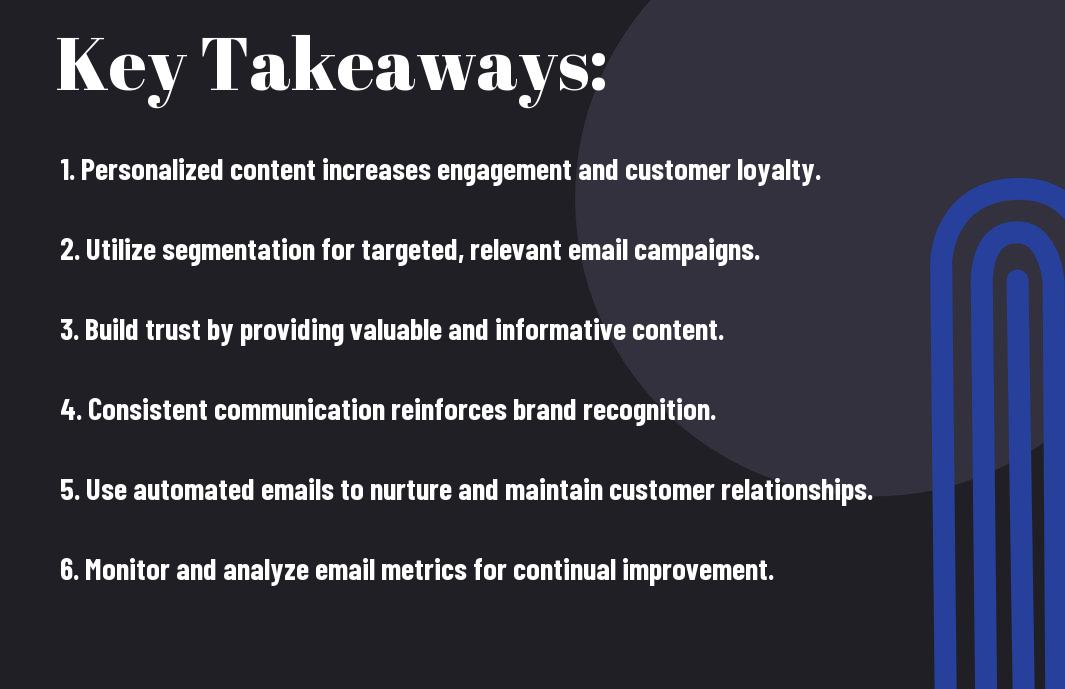
Key Takeaways:
- Email marketing is a powerful tool for building and strengthening customer relationships.
- Personalization and segmentation are crucial in email marketing to deliver relevant content to your audience.
- Effective email marketing can lead to increased customer engagement, loyalty, and ultimately, conversion rates.
- Consistent communication through emails helps in building trust with your customers over time.
- Utilizing automation in email marketing can save time and improve the efficiency of your campaigns.
- Providing valuable and informative content in emails can educate customers and keep them engaged with your brand.
- Analyze and track the performance of your email campaigns to understand what resonates with your audience and optimize future emails.
Building the Foundation
Obviously, email marketing is a powerful tool for businesses looking to connect with their customers on a deeper level. By building a strong foundation for your email marketing strategy, you can cultivate long-lasting relationships with your audience and drive significant results for your business.
Understanding Your Audience
One of the most important steps in building a successful email marketing strategy is to understand your audience inside and out. Take the time to research and analyze your target market, including their demographics, preferences, and behaviors. By gaining a deeper understanding of who your audience is and what they want, you can create more personalized and engaging email campaigns that resonate with them on a personal level.
Creating an Email Marketing Strategy
Creating a successful email marketing strategy involves developing a plan that aligns with your business goals and resonates with your audience. This includes setting clear objectives, defining your target audience, creating valuable content, and monitoring the performance of your campaigns to make data-driven decisions. To ensure the success of your email marketing efforts, it is crucial to consistently optimize and refine your strategy based on customer feedback and industry trends.

Crafting Effective Emails
The Anatomy of a Successful Email
Email marketing is a powerful tool for businesses to connect with their customers. Clear and engaging content is essential to capture the attention of your audience. The anatomy of a successful email includes a compelling subject line that entices the reader to open the email, followed by relevant and personalized content that speaks directly to the recipient’s needs and interests. Visual elements such as images and videos can enhance the overall appeal of the email and help convey your message effectively.
Furthermore, a strong call-to-action is crucial for guiding the reader towards the desired action, whether it be making a purchase, signing up for a webinar, or downloading a whitepaper. A well-designed email layout that is mobile-responsive and easy to navigate will also contribute to the success of your email marketing campaign.
Personalization and Audience Segmentation
Crafting personalized emails based on audience segmentation is key to building strong customer connections and driving engagement. By segmenting your audience based on factors such as demographics, purchase history, and browsing behavior, you can tailor your emails to resonate with each recipient on a more personal level. Personalization can include addressing the recipient by name, recommending products based on their past purchases, or sending targeted offers that align with their interests.
Personalization and audience segmentation not only help improve the relevance of your emails but also increase the likelihood of conversion. According to research, personalized emails generate higher open rates and click-through rates compared to generic emails, making them a valuable strategy for maximizing the effectiveness of your email marketing campaigns.
Delivering Value to Your Subscribers
Content That Resonates
Now more than ever, it is essential to provide valuable and engaging content to your email subscribers. Your audience’s inbox is inundated with emails daily, so it’s crucial to offer something unique that resonates with them. When creating content for your email campaigns, think about what will captivate and interest your subscribers. Whether it’s educational articles, insightful tips, or entertaining stories, make sure your content is relevant and valuable to your audience.
With the right content strategy, you can build credibility and trust with your subscribers, ultimately strengthening your customer relationships. By consistently providing content that resonates with them, you position yourself as a thought leader in your industry, establishing a strong connection with your audience.
Promotions and Exclusive Offers
On top of providing valuable content, offering unique promotions and exclusive offers can further engage your subscribers. Give your audience a reason to open and click through your emails by providing them with discounts, promotional codes, or exclusive deals. Create a sense of urgency by making these offers time-sensitive to encourage immediate action.
Your email subscribers are more likely to stay engaged and loyal to your brand when they feel they are receiving special treatment and exclusive benefits. By incorporating promotions and exclusive offers into your email marketing strategy, you can drive sales and conversions while rewarding your subscribers for their loyalty.
Timing and Frequency
Finding the Perfect Cadence
Your email marketing strategy’s success hinges on finding the right balance between the timing and frequency of your emails. Timing is crucial – sending an email too early or too late can result in it getting lost in a cluttered inbox. Consider your target audience and their behaviors to determine the best times to send emails. Frequency is equally important – bombarding your subscribers with emails may lead to high unsubscribe rates, while sending too few may cause them to forget about your brand. Experiment with different schedules to find the perfect cadence that keeps your audience engaged without overwhelming them.
Automating Your Email Campaigns
To streamline your email marketing efforts and ensure timely delivery, consider automating your email campaigns. Finding an email marketing platform that offers automation features can save you time and energy, while also allowing for personalized and targeted communication with your subscribers. Set up automated campaigns based on triggers such as subscriber sign-ups, purchases, or website activity to deliver relevant content at the right moment, increasing the chances of engagement and conversion.
Automating Your Email Campaigns not only helps in saving time and effort but also ensures that your emails are consistently delivered to your subscribers without manual intervention. This can lead to better engagement rates and ultimately drive more conversions for your business.
Conversion and Retention Tactics
Not only is email marketing an effective way to reach your target audience, but it’s also a powerful tool for converting leads into customers and retaining them for the long term. By implementing strategic tactics in your email campaigns, you can drive conversions and build strong connections with your audience.
Call-to-Action Best Practices
Conversion: When it comes to creating effective call-to-actions (CTAs) in your emails, it’s important to be clear, concise, and compelling. Make sure your CTAs stand out by using contrasting colors and engaging copy that urges recipients to take action. Whether you’re encouraging them to make a purchase, sign up for a webinar, or download a resource, your CTAs should be visible and irresistible.
Measuring the Success of Your Email Campaign
Campaign: One of the key aspects of email marketing is being able to measure the success of your campaigns. By tracking metrics such as open rates, click-through rates, conversion rates, and unsubscribe rates, you can gain valuable insights into the performance of your emails. Use A/B testing to experiment with different elements and determine what resonates best with your audience.
CalltoAction: Remember to always include a strong and clear call-to-action in your emails to guide recipients on the next steps. Also, track the performance of your CTAs to see which ones are driving the most conversions. By optimizing your CTAs and measuring their success, you can continuously improve your email campaigns and build stronger customer connections.
Advanced Email Marketing Techniques
For businesses looking to take their email marketing to the next level, there are several advanced techniques that can help drive better results and stronger customer connections. These techniques go beyond the basics of email marketing and require a more strategic approach to leverage their full potential.
- A/B Testing for Optimized Results
- Leveraging Analytics for Strategic Insights
A/B Testing for Optimized Results
With the use of A/B testing, marketers can determine the most effective email content, subject lines, call-to-action buttons, and more. By sending out two variations of an email to different segments of your audience and measuring their performance, you can identify what resonates best with your subscribers. This data-driven approach allows you to refine your email campaigns for optimal results.
Leveraging Analytics for Strategic Insights
An effective email marketing strategy is built on data and insights. By leveraging analytics tools, marketers can gain a deeper understanding of their audience’s preferences, behaviors, and engagement patterns. Analyzing key metrics such as open rates, click-through rates, and conversion rates can help you make informed decisions on how to tailor your email content and timing for better results.
Insights: By using analytics to track and measure the performance of your email campaigns, you can gain valuable insights into what is working well and what needs improvement. This data-driven approach empowers you to make strategic decisions that drive better results and strengthen your customer connections.
Challenges and Solutions in Email Marketing
After reading about the importance of email marketing in building strong customer relationships in Email Marketing: The Key Ingredient for Building Strong Customer Relationships, it is crucial to understand and address the challenges that come with this powerful tool.
Navigating Legal Requirements
Legal requirements in email marketing can be daunting, with laws like the CAN-SPAM Act and GDPR dictating how businesses can collect, use, and store customer data. To navigate these legal waters successfully, it is essential to ensure that your email marketing campaigns comply with all relevant regulations. This includes obtaining explicit consent from recipients before sending them marketing emails, providing a clear way for subscribers to opt-out, and honoring their preferences.
Dealing with Deliverability Issues
Deliverability is a critical aspect of email marketing, as your carefully crafted campaigns are useless if they never reach the intended recipients’ inboxes. Common issues that can affect deliverability include spam filters, blacklisting, and low engagement rates. To address these challenges, focus on creating engaging content that encourages recipients to open and interact with your emails. Additionally, regularly clean your email list to remove inactive or incorrect addresses that could harm your sender reputation.
Navigating legal requirements and dealing with deliverability issues are crucial aspects of email marketing that can impact the success of your campaigns. By staying informed about relevant laws and regulations, and proactively managing your sender reputation and engagement rates, you can overcome these challenges and unlock the full potential of email marketing in building strong customer connections.
Amplifying Email Marketing with Multichannel Integration
Your email marketing efforts can be greatly enhanced by integrating them with other channels. This integration allows you to reach your audience through various touchpoints, increasing the chances of engagement and conversion. If you want to learn more about how to build strong relationships through email marketing, check out 8 Ways to Build Relationships Through Email Marketing.
Combining Social Media with Email Marketing
Integration of social media with email marketing can be a powerful strategy for engaging customers. By sharing your email content on social platforms, you can extend your reach and encourage interaction. Additionally, including social sharing buttons in your emails can make it easier for subscribers to share your content with their networks, amplifying your message further.
Another way to integrate social media with email marketing is by running exclusive promotions or contests on social channels and promoting them to your email subscribers. This can help drive traffic to both platforms and create a seamless experience for your audience.
Integrating Email with Other Marketing Efforts
Marketing efforts across different channels can be aligned to create a cohesive customer journey. By integrating email with other marketing channels such as content marketing, paid advertising, and events, you can create a more impactful and personalized experience for your audience. This unified approach can lead to increased brand awareness, customer loyalty, and ultimately, higher conversions.
Future Trends in Email Marketing
AI and Machine Learning in Email Personalization
Marketing automation has already revolutionized the way businesses interact with their customers, and the role of AI and machine learning in email personalization is only going to grow in significance. Unlike traditional email marketing, where one-size-fits-all campaigns are sent to an entire list, AI technology allows for hyper-personalized content based on individual preferences and behaviors.
By leveraging AI and machine learning algorithms, marketers can analyze customer data to understand their preferences, deliver more relevant content, and predict future actions. This level of personalization not only increases engagement but also helps in building long-term customer relationships based on trust and loyalty.
Interactive Emails and the Future of Subscriber Engagement
Email marketing is evolving rapidly, and interactive emails are at the forefront of this evolution. This form of communication goes beyond static content and encourages subscribers to engage directly within the email. By including elements such as videos, surveys, quizzes, etc., marketers can create a more immersive brand experience.
This opens up new possibilities for subscriber engagement and provides valuable insights into customer preferences and behaviors. Marketers who embrace interactive emails will be able to stand out in crowded inboxes and create memorable experiences that drive conversions and customer loyalty.
Case Studies
Despite the rise of various digital marketing channels, email marketing remains one of the most effective tools for building strong customer connections. Here are some case studies that demonstrate the power of email marketing:
- Case Study 1: Company A saw a 40% increase in online sales after implementing a targeted email campaign to loyal customers.
- Case Study 2: Company B achieved a 30% higher open rate by personalizing subject lines and content based on customer preferences.
- Case Study 3: Company C experienced a 50% jump in customer engagement by sending interactive emails with videos and GIFs.
Success Stories of Email Marketing Campaigns
Studies have shown that companies who leverage email marketing effectively can see significant results in terms of customer engagement and sales conversions. Personalization, segmentation, and compelling content are key factors contributing to the success of email campaigns.
Lessons Learned from Failed Email Efforts
With the constant evolution of digital marketing, there are times when email campaigns may not deliver the desired results. Understanding the reasons behind failed email efforts such as poor segmentation, irrelevant content, or lack of personalization is crucial to improving future campaigns.
Campaigns that fail to resonate with the target audience can result in negative impact on brand reputation and customer relationships. It is essential to analyze and learn from these failures to avoid making the same mistakes in the future.
Conclusively
Email marketing continues to be a vital tool for businesses looking to build strong connections with their customers. By providing personalized, relevant content directly to their inboxes, companies can effectively engage with their audience and drive sales. Through the use of segmentation, automation, and engaging copy, businesses can create successful email campaigns that resonate with their subscribers. Overall, email marketing remains a powerful method for fostering customer relationships and driving business growth.
FAQ
Q: What is email marketing?
A: Email marketing is a digital marketing strategy that involves sending promotional messages or content to a group of people via email. It is a powerful tool for building and maintaining strong customer connections.
Q: How can email marketing help in building strong customer connections?
A: Email marketing allows businesses to engage with their customers directly, deliver personalized content, build brand loyalty, and drive customer action. It is effective in nurturing relationships and creating long-term customer connections.
Q: What are the benefits of using email marketing for businesses?
A: Some benefits of using email marketing for businesses include increased brand awareness, higher customer engagement, targeted communication, cost-effectiveness, and measurable results through analytics and tracking.
Q: How can businesses effectively use email marketing to connect with customers?
A: Businesses can effectively use email marketing by segmenting their email list, personalizing content, creating compelling subject lines and visuals, providing value to subscribers, optimizing for mobile devices, and analyzing performance metrics for continuous improvement.
Q: What are some best practices for successful email marketing campaigns?
A: Best practices for successful email marketing campaigns include building a permission-based email list, understanding your audience and their preferences, maintaining consistency in email frequency, testing different elements for optimization, and adhering to email marketing regulations such as GDPR and CAN-SPAM.
Q: How can businesses measure the success of their email marketing efforts?
A: Businesses can measure the success of their email marketing efforts through key performance indicators (KPIs) such as open rates, click-through rates, conversion rates, bounce rates, and unsubscribe rates. They can also track revenue generated from email campaigns and customer retention metrics.
Q: What are some common mistakes to avoid in email marketing?
A: Some common mistakes to avoid in email marketing include sending too many emails, not personalizing content, using misleading subject lines, neglecting mobile optimization, not testing emails before sending, and not providing an easy way for subscribers to unsubscribe. Avoiding these pitfalls can help businesses build stronger customer connections through email marketing.