Conducting an effective segmentation of your email list is crucial for achieving optimal conversions. By dividing your subscribers into distinct segments, you can tailor your messaging to better resonate with their unique preferences and behaviors. This, in turn, leads to higher engagement and ultimately increased conversions. However, determining the most strategic way to segment your email list can be a complex and daunting task.
When it comes to segmenting your email list for targeted conversions, there are various factors that need to be taken into consideration. From your products and services to the diverse personas within your subscriber base, as well as the variety of subjects and topics you cover in your email campaigns, understanding how to best segment your list is essential for maximizing engagement and conversions. In this blog post, we will explore the best practices for segmenting your email list to maximize targeted conversions and provide actionable insights for implementing an effective segmentation strategy.
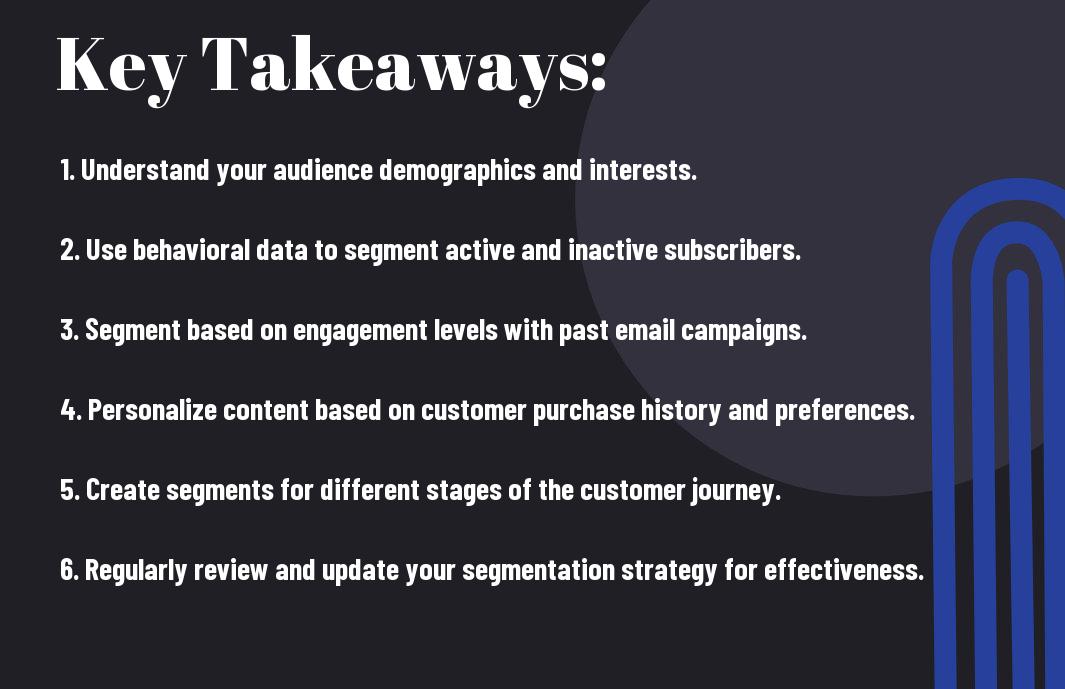
Key Takeaways:
- Understand Your Audience: Segment your email list based on demographics, behavior, and interests to better understand your audience.
- Personalization is Key: Tailoring your content to specific segments of your email list can lead to higher conversions.
- Utilize Engagement Data: Use engagement data such as open rates and click-through rates to segment your list and target engaged subscribers.
- Keep it Relevant: Ensure that your email content is relevant to the segment you are targeting, providing value to the recipient.
- Test and Optimize: Continuously test and optimize your email segmentation strategy to improve conversions over time.
- Automation is Important: Use automation tools to effectively segment and target your email list based on various criteria.
- Don’t Overcomplicate: While segmentation is crucial, avoid overcomplicating your email list segments to maintain efficiency and effectiveness.
Understanding Your Audience
Even before you can begin segmenting your email list for targeted conversions, you need to have a solid understanding of your audience. This means diving deep into the demographics and behaviors of your subscribers to ensure that your segmentation strategy is based on accurate and relevant data.
Analyzing Subscriber Demographics
On the demographic front, it’s crucial to gather information on factors such as age, gender, location, and profession. This data can help you create more personalized email campaigns that resonate with specific segments of your audience. By analyzing subscriber demographics, you can also uncover potential opportunities for reaching new markets or tailoring your products to better meet the needs of different customer personas.
Identifying Subscriber Behaviors
Audience behavior is another key aspect to consider when segmenting your email list. Understanding how subscribers interact with your emails, website, or products can provide valuable insights into their preferences, interests, and purchasing intent. By segmenting your list based on subscriber behaviors, you can create targeted campaigns that are more likely to lead to positive conversions.
Your segmentation strategy should take into account both the demographic and behavioral data of your subscribers to create the most effective segments for your email campaigns. By leveraging this information, you can confidently tailor your emails to meet the specific needs and interests of your diverse audience, ultimately improving your conversions and driving more revenue.
Segmentation Strategies
While creating a segmented email list is crucial for targeted conversions, the strategy used to segment the list can make all the difference. By utilizing various segmentation strategies, you can tailor your email content to the specific needs and interests of your diverse audience.
Geographic Segmentation
Segmentation based on geography involves dividing your email list by location, such as country, region, state, or city. This strategy allows you to target campaigns to recipients based on their physical location, providing an opportunity to tailor promotions and content specific to their area.
Demographic Segmentation
Geographic segmentation serves as the foundation for demographic segmentation, which involves dividing your email list based on demographics like age, gender, income, education, occupation, and marital status. This type of segmentation is crucial for tailoring your messaging to appeal to the unique characteristics of each group within your email list.
Plus, by understanding the demographic makeup of your audience, you can create more personalized and relevant email campaigns that drive higher engagement and conversions.
Psychographic Segmentation
Any effective segmentation strategy should include psychographic segmentation, which involves understanding the attitudes, interests, lifestyles, and values of your email list subscribers. This allows you to create targeted campaigns that resonate with the specific motivations and preferences of each group within your audience.
For instance, by segmenting based on psychographics, you can tailor your content to match the personalities, habits, and purchasing behavior of your diverse audience.
Behavioral Segmentation
Geographic, demographic, and psychographic segmentation lay the groundwork for behavioral segmentation, which involves categorizing your email list based on actual consumer behavior, such as past purchases, website interactions, content engagement, and email response patterns. This enables you to send highly targeted and relevant content to different segments of your audience based on their specific actions and interests.
Psychographic segmentation allows you to target your email campaigns based on the specific interests and behaviors of different segments within your audience, increasing the likelihood of conversions and customer loyalty.
Advanced Segmentation Techniques
Now, let’s delve into some advanced segmentation techniques that can take your email marketing to the next level. By understanding your audience on a deeper level, you can tailor your messaging to increase engagement and drive conversions.
-
Predictive Analytics
-
Lifecycle Stage Segmentation
-
Engagement-level Segmentation
Predictive Analytics
The use of predictive analytics in email segmentation has revolutionized the way marketers target their audience. By leveraging data and AI technology, marketers can now accurately predict which products and personas are most likely to convert and tailor their email campaigns accordingly. This level of advanced segmentation allows for highly targeted and personalized messaging, leading to improved conversion rates and customer satisfaction.
Lifecycle Stage Segmentation
On the other hand, lifecycle stage segmentation involves categorizing your audience based on where they are in the customer journey. By understanding the specific needs and pain points of each lifecycle stage, marketers can deliver relevant content and offers that resonate with the recipient, ultimately leading to higher engagement and loyalty.
Any effective email marketing strategy should include lifecycle stage segmentation to ensure that the right message reaches the right person at the right time, increasing the likelihood of conversion and customer retention.
Engagement-level Segmentation
On the other hand, engagement-level segmentation involves categorizing your audience based on their level of interaction with your emails and brand. By identifying different stages of engagement, marketers can tailor their messaging to re-engage inactive subscribers or nurture highly engaged contacts. This level of segmentation allows for a more personalized and effective email marketing strategy that ultimately leads to improved ROI.
Stage-based segmentation can help marketers identify potential churn risks, nurture leads, and ultimately drive positive actions from their audience, leading to a more responsive email list.
Implementing Segmentation in Email Campaigns
Unlike sending out a generic email to your entire email list, implementing segmentation allows you to tailor your content to specific segments of your audience. This means you can send targeted messages to different groups of your subscribers based on their interests, behaviors, and demographics.
Tailoring Content to Segments
For effective segmentation, it’s crucial to tailor your content to the different segments of your email list. By understanding the diverse interests and needs of your email list segments, you can create personalized content that resonates with each group. This could involve customizing product recommendations, creating specialized offers, or highlighting specific pain points that are relevant to each segment.
Personalization Tactics
Content personalization tactics play a key role in crafting email campaigns that drive targeted conversions. By incorporating the use of dynamic content, personalized subject lines, and individualized product recommendations, you can create a more engaging experience for your email list segments. This level of personalization can lead to a significant increase in open rates, click-through rates, and ultimately, conversions.
Implementing personalization tactics requires a strategic approach, involving the use of customer data, segmentation tools, and personalized messaging. By leveraging behavioral data, such as purchase history and website interactions, you can create highly relevant and personalized content for each segment of your email list, ultimately leading to improved engagement and conversion rates.
In summary, implementing segmentation and personalization tactics in your email campaigns can lead to higher engagement and conversion rates, as well as improved customer satisfaction and loyalty. However, it’s important to be mindful of privacy regulations and data protection when utilizing customer data for personalization.
Tools and Software for Email Segmentation
For successful email segmentation, it’s important to utilize the right tools and software. Whether you need to integrate with your CRM, utilize email marketing platforms, or automate your segmentation process, there are several options available to help you achieve targeted conversions.
CRM Integration
Segmentation within your CRM is crucial for targeting the right audiences with personalized content. By integrating your CRM with email marketing software, you can easily create segments based on customer behavior, purchase history, and other data points to deliver highly targeted emails.
Email Marketing Platforms
One of the most effective ways to segment your email list is through email marketing platforms. These tools offer robust segmentation capabilities, allowing you to create segmentation rules based on subscriber interests, engagement levels, and other criteria to ensure your emails are tailored to the specific needs of each segment.
Email marketing platforms also provide advanced reporting and analytics to help you track the performance of your segmented campaigns and make data-driven decisions for future segmentation strategies.
Automation Tools
Email automation tools can streamline the segmentation process by automatically categorizing subscribers based on their actions and behaviors. These tools can trigger targeted emails based on specific subscriber actions such as website visits, email opens, and link clicks to ensure timely and relevant communication.
With advanced automation capabilities, you can create complex segmentation rules and workflows to deliver personalized content at scale, saving time and increasing efficiency in your email marketing efforts.
Measuring the Success of Segmented Campaigns
Keep track of the performance of your segmented email campaigns is essential to understanding the effectiveness of your targeting strategy. By measuring key performance indicators and analyzing conversion rates, you can gain valuable insights into the success of your segmented campaigns.
Key Performance Indicators (KPIs)
For marketing teams, it’s crucial to define and track KPIs to measure the success of segmented email campaigns. KPIs such as open rates, click-through rates, and conversion rates can provide valuable insights into the effectiveness of your targeting strategy and the overall performance of your segmented campaigns.
Analyzing Conversion Rates
To gauge the success of segmented email campaigns, it’s important to analyze conversion rates for different segments of your email list. By comparing the conversion rates of various segments, you can identify which segments are performing well and which may need further optimization to improve their performance.
Performance indicators such as conversion rates are important metrics to monitor as they directly impact the overall success of your segmented email campaigns. By analyzing conversion rates, you can make data-driven decisions to improve targeting and ultimately drive more targeted conversions.
A/B Testing Segmented Campaigns
Indicators of success for segmented email campaigns can be further refined through A/B testing. By testing different variables within your segmented campaigns, such as subject lines, calls to action, or content, you can gather valuable data on what resonates most with your segmented email list.
Plus, A/B testing segmented campaigns allows you to continually optimize and improve your targeting strategy, leading to more positive results and increased conversions from your segmented email list.
Challenges and Best Practices
Not all email marketers face the same challenges when it comes to segmenting their email lists for targeted conversions. However, there are some common obstacles that many marketers encounter, as well as best practices for overcoming them and maintaining data privacy and compliance.
Overcoming Common Obstacles
Practices such as understanding your products, personas, and subjects in plural, ensuring data accuracy, and having a clear segmentation strategy in place can help you overcome common obstacles in segmenting your email list. Additionally, regularly monitoring and adjusting your segmentation criteria based on performance can lead to better targeted conversions.
Maintaining Data Privacy and Compliance
Data privacy and compliance are critical considerations when segmenting your email list. The use of proper consent and opt-in mechanisms, encryption, and data protection measures is essential for maintaining the trust of your subscribers and adhering to regulations such as GDPR and CAN-SPAM.
The proper handling of personal data and adherence to regulations not only protects your subscribers’ privacy but also safeguards your brand reputation and minimizes the risk of legal repercussions.
Continuous Improvement and Adaptation
Overcoming challenges and maintaining compliance are ongoing processes. Continuous improvement and adaptation are necessary to ensure that your email segmentation strategies remain effective and in line with evolving best practices and regulations. Regularly reviewing and refining your segmentation criteria based on feedback and performance metrics is crucial for achieving targeted conversions.
Plus, staying informed about advancements in technology and industry trends can provide opportunities for enhancing your segmentation strategies and staying ahead of the competition.

Conclusion
With these considerations in mind, segmenting your email list for targeted conversions is crucial for maximizing the effectiveness of your email marketing efforts. By using data-driven insights and paying attention to customer behavior and preferences, you can create highly personalized and relevant content that speaks directly to the needs and interests of your audience. This not only increases the likelihood of conversions but also helps to build stronger, more meaningful connections with your customers.
Ultimately, the best way to segment your email list for targeted conversions will depend on your specific business goals, audience demographics, and the nature of your products or services. It’s important to continually monitor and analyze the performance of your email campaigns, making adjustments to your segmentation strategy as needed to ensure that you are consistently delivering the most impactful and engaging content to your subscribers.
FAQ
Q: Why is it important to segment your email list for targeted conversions?
A: Segmenting your email list allows you to tailor your messaging and offers to specific groups of subscribers, increasing the likelihood of conversion and engagement.
Q: What are the most effective ways to segment an email list?
A: Some effective ways to segment your email list include demographics, purchase history, engagement with previous emails, and subscriber preferences.
Q: How can demographics be used to segment an email list?
A: Demographic segmentation involves categorizing subscribers based on age, gender, location, income level, and other relevant factors to target specific groups with customized content.
Q: What is the role of purchase history in segmenting an email list?
A: Purchase history segmentation allows you to send targeted offers and product recommendations based on previous purchases, increasing the likelihood of conversions and repeat sales.
Q: How can engagement with previous emails be used for segmentation?
A: By segmenting based on engagement, you can target subscribers who regularly open and click on your emails, as well as re-engage inactive subscribers with tailored content to drive conversions.
Q: What role do subscriber preferences play in segmenting an email list?
A: Subscriber preferences segmentation allows you to personalize content based on their interests, ensuring that they receive relevant and engaging emails that are more likely to lead to conversions.
Q: What are the benefits of segmenting an email list for targeted conversions?
A: The benefits of segmenting an email list include higher open and click-through rates, improved engagement, increased conversions, and overall better ROI on email marketing efforts.
Related posts: