Ephemeral it may seem, but maintaining a healthy and engaged email list is crucial for the success of any marketing campaign. While building a sizable list of contacts is important, it is equally important to focus on strategies that will help reduce email list churn and boost conversions. It’s essential to consistently engage with your email list in a way that keeps them interested and minimizes the likelihood of them unsubscribing. In this blog post, we will be discussing a range of strategies and tactics that can be employed to achieve this goal.
To address the issue of email list churn and increase conversions, it’s important to first understand the root causes of these problems. By analyzing your email marketing metrics and identifying the most important areas where you are losing subscribers or failing to convert leads, you can begin to pinpoint the dangerous elements of your current strategy. From there, you can then implement a variety of positive tactics to address these issues and ultimately boost the effectiveness of your email marketing efforts.
Key Takeaways:
- Regularly Clean Your Email List: Removing inactive or disengaged subscribers can help improve your list’s overall engagement and deliverability.
- Use Double Opt-In: Implementing a double opt-in process can ensure that subscribers are genuinely interested in receiving your emails, reducing the risk of unengaged contacts.
- Segment Your Email List: By segmenting your email list based on demographics, interests, or behaviors, you can send more targeted and relevant content, leading to higher engagement and conversions.
- Personalize Your Emails: Addressing subscribers by their name and tailoring content to their preferences can help create a more personalized experience and increase the likelihood of conversions.
- Provide Valuable Content: Offering valuable and educational content can keep subscribers engaged and encourage them to stay on your list, ultimately boosting conversions.
- Optimize Email Frequency: Finding the right balance in email frequency can prevent email fatigue and reduce the likelihood of subscribers unsubscribing from your list.
- Monitor and Analyze Metrics: Regularly monitor key metrics such as open rates, click-through rates, and conversion rates to identify trends and areas for improvement in your email marketing strategy.
Analyzing the Root Causes of Churn
Even the most well-curated email list can experience churn, but identifying the root causes of this phenomenon is crucial in devising effective strategies to reduce it. By delving into the factors that contribute to email list churn, you can target specific areas for improvement and implement tailored solutions.
Identifying Common Churn Triggers
Causes of email list churn can vary, but some common triggers include irrelevant content, overwhelming frequency of emails, technical issues with email delivery, and changing subscriber preferences. By analyzing the patterns associated with unsubscribes and non-engagement, you can pinpoint the specific factors driving churn among your audience.
Monitoring Subscriber Engagement Levels
Any successful email marketing strategy hinges on subscriber engagement. Monitoring open rates, click-through rates, and response rates can provide valuable insights into the level of engagement your subscribers have with your emails. By regularly assessing these metrics, you can identify trends and patterns that may indicate a decline in subscriber engagement.
Plus, keeping a close eye on subscriber feedback and interaction with your content can provide additional insights into the factors influencing churn, allowing you to make data-driven decisions to boost conversions and minimize list churn.
Enhancing Email Content Quality
While there are various strategies to reduce email list churn and boost conversions, one of the most crucial is to enhance the quality of your email content. By delivering valuable and engaging content, you can keep your audience interested and ultimately improve your email marketing success. For more tips on how to boost your email marketing click-through rate, check out 13 Ways to Boost Your Marketing Email Click-Through Rate.
Crafting Compelling Subject Lines
Lines are the first thing your subscribers see, and they can make or break the success of your email campaigns. A catchy subject line can entice your audience to open the email, while a vague or uninteresting one may lead to high unsubscribe rates. Experiment with different language, personalization, and offers to see which subject lines generate the most engagement from your email list.
Providing Value in Every Email
Enhancing the value of the content in your emails is crucial for keeping your subscribers interested in your communication. People are more likely to stay engaged with your emails if they consistently find value in the content you provide. By offering helpful resources, exclusive promotions, and insightful information, you can establish a strong rapport with your audience and keep them coming back for more.
A well-structured email full of valuable content not only increases engagement and boosts conversions but also helps in reducing email list churn. By consistently offering high-quality content, you’ll build trust with your audience, making them less likely to unsubscribe or mark your emails as spam.
Segmenting Your Audience for Personalization
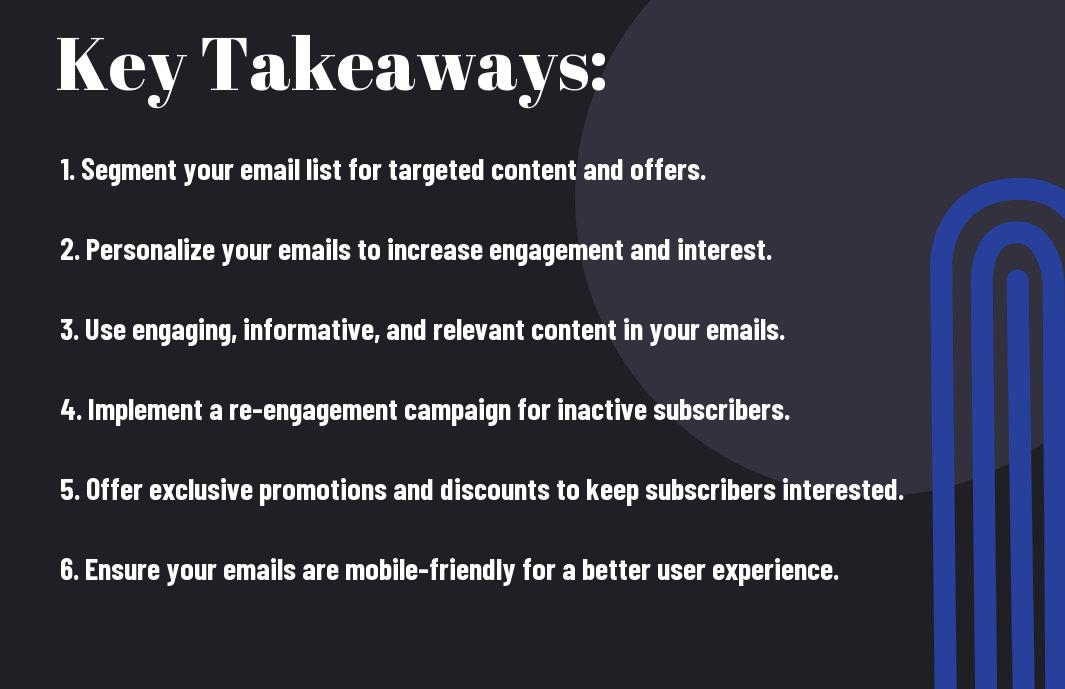
Email segmentation allows you to divide your subscriber base into smaller groups based on specific criteria, such as demographics, behavior, or preferences. By segmenting your email list, you can tailor your content and offers to better suit the interests and needs of each group. This level of personalization can significantly improve engagement and conversion rates, as it shows your subscribers that you understand and care about their individual preferences.
Email segmentation is a powerful tool for boosting the relevance and effectiveness of your email marketing campaigns. By sending targeted content to specific segments of your audience, you can increase open rates, click-through rates, and overall conversions.

Optimizing Email Frequency and Timing
Now, let’s delve into the critical aspects of optimizing email frequency and timing to minimize list churn and increase conversions. By strategically targeting your audience with the right frequency and timing, you can significantly improve your email marketing performance.
Determining Optimal Email Cadence
For products and services with a longer sales cycle, a less frequent email cadence may be more appropriate to avoid overwhelming subscribers. On the other hand, for fast-moving subjects and personas, a higher frequency may be necessary to keep your brand top of mind. Analyze the engagement metrics of your email campaigns to determine the optimal cadence for your audience.
Selecting the Best Times to Send Emails
To maximize the impact of your email campaigns, it is crucial to send emails at the right times. For B2B audiences, sending emails during weekdays and work hours can yield better results, while B2C audiences may be more responsive to emails sent during evenings and weekends. Conduct A/B testing to identify the best times for sending emails to your specific audience.
Emails sent at the optimal frequency and timing can significantly improve open rates, click-through rates, and ultimately, conversions. By strategically determining the best cadence and timing for your audience, you can ensure that your emails are more relevant and engaging, ultimately reducing list churn and boosting conversions.
Implementing Effective Onboarding Strategies
To reduce email list churn and boost conversions, it is crucial to implement effective onboarding strategies. This involves creating a seamless and valuable experience for new subscribers, which can significantly impact their engagement and conversion rates.
Creating a Welcome Email Series
Strategies for creating a welcome email series include sending a series of targeted emails to new subscribers, introducing them to your brand, and providing valuable content. The first email should be a warm welcome, followed by subsequent emails that deliver helpful resources, product information, and special offers. This helps to establish a connection with new subscribers and keeps them engaged from the start.
Effective onboarding through a welcome email series sets the tone for your relationship with your new subscribers. It helps them understand the value of being part of your email list and encourages them to stay engaged with your content and offerings.
The Welcome Email Series is a critical component of successful onboarding. It sets the stage for the subscriber’s journey with your brand, and the content and timing of these emails can greatly influence their decision to engage further or unsubscribe.
Setting Expectations Early
Onboarding new subscribers includes setting clear expectations early on. Be transparent about the type and frequency of emails they will receive, and what kind of content and offers they can expect. This helps manage their expectations and builds trust, which is essential for retaining subscribers and converting them into customers.
A clear and honest communication about what new subscribers can expect from your emails is a crucial step to reduce churn and boost conversions. It eliminates any confusion or disappointment, and ensures that subscribers who remain engaged are genuinely interested in your content and offerings.
Leveraging Feedback and Surveys
For any email marketing campaign, collecting feedback from your subscribers is crucial in understanding their needs and preferences. One way to do this is by leveraging feedback and surveys to gain valuable insights that can help reduce email list churn and boost conversions.
Collecting Subscribers’ Opinions
Collecting subscribers’ opinions through surveys and feedback forms is an effective way to understand their preferences and pain points. By regularly seeking their input, you can gain valuable insights into what products, services, or content they are interested in, and what issues they may be experiencing. This information can help you tailor your email marketing strategies to better meet their needs, ultimately boosting engagement and conversions.
Adapting Strategies Based on Feedback
The feedback and insights gathered from surveys and feedback forms can help you adapt your email marketing strategies to better resonate with your subscribers. By paying attention to the feedback, you can make necessary changes to your email content, frequency, and timing, as well as personalize your offers and promotions to better meet subscribers’ needs and increase conversions. This proactive approach to adapting your strategies based on feedback can lead to improved engagement and retention rates, ultimately reducing email list churn and boosting conversions in the long run.
Utilizing Re-engagement Campaigns
Keep your email list healthy by implementing re-engagement campaigns to win back inactive subscribers. It’s important to understand the impact of email churn and the benefits of reducing it. Check out our blog post on Why is Email Churn A Big Deal? 5 Ways to Reduce Email Churn Rate for more insights on this topic.
Identifying Inactive Subscribers
Campaigns targeting inactive subscribers can help you identify who isn’t engaging with your emails. Segment your email list and send tailored messages to these subscribers, offering them incentives to re-engage with your content.
Developing a Win-Back Email Strategy
To win back inactive subscribers, develop a win-back email strategy that includes personalized content, compelling subject lines, and a clear call-to-action. By using data and analytics, you can identify the most effective approach to re-engage inactive subscribers.
Developing a win-back email strategy can help you regain the interest of your audience and ultimately boost conversions. By understanding the behavior of your inactive subscribers, you can tailor your approach and provide them with relevant incentives to re-engage.
Offering Incentives to Re-engage
On your win-back email campaigns, offer incentives such as discounts, free trials, or exclusive content to entice inactive subscribers to re-engage. Highlight the value they will receive by coming back to your email list and make it easy for them to take action.
A well-designed incentive can be a powerful tool for re-engaging inactive subscribers and reinvigorating interest in your products or services. Use this opportunity to showcase your persona and demonstrate the positive impact your products can have on their lives.
Advancing with Automation and A/B Testing
After implementing best practices for capturing and retaining email subscribers, the next step is to advance your email marketing strategy with automation and A/B testing. These powerful techniques can help you streamline your email marketing efforts, improve personalization, and drive better results.
Streamlining with Email Marketing Automation
Automation is a game-changer when it comes to managing your email list. With the right tools in place, you can automate welcome sequences, nurturing campaigns, and even re-engagement efforts for inactive subscribers. This not only saves you time and effort, but also ensures that your subscribers receive relevant, timely content, leading to higher engagement and conversions.
Utilizing A/B Testing for Continuous Improvement
Continuous improvement is essential for email marketing success, and A/B testing is a key strategy for achieving this. By continuously testing different subject lines, call-to-action (CTA) buttons, and content variations, you can gain valuable insights into what resonates with your subscribers. This allows you to refine your email strategy over time, leading to higher open rates, click-through rates, and ultimately, conversions.
With A/B testing, you can continuously experiment with different elements of your emails to optimize performance and achieve better results. By testing different variables, such as subject lines, images, and CTAs, you can gain valuable insights into what resonates with your subscribers, allowing you to refine your email strategy over time. This leads to higher open rates, click-through rates, and ultimately, conversions.
Conclusion
Drawing together the various strategies discussed, it is clear that there are several effective methods for reducing email list churn and boosting conversions. By focusing on creating valuable, personalized content, engaging with subscribers through targeted email campaigns, and implementing segmentation and personalization tactics, businesses can significantly reduce email list churn and increase conversion rates. Additionally, utilizing A/B testing, optimizing for mobile devices, and regularly cleaning and updating email lists are essential for maintaining a healthy subscriber base and maximizing conversions. With a comprehensive understanding of these strategies and a dedication to consistently improving email marketing efforts, businesses can cultivate a loyal and engaged subscriber base while also driving higher conversion rates.
FAQ
Q: What is email list churn?
A: Email list churn refers to the rate at which subscribers on your email list stop engaging with your emails. It is a measure of attrition and can impact the effectiveness of your email marketing efforts.
Q: Why is reducing email list churn important for businesses?
A: Reducing email list churn is crucial for businesses because retaining existing subscribers is often more cost-effective than acquiring new ones. Additionally, a high churn rate can negatively impact email deliverability and overall engagement metrics.
Q: What strategies can be employed to reduce email list churn?
A: Several strategies can be employed to reduce email list churn, including improving the quality and relevance of email content, segmenting the email list to target specific groups of subscribers, and implementing personalized communication based on subscriber behavior and preferences.
Q: How can personalized communication help reduce email list churn?
A: Personalized communication involves tailoring email content and offers to the specific needs and interests of individual subscribers. By delivering relevant content and offers, businesses can increase engagement and reduce the likelihood of subscribers becoming disengaged or unsubscribing.
Q: What role does email list segmentation play in reducing churn?
A: Email list segmentation involves dividing subscribers into smaller, targeted groups based on demographics, behavior, or other factors. This allows businesses to send more relevant and personalized content to each segment, increasing the likelihood of engagement and reducing churn.
Q: How can A/B testing help reduce email list churn?
A: A/B testing involves sending variations of an email to different segments of the email list to determine which performs better in terms of open rates, click-through rates, and conversions. By identifying the most effective content and design, businesses can optimize their emails to reduce churn and boost conversions.
Q: What are some best practices for retaining subscribers and boosting conversions?
A: Best practices for retaining subscribers and boosting conversions include regularly cleaning and maintaining the email list to remove inactive or disinterested subscribers, providing valuable and relevant content, and incentivizing engagement through exclusive offers and promotions.
Related posts: