Enabling ChatGPT and CRM integration in your startup’s sales processes can be a game-changer, allowing you to streamline your sales processes and improve your conversion rates. In this tutorial, we will discuss the benefits of integrating ChatGPT and CRM, provide step-by-step instructions for implementing the integration, and show you how this powerful combination can help you win more customers and drive revenue growth. By the end of this post, you’ll have a clear understanding of how this integration can positively impact your startup’s sales efforts.
Key Takeaways:
- Streamlined Sales Processes: Integrating ChatGPT with CRM can help startups automate lead qualification, sales follow-ups, and customer communication, allowing sales teams to focus on high-priority leads and close deals more efficiently.
- Improved Conversion Rates: The integration of ChatGPT and CRM can enhance personalization in customer interactions, providing tailored responses and product recommendations, ultimately leading to higher conversion rates and customer satisfaction.
- Enhanced Customer Experience: By utilizing ChatGPT for personalized conversations and integrating its insights with CRM data, startups can create a seamless and engaging customer experience, fostering long-term relationships and loyalty.
Understanding ChatGPT and CRM Integration
Some of the most innovative startups are leveraging the power of artificial intelligence and customer relationship management (CRM) systems to develop more efficient sales processes. By integrating OpenAI’s ChatGPT with CRM platforms, businesses can automate lead nurturing, improve customer interactions, and ultimately increase conversion rates. In this chapter, we’ll dive into the basics of ChatGPT and CRM integration and explore the benefits it can bring to your startup’s sales operations.
Definitions and Basics
When we talk about ChatGPT, we’re referring to a cutting-edge language model developed by OpenAI, capable of generating human-like text based on the input provided to it. This means that when integrated with a CRM system, ChatGPT can handle customer interactions, answer common queries, and even engage in personalized conversations with leads and prospects. On the other hand, a CRM system is a powerful tool that helps businesses manage and analyze customer interactions, streamline processes, and improve profitability. When these two technologies are combined, the result is a seamless and efficient customer engagement and sales process.
Benefits of Combining ChatGPT with CRM
Integrating ChatGPT with your CRM system can bring a myriad of benefits to your startup’s sales processes. One of the key advantages is the ability to handle routine customer inquiries and support tickets without human intervention. This frees up your sales team’s time to focus on closing deals and developing more meaningful relationships with high-potential leads. Additionally, ChatGPT can be trained to identify and qualify leads based on their interactions, providing your team with valuable insights into customer preferences and behaviors. By automating these tasks, you can significantly speed up your sales pipeline and improve overall conversion rates.
By integrating ChatGPT with your CRM, you are able to automate routine customer interactions and support, freeing up your team to focus on more meaningful tasks. Additionally, the integration allows for data-driven insights into customer behaviors and preferences, which can be essential for improving your sales process.
Streamlining Sales Processes with ChatGPT and CRM
One of the key challenges that startups face is streamlining their sales processes to effectively manage leads and convert them into customers. Integrating ChatGPT with your CRM system can provide a powerful solution to this problem. By combining the capabilities of chatbots and customer relationship management software, you can automate various aspects of the sales process, improve efficiency, and increase conversion rates.
Lead Generation and Qualification
Integrating ChatGPT with your CRM system can significantly help in lead generation and qualification. Chatbots powered by ChatGPT can engage potential leads in real-time conversations, answer their queries, and gather relevant information. This data can then be automatically fed into the CRM system, allowing you to easily qualify leads based on their interactions and engagement level. This saves your sales team valuable time and ensures that they focus on high-quality leads, thereby improving the overall conversion rate.
Automated Customer Engagement
With the integration of ChatGPT and CRM, you can set up automated customer engagement workflows that deliver personalized messages and content to leads and existing customers based on their behavior and stage in the sales cycle. Chatbots can be used to nurture leads by providing relevant information and guiding them through the sales funnel. This not only keeps your brand top-of-mind but also ensures that you are providing value at every touchpoint. The result is a more engaged customer base and a higher chance of conversion.
Personalized Sales Strategies
Integrating ChatGPT with your CRM system allows you to create and execute personalized sales strategies at scale. By leveraging the AI capabilities of ChatGPT, you can analyze customer data, understand their preferences, and predict their behavior. This enables you to tailor your sales pitches and offerings to individual customers, making your approach more relevant and effective. When you can speak directly to a customer’s needs and desires, you significantly increase the likelihood of closing a deal.
Enhancing Conversion Rates through Intelligent Interactions
Despite the increasing competition in the startup landscape, there are effective ways to streamline your sales processes and improve conversion rates. Integrating ChatGPT with your CRM system can be a game-changer in this regard. By leveraging AI-powered chatbots and CRM data, you can engage your leads intelligently and guide them through the sales funnel with personalized interactions.
ChatGPT’s Role in Conversion Optimization
When it comes to conversion optimization, intelligent interactions play a crucial role. ChatGPT, with its advanced language processing capabilities, can engage with your leads in a natural and personalized manner. By understanding their needs and preferences, ChatGPT can provide relevant information, address queries, and even suggest tailored solutions. This level of personalized engagement can significantly increase the likelihood of conversion, as it establishes a connection and builds trust with your potential customers.
Data-Driven Decision-Making with CRM Analytics
In addition to intelligent interactions, leveraging CRM analytics is essential for making data-driven decisions that can optimize your conversion rates. Your CRM system holds valuable insights into customer behavior, preferences, and past interactions. By analyzing this data, you can identify patterns, forecast trends, and even predict potential roadblocks in the sales process. This allows you to tailor your approach, address specific pain points, and strategically guide leads towards conversion. With CRM analytics, you can also track the effectiveness of various touchpoints and optimize your sales processes based on real-time feedback.
By integrating ChatGPT with your CRM system, you can create a powerful synergy that enables you to engage leads intelligently and make data-driven decisions to optimize conversion rates. This combination not only streamlines your sales processes but also empowers you to deliver personalized and effective interactions at scale. With ChatGPT and CRM integration, you can gain a competitive edge in the startup landscape and drive impactful results for your business.
Implementation Steps for ChatGPT and CRM Integration
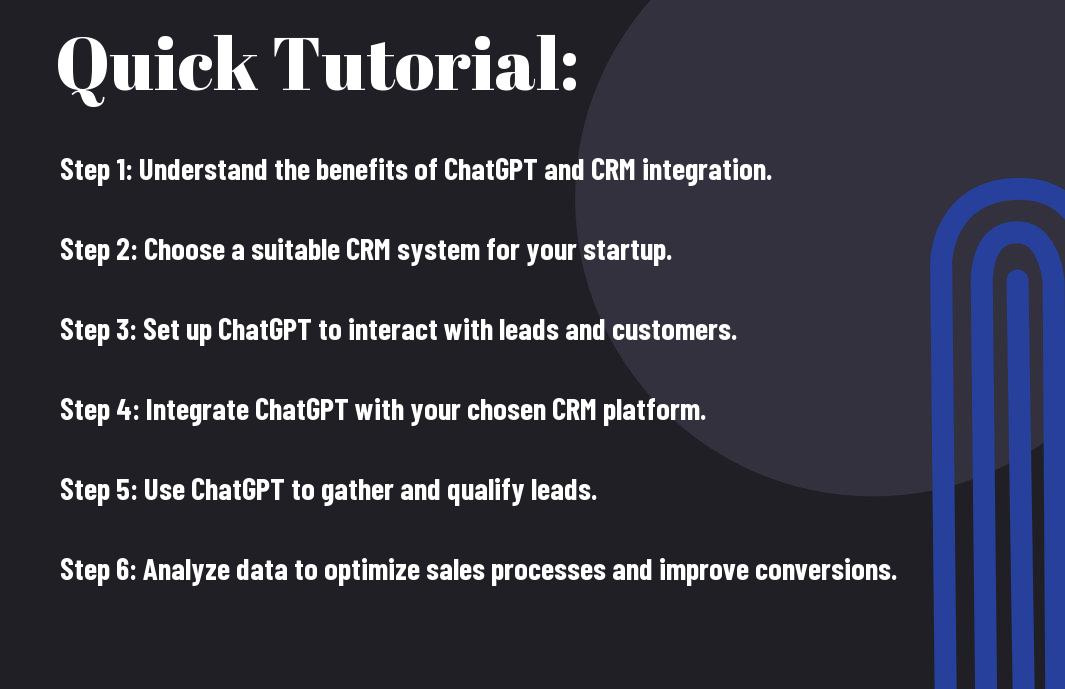
Now that you’ve recognized the potential benefits of integrating ChatGPT with your CRM system, it’s time to look at the practical steps for implementation. This process involves several key stages, including assessing CRM compatibility, integrating ChatGPT with your CRM system, and training the AI for your sales processes. By following these steps, you can streamline your sales operations, improve customer engagement, and ultimately boost conversion rates.
Assessing CRM Compatibility
Before diving into the integration process, it’s crucial to assess the compatibility of your CRM system with ChatGPT. You need to verify whether your CRM platform supports the necessary APIs and data structures required for seamless integration with ChatGPT. Additionally, consider the potential impact on your existing workflows and processes. It’s important to identify any potential conflicts or limitations that may arise during the integration process. This initial assessment will help you understand the scope of the integration and the adjustments needed to ensure a smooth transition.
Integrating ChatGPT with Your CRM System
Once you’ve determined the compatibility of your CRM system, the next step is to integrate ChatGPT with your CRM platform. This process involves configuring the necessary settings within your CRM system to enable seamless communication with ChatGPT. You may need to work with your CRM provider or IT team to ensure that the integration is implemented correctly. This step is crucial for ensuring that ChatGPT can access and analyze relevant customer data, interact with sales representatives, and provide personalized recommendations to support your sales processes.
Training the AI for Your Sales Processes
After integrating ChatGPT with your CRM system, you’ll need to focus on training the AI to align with your specific sales processes. This involves fine-tuning ChatGPT’s understanding of your products or services, customer preferences, and sales strategies. You can achieve this by providing relevant training data and feedback to help ChatGPT learn and adapt to your business context. By investing time in training the AI, you can ensure that ChatGPT becomes an effective tool for enhancing your sales team’s productivity and customer interactions.
By following these implementation steps, you can pave the way for a seamless integration of ChatGPT with your CRM system. This integration has the potential to revolutionize your sales processes, empower your team with valuable insights, and ultimately drive stronger conversion rates. Remember that thorough planning and a clear understanding of the integration process are essential for a successful implementation.
Best Practices for Maximizing Benefits
After integrating ChatGPT with your CRM system, it’s important to implement best practices to maximize the benefits of this integration. By following these best practices, you can ensure that your sales processes are streamlined and your conversion rates are improved.
Continuous AI Training and Improvement
One of the best practices for maximizing the benefits of ChatGPT and CRM integration is to continuously train and improve the AI model. This means providing ChatGPT with new data, customer interactions, and feedback to enhance its understanding of your customers and their needs. By keeping the AI model updated and well-trained, you ensure that it continues to provide accurate and relevant responses to customer inquiries, leading to better engagement and increased conversion rates.
Regularly Updating Sales Scripts and Responses
Another important practice is to regularly update your sales scripts and responses based on the insights and feedback obtained from customer interactions. By analyzing the conversations and identifying common questions or points of confusion, you can refine and update the responses provided by ChatGPT. This ensures that the AI model aligns with your current sales strategy and is equipped to address the specific needs and concerns of your potential customers, ultimately improving the effectiveness of your sales process.
Monitoring and Analyzing Customer Interactions
Monitoring and analyzing customer interactions is crucial for maximizing the benefits of ChatGPT and CRM integration. By tracking customer conversations and analyzing the data provided by your CRM system, you can gain valuable insights into customer behavior, preferences, and pain points. This information can help you identify trends, improve your understanding of customer needs, and tailor your sales approach accordingly. Additionally, it allows you to identify any gaps or areas for improvement in your AI model, ensuring that it continues to deliver accurate and impactful responses to customer inquiries.
By following these best practices, you can ensure that the integration of ChatGPT with your CRM system is leveraged to its fullest potential. Continuous AI training and improvement, regular updates to sales scripts and responses, and monitoring and analyzing customer interactions are essential for maximizing the benefits and achieving a streamlined sales process with improved conversion rates.Implementing these best practices will position you as a leader in harnessing the power of AI to drive sales success for your startup.
Real-World Success Stories
Lastly, let’s take a look at some real-world success stories of startups that have integrated ChatGPT with their CRM systems, and how it has helped them streamline their sales processes and improve conversion rates.
Case Study: Startup X’s Transformation
Startup X, a small SaaS company, was struggling to keep up with their sales leads and effectively communicate with potential customers. After integrating ChatGPT with their CRM system, they saw a dramatic improvement in their ability to engage with leads. With the help of AI-powered chatbots, they were able to automate responses to common queries and provide personalized recommendations to potential customers. This not only saved time for the sales team but also improved the overall customer experience, leading to a significant increase in conversion rates.
Case Study: Startup Y’s Increase in Sales
Startup Y, a B2B technology startup, wanted to find a way to better qualify their leads and nurture them through the sales pipeline. By integrating ChatGPT with their CRM, they were able to automate lead scoring and engage with leads on a personalized level. This resulted in a 25% increase in their sales pipeline and a 37% increase in their conversion rates. The AI-powered chatbots also allowed their sales team to focus on high-value activities, ultimately leading to more efficient and effective sales processes.

Potential Challenges and Solutions
However, as you consider integrating ChatGPT and CRM, there are potential challenges that you may encounter along the way. These challenges can range from technical hurdles to privacy and compliance concerns. It’s important to be aware of these challenges and have strategies in place to address them to ensure a smooth integration process.
Navigating Technical Hurdles
One potential challenge you may face when integrating ChatGPT and CRM is navigating technical hurdles. This could include compatibility issues between the two platforms, ensuring seamless data transfer, and addressing any potential disruptions to your existing sales processes. To overcome these technical challenges, it’s important to work closely with your IT team or an experienced integration partner. They can help you assess the technical requirements, identify potential roadblocks, and implement necessary solutions to ensure a seamless integration.
Addressing Privacy and Compliance Concerns
Another important consideration when integrating ChatGPT and CRM is addressing privacy and compliance concerns. As you begin to leverage AI-driven chat capabilities within your CRM, you must ensure that customer data is handled in a compliant and secure manner. This includes adhering to data protection regulations such as GDPR, CCPA, and other industry-specific standards. You should work closely with your legal and compliance teams to implement necessary safeguards, such as data encryption, access controls, and obtaining consent for data usage. It’s crucial to prioritize data privacy and compliance to build trust with your customers and maintain the integrity of your sales processes.
Future Outlook of AI in Sales and CRM
Your startup’s sales processes and customer relationship management are about to undergo a significant transformation with the integration of AI. As we look ahead, the future of AI in sales and CRM holds the promise of more efficient processes, improved customer experiences, and higher conversion rates.
Predicting Trends and Innovations
In the near future, AI in sales and CRM is expected to revolutionize the way businesses interact with customers and manage their sales pipelines. One major trend to watch out for is the increasing use of AI-powered predictive analytics to anticipate customer behavior and preferences. This will enable your startup to tailor its sales strategies more effectively, ultimately leading to higher conversion rates and improved customer satisfaction. Furthermore, innovations in natural language processing (NLP) will allow for more sophisticated interactions with customers, leading to more personalized and engaging experiences.
Preparing for Advanced AI Integration
As you consider integrating AI into your sales and CRM processes, it’s important to prepare for this advanced technology. Here are some key factors to keep in mind:
- Data Quality: Ensure that your data is clean, accurate, and well-organized to maximize the benefits of AI integration.
- Staff Training: Train your sales and customer service teams to effectively utilize AI tools and leverage the insights they provide.
- Ethical Considerations: Be mindful of the ethical implications of AI in sales and CRM, ensuring that your practices prioritize customer privacy and data security.
By addressing these considerations, you can position your startup for success in leveraging advanced AI capabilities to streamline your sales processes and enhance customer relationships.
The Benefits of ChatGPT and CRM Integration for Startups
The integration of ChatGPT and CRM can significantly benefit startups by streamlining sales processes and improving conversion rates. By using ChatGPT to handle initial customer inquiries and then seamlessly transferring that data to CRM for lead management and automatic follow-ups, you can provide a more personalized and immediate response to potential customers, ultimately increasing your chances of closing a sale. This integration can also help you track and analyze customer interactions, allowing for a more data-driven approach to your sales strategy. By leveraging these advanced technologies, you can optimize your sales process and drive higher conversion rates for your startup.
FAQ
Q: How can ChatGPT and CRM integration benefit startups?
A: Integrating ChatGPT with a CRM system can help startups streamline their sales processes by automating routine customer interactions, lead qualification, and data entry. This integration can also improve customer experience, increase sales team productivity, and ultimately boost conversion rates.
Q: What are the key advantages of integrating ChatGPT with CRM for startups?
A: By integrating ChatGPT with CRM, startups can leverage the power of AI to handle a high volume of customer queries, provide immediate responses, and qualify leads more effectively. This not only frees up valuable time for sales reps but also ensures that potential leads are engaged in a timely manner, leading to higher conversion rates and overall sales efficiency.
Q: Can ChatGPT and CRM integration provide actionable insights for startups?
A: Yes, the integration of ChatGPT and CRM can provide startups with valuable insights into customer behavior, preferences, and trends. By analyzing the data generated from customer interactions, startups can gain a deeper understanding of their target audience, identify potential sales opportunities, and tailor their outreach strategies to better meet the needs of their prospects, ultimately leading to improved conversion rates and business growth.
Related posts: