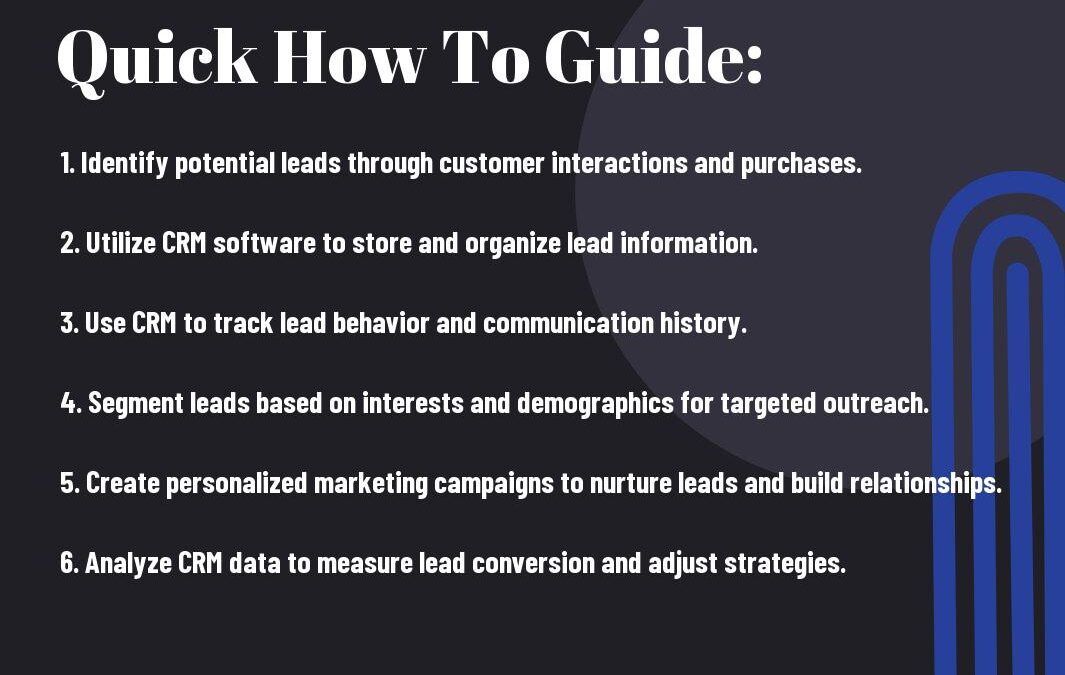
Leveraging Customer Relationship Management (CRM) software is crucial for a local shop owner looking to efficiently manage and cultivate leads. It provides a comprehensive platform that can help streamlining sales processes, identifying potential customers, and tracking interactions with them. With the right CRM tools in place, a shop owner can effectively organize and prioritize leads, track customer preferences, and ultimately drive sales growth.
Using a CRM system gives a local shop owner the ability to consolidate critical customer information such as contact details, purchase history, and communication records in one place. With this data, they can easily identify high-priority leads and tailor their marketing and sales efforts accordingly. Additionally, CRM software offers automation features that simplify lead nurturing tasks, such as sending personalized follow-up emails and reminders for follow-up actions. This not only saves time and effort, but also ensures that no potential leads slip through the cracks.
Furthermore, a CRM system provides insightful analytics and reporting capabilities that allow shop owners to monitor the effectiveness of their lead management strategies. By analyzing the data, they can identify patterns, trends, and areas for improvement, enabling them to make informed decisions and refine their lead cultivation tactics for optimal results. In today’s competitive business landscape, harnessing the power of CRM is essential for any local shop owner looking to drive growth and build lasting relationships with their customers.
Key Takeaways:
- Centralized lead management: CRM software allows local shop owners to manage all leads in one centralized system, making it easier to track and prioritize potential customers.
- Personalized communication: CRM tools enable shop owners to customize and personalize their communication with leads, increasing the chances of converting them into customers.
- Lead nurturing: With CRM, shop owners can create automated lead nurturing campaigns, ensuring that leads are engaged and informed throughout the sales process.
- Improved follow-up: By setting reminders and tasks in the CRM system, shop owners can ensure timely and effective follow-up with potential customers.
- Data analysis: CRM provides valuable insights into the behavior and preferences of leads, allowing shop owners to tailor their marketing efforts accordingly.
- Customer segmentation: CRM allows shop owners to categorize and segment leads based on various criteria, making it easier to target specific customer groups with relevant offers and promotions.
- Increased efficiency: By automating and streamlining lead management processes, CRM helps local shop owners save time and resources, ultimately leading to improved productivity and sales performance.

Essential CRM Features for Local Shop Owners
The use of Customer Relationship Management (CRM) software has become essential for local shop owners to effectively manage and cultivate leads. These tools not only help in maintaining customer relationships but also in identifying potential sales opportunities. There are several essential features that local shop owners should look for in a CRM system to make the most of their efforts in lead management.
Contact Management: Centralizing Customer Data
The ability to centralize customer data is the foundation of effective lead management for local shop owners. A good CRM system allows the owner to store and organize all customer information in one place, including contact details, purchase history, and communication preferences. This centralized data enables the owner to have a complete view of each customer, helping them to personalize their interactions and provide better customer service. With a CRM, a shop owner can easily access customer information, track customer interactions, and manage follow-ups, all from one unified platform.
Lead Scoring and Prioritization: How to Identify Potential Sales
Lead scoring and prioritization is another crucial feature of a CRM system for local shop owners. Through this feature, a CRM assigns a score to each lead based on their behavior and engagement with the shop. The owner can then prioritize leads based on their score, focusing their efforts on the most promising opportunities. This not only helps in identifying potential sales but also in efficiently allocating resources and time. By knowing which leads are most likely to convert, a shop owner can tailor their marketing and sales efforts to target those leads, thereby increasing the chances of closing a sale.
How-to Implement CRM in Your Local Shop
However, implementing a Customer Relationship Management (CRM) system in a local shop can seem daunting at first. This is especially true for shop owners who might not be familiar with the concept or the technological aspect of it. In reality, it can be quite simple to get started with CRM and can offer tremendous benefits in terms of managing and cultivating leads for a small business.
Choosing the Right CRM for Your Business Needs
When selecting a CRM for a local shop, it is important to consider the specific needs and size of the business. The shop owner should think about the budget, the level of technical expertise in the team, and the features needed to effectively manage and cultivate leads. It’s essential to choose a CRM that aligns with the shop’s requirements and one that can scale as the business grows. Taking the time to research different options and even testing out different systems can help in making an informed decision.
Setting Up Your CRM: A Step-by-Step Guide
Setting up a CRM system for a local shop involves a few key steps. It’s important to start by inputting all the relevant customer data into the system. This could include names, contact details, purchase history, and any other pertinent information. Once the data is in the system, the shop owner can begin to segment the customer base for targeted marketing efforts. This may involve creating different customer groups based on purchase behavior, demographics, or other criteria. The CRM system should also be integrated with other tools such as email marketing and social media platforms to streamline customer communication and engagement.
| Key Steps | Details |
| Data Input | Input all relevant customer data into the system including names, contact details, purchase history, and any other pertinent information. |
| Segment Customer Base | Create different customer groups based on purchase behavior, demographics, or other criteria to streamline marketing efforts. |
| Integration | Integrate the CRM system with other tools such as email marketing and social media platforms for streamlined communication and engagement. |
Tips for Training Your Team on CRM Usage
Training the team on CRM usage is crucial for effective implementation and utilization of the system. The shop owner should provide comprehensive training sessions on how to use the CRM, including data input, customer segmentation, and communication tools. It’s also important to emphasize the benefits of using a CRM and how it can positively impact the business. Providing ongoing support and resources for the team members can help in ensuring that they are comfortable and confident in using the CRM on a day-to-day basis. Recognizing the effort and progress made by the team in adapting to the CRM can also boost morale and encourage continued usage.
Strategies for Lead Cultivation Using CRM
Now that the local shop owner has implemented a CRM system to manage leads, it’s time to focus on strategies for effectively nurturing these leads and turning them into loyal customers. With the right approach, it’s possible to leverage the power of CRM to segment leads, personalize customer experiences, and automate follow-ups.
Segmenting Your Leads for Targeted Campaigns
Segmentation is a crucial strategy for the successful cultivation of leads. Through CRM, the local shop owner can categorize leads based on various factors such as demographics, purchase history, or browsing behavior. By segmenting leads, the shop owner can create targeted marketing campaigns that are tailored to the specific needs and interests of each group. For example, he can send out personalized email offers to targeted segments based on their previous purchases, increasing the likelihood of conversion. This targeted approach can significantly improve the shop owner’s conversion rates and overall customer satisfaction.
Personalization: Tips for Tailoring Customer Experiences
Personalization is key to creating meaningful customer experiences and building long-lasting relationships. With CRM, the local shop owner can gather valuable insights about each lead, including their preferences, purchase history, and interactions with the shop. By utilizing this data, she can personalize communications and offers to resonate with each individual. For instance, utilizing the lead’s name in email communications can create a sense of personal connection. Furthermore, recommending products based on past purchases or browsing history can demonstrate that the shop owner understands the lead’s unique needs. This level of personalized attention can lead to increased customer loyalty and higher lifetime value for the shop.
How to Automate Follow-ups and Nurture Relationships
Automating follow-ups and relationship nurturing is another essential aspect of lead cultivation via CRM. By setting up automated drip campaigns, the shop owner can ensure that leads receive regular, targeted communications without requiring constant manual effort. For example, he can set up automated follow-up emails to be sent after a lead makes an initial inquiry, ensuring that no potential customer falls through the cracks. Moreover, using CRM, the shop owner can track lead engagement and send follow-ups based on lead behavior, such as opening an email or visiting the shop’s website. This kind of proactive approach can foster ongoing relationships with leads and ultimately drive more conversions. This level of automation not only saves time but also allows for a more consistent and thorough approach to lead nurturing.
This comprehensive approach to lead cultivation using CRM can help the local shop owner build and maintain valuable customer relationships, ultimately driving business growth and long-term success.
Monitoring and Analyzing CRM Data
Lastly, monitoring and analyzing CRM data play a crucial role in effectively managing and cultivating leads for a local shop owner. By keeping a close eye on CRM data, the shop owner can gain valuable insights into customer behavior, preferences, and interactions with the business. This information can then be used to tailor marketing strategies, follow-up communication, and overall customer experience, ultimately leading to increased sales and customer satisfaction.
Tracking Lead Progress: Essential Metrics to Watch
When it comes to tracking lead progress, there are several essential metrics that a local shop owner should pay close attention to. These may include lead conversion rates, lead response times, and customer engagement metrics. By tracking these metrics, the shop owner can identify areas that need improvement and adjust their approach to lead management accordingly. For example, if the lead response time is slow, it may negatively impact the conversion rate, so the shop owner can focus on improving response times to increase the likelihood of converting leads into customers.
Additionally, tracking the source of leads can provide valuable insights into the effectiveness of different marketing channels. By understanding which channels are generating the most leads, the shop owner can allocate resources more effectively and optimize their marketing strategies to focus on the most successful channels.
Understanding CRM Reports: Making Data-Driven Decisions
CRM reports offer a wealth of valuable data that can help a local shop owner make informed, data-driven decisions. By analyzing the reports generated by the CRM system, the shop owner can identify trends, patterns, and opportunities that may not be immediately obvious. For example, they can identify the most profitable customer segments, understand the purchasing behavior of their customers, and forecast future sales based on historical data.
Furthermore, CRM reports can help the shop owner identify any weaknesses or inefficiencies in their lead management process. By pinpointing areas that need improvement, the shop owner can take proactive measures to address these issues and optimize their lead management strategy for better results.
Factors Influencing CRM Success
Your local shop’s success with CRM is influenced by several key factors that determine its effectiveness. These factors determine how well the CRM system is adopted by staff, how clean and current the data is, and how effectively customer feedback is utilized for continuous improvement. Any successful CRM strategy requires careful consideration and management of these factors.
Data Quality and Management: Keeping Information Clean and Current
One of the most critical factors in CRM success is the quality and management of data. Dirty or outdated data can severely hinder a shop owner’s ability to effectively manage and cultivate leads. Inaccurate information can lead to wasted time and missed opportunities, while clean and current data allows for more targeted marketing efforts and better customer insights. It’s crucial to regularly clean and update the CRM database to ensure its accuracy and relevance to the shop’s operations.
User Adoption: Encouraging Consistent CRM Use Among Staff
Another key factor in CRM success is the consistent adoption of the system among staff. Consistent use of CRM by all employees ensures that customer interactions and data are accurately recorded and utilized. Resistance or lack of adoption by staff can lead to incomplete or inconsistent data, reducing the effectiveness of the CRM system. It’s important for shop owners to provide proper training and encourage the use of CRM as an integral part of daily operations.
Customer Feedback: How to Use Insights for Continuous Improvement
Understanding and utilizing customer feedback is essential for continuous improvement and success with CRM. Insights from customer feedback can help shop owners understand their customers’ needs and preferences, allowing them to tailor their marketing and customer service efforts accordingly. By actively seeking and analyzing customer feedback, shop owners can make informed decisions that drive business growth and customer satisfaction.
Advanced CRM Techniques
However, in order to truly leverage CRM for lead management, a local shop owner can implement advanced techniques that go beyond basic customer relationship management. These advanced techniques can help streamline processes, improve customer interactions, and ultimately drive more sales.
- Data Segmentation: By categorizing leads based on their behavior, interests, and purchasing history, a shop owner can create targeted marketing campaigns that are more likely to resonate with potential customers.
- Automation: Automating repetitive tasks such as follow-up emails, appointment reminders, and lead nurturing allows a shop owner to focus on more strategic activities while still maintaining a personalized touch with their leads.
- Performance Analytics: Utilizing CRM analytics tools can provide insights into the effectiveness of marketing campaigns, sales strategies, and customer retention efforts, allowing for data-driven decision-making and continuous improvement.
Integrating CRM with Other Business Tools
When it comes to effectively managing and cultivating leads, integrating CRM with other essential business tools can significantly enhance a shop owner’s capabilities. By syncing CRM with tools such as email marketing platforms, e-commerce systems, and customer service software, a shop owner can streamline processes, gain a holistic view of the customer journey, and provide a seamless experience for their leads and customers.
Leveraging Social Media within CRM for Lead Cultivation
Integrating social media with CRM can provide a shop owner with valuable insights into their leads’ preferences, behaviors, and interactions. By tracking social media engagements within the CRM system, a shop owner can personalize their lead nurturing efforts, engage in targeted social selling, and build stronger relationships with potential customers.
Mobile CRM: Tips for On-the-Go Customer Management
When it comes to managing leads on the go, having a mobile CRM solution is essential for a shop owner. Whether it’s accessing customer information, updating leads’ statuses, or responding to inquiries while away from the shop, a mobile CRM allows for flexible and efficient customer management. It’s important for a shop owner to prioritize security and data protection when using mobile CRM, ensuring that customer information remains secure even when accessed from mobile devices. Knowing that convenience is key in today’s fast-paced business environment, a mobile CRM empowers a shop owner to stay connected and responsive at all times.
Avoiding Common CRM Pitfalls
Despite the numerous benefits of using a CRM system, it is essential for local shop owners to be aware of the common pitfalls that can arise when implementing and using CRM. By recognizing these pitfalls, they can take proactive steps to avoid them and ensure the success of their CRM efforts.
Overcoming Resistance to New Technologies
One common challenge when implementing CRM is overcoming the resistance to new technologies. Some shop owners and their staff may be hesitant to adopt a new system, fearing that it will disrupt their established workflow or be too difficult to learn. To overcome this resistance, it is crucial for shop owners to clearly communicate the benefits of CRM, such as its ability to streamline processes, improve customer interactions, and ultimately drive business growth. Providing training and support for staff members can also help ease the transition and demonstrate the value of the new system. Additionally, showing real-life examples of how CRM has benefited similar businesses can help alleviate concerns and build confidence in the new technology.
Ensuring Privacy and Security of Customer Data
Another important consideration when implementing CRM is ensuring the privacy and security of customer data. With the increasing prevalence of data breaches and privacy concerns, shop owners must prioritize the protection of their customers’ information. This includes implementing robust security measures within the CRM system, such as encryption, access controls, and regular data backups. Additionally, shop owners should stay informed about relevant data privacy regulations and ensure compliance with laws such as the General Data Protection Regulation (GDPR) or the California Consumer Privacy Act (CCPA). Building trust with customers by demonstrating a commitment to safeguarding their data is essential for maintaining a positive reputation and retaining their loyalty.
Maintaining CRM to Adapt to Changing Business Needs
As businesses evolve, so do their CRM requirements. One common pitfall is failing to adapt the CRM system to meet changing business needs. This can result in outdated processes, inefficient workflows, and missed opportunities. To avoid this pitfall, shop owners should regularly evaluate their CRM system and make necessary adjustments to accommodate growth, new sales strategies, and shifts in customer preferences. This may involve updating customer data, adding new features or integrations, or even migrating to a more advanced CRM solution. By staying proactive and staying ahead of changing business needs, shop owners can ensure that their CRM continues to be a valuable asset for their business.
Case Studies: Local Shops Excelling with CRM
Now, let’s take a look at some real-life examples of local shops that have leveraged CRM to effectively manage and cultivate leads. These case studies showcase the tangible benefits of implementing a CRM system for local businesses.
- Case Study 1: Smith’s Bakery saw a 30% increase in repeat customers after implementing a CRM system. They were able to personalize their marketing efforts and track customer preferences, leading to higher retention rates.
- Case Study 2: Jones’ Boutique experienced a 20% boost in sales conversion rates by using CRM to segment their leads and tailor their communication strategies. They were able to engage with potential customers at the right time with the right message, resulting in higher conversion rates.
- Case Study 3: Miller’s Coffee House utilized CRM to streamline their lead management process and saw a 25% increase in overall lead generation. By identifying and nurturing promising leads, they were able to expand their customer base and drive business growth.
Real-World Examples of Effective CRM Use
These case studies demonstrate the power of CRM in transforming the way local shops attract, manage, and nurture leads. By implementing a robust CRM system, businesses like Smith’s Bakery, Jones’ Boutique, and Miller’s Coffee House were able to improve customer engagement, increase sales, and ultimately grow their bottom line. The key takeaway from these examples is the impact of personalized marketing, streamlined lead management, and targeted communication on driving business success.
Key Takeaways and Learned Lessons
By examining the experiences of the aforementioned local shops, it becomes evident that CRM can be a game-changer for small businesses. It allows them to effectively track customer interactions, personalize their marketing efforts, and manage leads efficiently. The success stories of Smith’s Bakery, Jones’ Boutique, and Miller’s Coffee House serve as a testament to the fact that CRM is a valuable tool for local shop owners looking to thrive in today’s competitive market.
Summing up the Benefits of CRM for Local Shop Owners
CRM is an invaluable tool for local shop owners looking to effectively manage and cultivate leads. By utilizing a CRM system, a shop owner can keep track of customer interactions, preferences, and purchase histories, allowing them to better understand their customers and tailor their marketing and sales efforts accordingly. This level of customer insight can help a shop owner build and maintain lasting relationships with their customers, ultimately leading to increased sales and customer loyalty.
Furthermore, CRM can streamline the lead management process, ensuring that no potential customer falls through the cracks. From initial contact to conversion, a CRM system can help a shop owner nurture and prioritize leads, ultimately leading to more successful sales. Additionally, the automation features of CRM can help a shop owner stay organized and focused, freeing up time to focus on other aspects of their business. Overall, CRM offers local shop owners a powerful set of tools to effectively manage and cultivate leads, ultimately leading to greater success for their business.
FAQ
Q: What is CRM and how can it help a local shop owner?
A: CRM stands for Customer Relationship Management, and it can help a local shop owner effectively manage and cultivate leads by providing a centralized system to track and nurture customer interactions and data.
Q: How can CRM software benefit a local shop owner?
A: CRM software can benefit a local shop owner by offering tools for lead management, sales tracking, customer communication, and data analysis, ultimately helping to increase customer retention and drive sales growth.
Q: What features should a local shop owner look for in CRM software?
A: Local shop owners should look for CRM software with lead tracking, contact management, pipeline management, customer communication tools, and integrations with other business systems.
Q: How can CRM help in managing and nurturing leads for a local shop?
A: CRM can help in managing and nurturing leads for a local shop by providing a systematic way to track lead interactions, prioritize follow-ups, and personalize communication to increase the likelihood of closing sales.
Q: Can CRM software help a local shop owner understand customer behavior?
A: Yes, CRM software can help a local shop owner understand customer behavior by analyzing customer data and providing insights into purchasing patterns, preferences, and engagement history.
Q: How does CRM software assist in retaining existing customers for a local shop?
A: CRM software assists in retaining existing customers for a local shop by enabling personalized communication, tracking customer satisfaction, and identifying opportunities for upselling or cross-selling based on past interactions and purchase history.
Q: What are the potential challenges in implementing CRM for a local shop owner?
A: Potential challenges in implementing CRM for a local shop owner include data migration, employee training, and ensuring consistent and accurate use of the CRM system across all customer interactions.
Related posts: