
Utilizing cutting-edge AI technology such as ChatGPT in combination with a robust CRM system can revolutionize the way startups interact with their customers. By integrating these powerful tools into your customer engagement strategy, you can leverage advanced conversational capabilities to provide personalized, real-time support and gain valuable insights into customer behaviors and preferences. This proactive approach enables you to strengthen relationships, anticipate needs, and ultimately enhance customer retention. In this tutorial, you will discover the tangible benefits of incorporating ChatGPT and CRM systems into your business practices, and learn how to effectively implement them for maximum impact.
Key Takeaways:
- Personalized Customer Interactions: By using ChatGPT and integrating it with CRM systems, startups can provide personalized communication with customers through chatbots. This can help in building strong relationships and trust, ultimately leading to improved customer engagement and retention.
- Efficient Customer Support: ChatGPT can assist startups in providing quick and accurate responses to customer queries, while CRM systems can help in tracking customer interactions and resolving issues effectively. This combined approach can enhance the overall customer support experience and contribute to higher retention rates.
- Data-Driven Insights: Leveraging ChatGPT and CRM systems can help startups gather valuable customer data, which can be used to analyze customer behavior and preferences. This, in turn, allows for the creation of targeted marketing strategies and personalized offerings, leading to increased customer engagement and loyalty.
Understanding ChatGPT in the Context of Customer Engagement
Any startup in today’s competitive market knows the importance of effective customer engagement and retention strategies. Leveraging ChatGPT in conjunction with a CRM system can be a game-changer in this regard. With ChatGPT’s advanced language processing capabilities, you can enhance your customer interactions, improve response times, and ultimately foster better relationships with your audience. In this chapter, we will delve into the significance of ChatGPT in the context of customer engagement and how it can be a valuable tool for startups.
What is ChatGPT?
ChatGPT, short for “Generative Pre-trained Transformer,” is an advanced language model developed by OpenAI. It is designed to generate human-like text based on the input it receives. Essentially, ChatGPT is an AI-powered tool that can understand and respond to natural language input, making it an ideal candidate for communication and customer engagement purposes.
Advantages of Using ChatGPT for Communication
Deploying ChatGPT for customer communication offers several advantages for startups. One of the key benefits is the ability to provide instant and personalized responses to customer queries. By leveraging ChatGPT, you can significantly improve response times, addressing customer concerns in real-time. Additionally, ChatGPT can handle a large volume of queries simultaneously, ensuring that no customer is left waiting for a response. The efficiency and effectiveness of this tool can positively impact your customer engagement and retention efforts.
Exploring CRM Systems and Their Role in Startups
The success of a startup is heavily dependent on its ability to engage and retain customers. One of the most effective tools for achieving this is through the use of Customer Relationship Management (CRM) systems. These digital platforms not only help you manage customer data but also provide valuable insights that can be used to improve customer engagement and retention.
Definition of a CRM System
A CRM system is a software application that allows you to manage and analyze customer interactions and data throughout the customer lifecycle. It helps you streamline processes, improve profitability, and drive customer satisfaction by consolidating customer information and documents into a single database. This enables you to effectively manage relationships with customers, helping you to stay connected with them, streamline processes, and improve profitability.
Benefits of Integrating CRM in Startup Operations
Integrating a CRM system into your startup operations can bring a multitude of benefits. By centralizing customer data and interactions, you can gain a comprehensive view of each customer’s journey. This allows you to personalize your interactions with them and tailor your marketing efforts to their specific needs, leading to improved customer satisfaction and loyalty. Moreover, the ability to track customer interactions and preferences enables you to identify potential leads and opportunities, ultimately increasing your sales and revenue. The automation of routine tasks also frees up more time for you and your team to focus on building and nurturing customer relationships.
Whether you’re a new startup looking to establish a strong customer base or an established one seeking to improve your customer engagement and retention, integrating a CRM system into your operations can be a game-changer. It provides you with a centralized platform to manage and analyze customer interactions, enabling you to deliver personalized experiences that keep your customers coming back for more. The wealth of data and insights that a CRM system offers can help you make informed decisions that drive your startup’s success.
Strategies for Combining ChatGPT with CRM Systems
Your startup can effectively improve customer engagement and retention by combining ChatGPT with CRM systems. Here are some essential strategies to maximize the potential of this integration.
Centralizing Customer Interactions
Centralizing customer interactions through the integration of ChatGPT with your CRM system allows you to have a complete view of all customer conversations and interactions. This means that all communication, whether it’s through email, chat, or social media, is stored in one place. This centralized approach enables you to have a holistic understanding of each customer’s journey, making it easier to provide personalized and timely responses. By understanding the context of previous interactions, you can also avoid repeating information, demonstrating that you value your customers’ time and experience.
Automating Feedback and Follow-Ups
Automating feedback collection and follow-ups can significantly enhance your customer engagement and retention efforts. By integrating ChatGPT with your CRM system, you can use AI-powered chatbots to gather feedback from customers in real-time. Additionally, you can automate follow-up processes based on customer interactions and feedback. This automation not only saves time and resources but also ensures that no valuable customer feedback goes unnoticed. It also allows you to promptly address any issues or concerns raised by customers, leading to improved satisfaction and loyalty.
Personalizing Customer Communication
Personalization is key to building strong customer relationships. By leveraging ChatGPT and CRM integration, you can personalize customer communication at scale. Utilize customer data stored in your CRM system to tailor your messages and responses to individual preferences, behaviors, and past interactions. This personalized approach demonstrates that you understand and value your customers as individuals, enhancing their overall experience with your startup. Moreover, personalized communication can foster a sense of loyalty and trust, leading to improved customer retention and advocacy.

Tutorial Steps: Implementing ChatGPT into Your CRM
Lastly, let’s walk through the essential steps for seamlessly integrating ChatGPT into your CRM system to enhance customer engagement and retention.
Step 1: Choosing the Right CRM Platform
The first step in implementing ChatGPT into your CRM system is to ensure that you have chosen the right CRM platform that aligns with your startup’s goals and customer engagement needs. Look for a CRM system that offers robust customization options, seamless integration capabilities, and comprehensive analytics to track customer interactions. Additionally, consider a CRM platform that allows for easy integration with AI-powered tools like ChatGPT for enhanced customer communication and support.
Step 2: Integrating ChatGPT with Your CRM
Once you have selected the appropriate CRM platform, the next step is to seamlessly integrate ChatGPT into it. Ensure that your CRM platform provides the necessary API or integration options for integrating AI chatbots like ChatGPT. By integrating ChatGPT with your CRM, you will be able to automate customer interactions, provide real-time support, and gather valuable insights to enhance customer engagement and retention. This integration will enhance customer experience by providing immediate responses to inquiries and issues.
Step 3: Training ChatGPT for Your Startup’s Needs
After the integration is complete, it is crucial to train ChatGPT to tailor its responses to meet your startup’s specific needs and customer engagement strategies. Train ChatGPT with relevant data, FAQs, and customer interaction scenarios to ensure that it understands your startup’s products, services, and brand voice. By training ChatGPT to understand your startup’s unique requirements, you can provide more personalized and effective customer interactions, ultimately contributing to improved customer engagement and retention.
Step 4: Monitoring Performance and Gathering Insights
Once ChatGPT is operational, it is essential to monitor its performance within your CRM system. Track the interactions between ChatGPT and customers, gather insights on frequently asked questions, and analyze the effectiveness of ChatGPT in addressing customer queries and issues. Use the analytics provided by your CRM system to identify patterns, trends, and areas for improvement. By monitoring performance and gathering insights, you can continually optimize ChatGPT’s functionality and enhance its impact on customer engagement and retention.
Step 5: Iterating and Improving Customer Interaction Strategies
Finally, utilize the insights gathered from ChatGPT’s performance to iterate and improve your startup’s customer interaction strategies. Implement feedback from customers and internal teams to refine ChatGPT’s responses, expand its knowledge base, and enhance its capabilities over time. Continual improvement of ChatGPT’s functionality and integration within your CRM will lead to heightened customer satisfaction, improved retention rates, and build stronger relationships with your customers.
Real-world Examples and Case Studies
Despite being a relatively new technology, the use of ChatGPT and CRM systems has shown promising results in improving customer engagement and retention for startups. Here are a few case studies that highlight the impact of these technologies:
- Company A saw a 30% increase in customer engagement after implementing ChatGPT for customer support.
- Company B experienced 20% higher customer retention after integrating a CRM system to personalize communication with their customers.
- Company C reported a 15% reduction in customer churn rate by using ChatGPT to proactively address customer concerns.
Success Stories of Startups Using ChatGPT and CRM
Startups across various industries have leveraged the power of ChatGPT and CRM systems to enhance their customer engagement and retention. By utilizing AI-powered chatbots, startups have been able to provide personalized and timely support to their customers, resulting in improved satisfaction and loyalty. Additionally, the integration of CRM systems has allowed startups to effectively manage customer data, leading to more targeted marketing efforts and, ultimately, increased customer retention.
Analyzing the Impact on Customer Retention
Integrating ChatGPT and CRM systems into your startup’s customer engagement strategy can have a significant impact on customer retention. By leveraging AI-driven chatbots, you can provide immediate and personalized assistance to your customers, addressing their inquiries and concerns in a timely manner. Additionally, CRM systems enable you to track customer interactions and preferences, allowing you to tailor your marketing efforts and communication to better meet their needs. This not only enhances customer satisfaction but also strengthens their loyalty to your brand, ultimately leading to long-term customer retention.
Best Practices for Startups Using ChatGPT and CRM
However, to maximize the benefits of using ChatGPT and CRM systems for improving customer engagement and retention, startups should follow certain best practices. First and foremost, it is crucial to ensure that the data collected and used in these systems is managed and safeguarded responsibly. Additionally, ethical considerations should be at the forefront of your AI-powered interactions with customers, and transparency in how AI is being utilized is key.
Security Considerations
When using ChatGPT and CRM systems, it’s important to prioritize security to protect your customers’ sensitive data. Implement robust security measures to safeguard customer information, such as using encryption, multi-factor authentication, and regular security audits. Additionally, ensure compliance with data protection regulations such as GDPR and CCPA to avoid legal implications and maintain customer trust.
Ethical Use of AI in Customer Relations
As you utilize AI-powered tools for customer interactions, it’s crucial to uphold ethical standards. **Avoid using AI in ways that deceive or manipulate customers**, and be transparent about the use of AI in your communications. **Respect customer privacy and preferences**, and always provide an option for human support when necessary. By ethically leveraging AI, you can build trust with your customers and foster long-term relationships.
Future Trends: AI, CRM, and Startups
To stay ahead in the competitive business landscape, it’s crucial for startups to adapt to the latest technology trends. The intersection of Artificial Intelligence (AI) and Customer Relationship Management (CRM) systems has opened up new possibilities for startups to enhance customer engagement and retention. In this chapter, we’ll explore the future trends of AI, CRM, and startups, and how they can work together to drive growth and success for your business.
The Evolving Landscape of Customer Engagement Technologies
With the rapid advancement of AI and CRM systems, the landscape of customer engagement technologies is evolving at an unprecedented pace. Traditional methods of customer interaction are being reshaped by AI-powered chatbots, personalized automation, and predictive analytics. These technologies empower startups to deliver hyper-personalized experiences to customers, anticipate their needs, and offer proactive support. As a startup, embracing these evolving technologies can set you apart from the competition and establish strong, long-lasting relationships with your customers.
Predictions for AI and CRM Advancements
The future of AI and CRM holds promising advancements that can revolutionize how startups engage with their customers. AI algorithms will become more sophisticated, enabling startups to analyze customer behavior in real time, forecast trends, and optimize marketing strategies. CRM systems will integrate seamlessly with AI, providing startups with holistic insights into customer journeys, preferences, and pain points. By harnessing these advancements, startups can unlock new opportunities for growth and significantly improve customer engagement and retention.
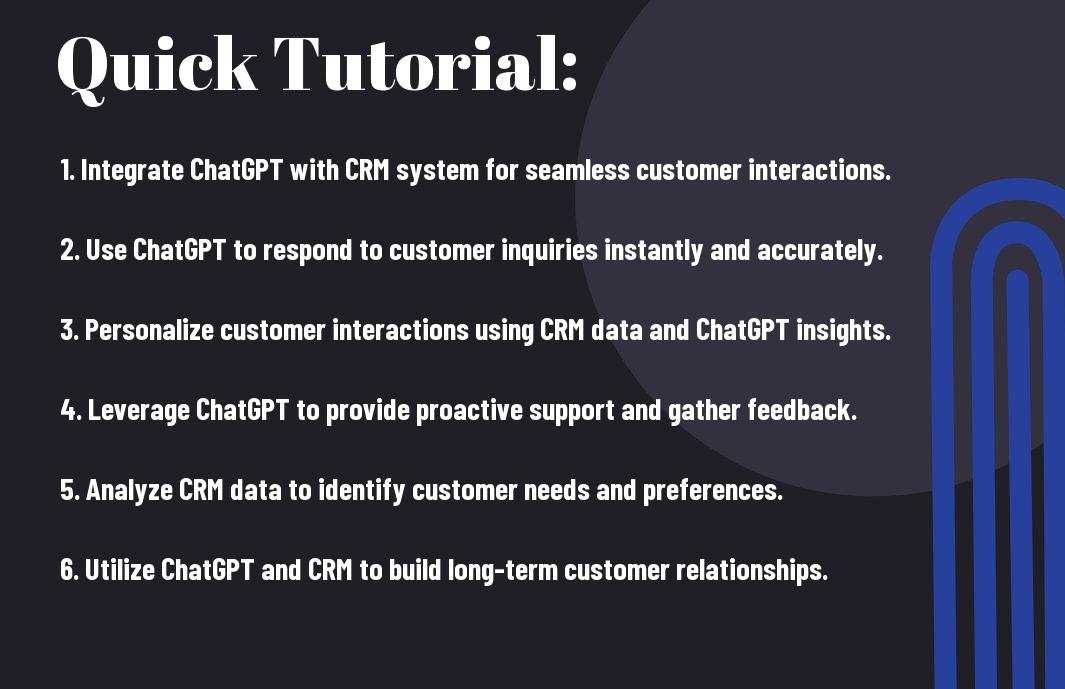
Using ChatGPT and CRM System for Improved Customer Engagement and Retention
With this in mind, it is clear that leveraging ChatGPT and a CRM system can significantly benefit startups in their efforts to improve customer engagement and retention. By using ChatGPT, you can provide personalized and timely responses to customer inquiries, enhancing the overall customer experience. Additionally, integrating a CRM system allows you to track and analyze customer interactions, enabling you to identify trends and preferences, ultimately leading to more targeted and effective engagement strategies. By taking advantage of these technologies, you can build stronger relationships with your customers and increase their loyalty to your brand, ultimately contributing to the long-term success of your startup.
FAQ
Q: How can using ChatGPT and CRM system help startups improve customer engagement and retention?
A: Implementing ChatGPT in a CRM system allows startups to provide personalized and immediate responses to customer inquiries, ultimately enhancing engagement. Additionally, the CRM system helps track customer interactions and behaviors, enabling startups to tailor their communication to better retain customers. This combination seamlessly integrates AI-powered chatbots with comprehensive customer data management for a more effective and efficient approach to customer engagement and retention.
Q: What are the key benefits of using ChatGPT and CRM for startups?
A: By integrating ChatGPT and CRM, startups can streamline customer interactions, improving response times and overall customer experience. This enables startups to build stronger relationships with customers through personalized communication, leading to increased retention and loyalty. Furthermore, the CRM system provides valuable insights into customer preferences and behaviors, empowering startups to make data-driven decisions to further enhance engagement and ultimately drive business growth.
Q: How can startups effectively implement ChatGPT and CRM to maximize customer engagement and retention?
A: To effectively implement ChatGPT and CRM, startups should first identify key customer touchpoints where AI-powered chatbots can enhance the customer experience. Integrating the CRM system with ChatGPT allows startups to capture and analyze customer data, enabling them to personalize communication and anticipate customer needs. Additionally, startups should continuously optimize their chatbot and CRM strategies by leveraging customer insights to adapt to changing preferences and market dynamics, ensuring sustained engagement and retention success.
Related posts: