Essential for the efficiency and growth of small businesses, Customer Relationship Management (CRM) systems are vital tools to effectively manage interactions with customers. Mastering CRM can lead to improved customer satisfaction, increased sales, and long-term business success. To navigate the complexities of CRM implementation, small business owners must follow these crucial steps to optimize their CRM strategy and maximize its benefits.
Key Takeaways:
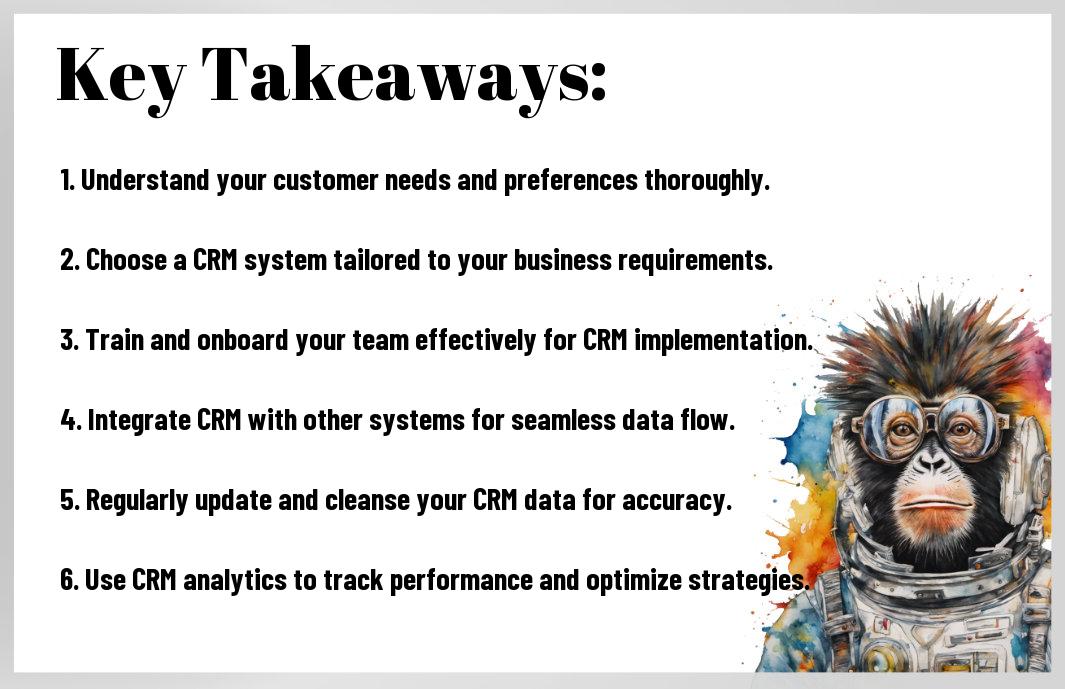
- Understand your customers: Developing a deep understanding of your customers’ preferences, behaviors, and needs is crucial for effective CRM implementation.
- Choose the right CRM system: Select a CRM system that aligns with your business needs, offers scalability, and provides user-friendly features.
- Train your team: Providing adequate training to your team on how to use the CRM system effectively can improve productivity and customer service.
- Customize your CRM system: Tailoring your CRM system to meet your specific business requirements can enhance its usefulness and efficiency.
- Integrate your CRM with other tools: Integrating your CRM with other business tools such as marketing automation platforms can streamline processes and improve data accuracy.
- Regularly update and clean your data: Maintaining clean and up-to-date data in your CRM system is imperative for accurate reporting and decision-making.
- Continuously evaluate and optimize: Regularly monitor and analyze CRM performance metrics to identify areas for improvement and optimize your CRM strategy for better results.
Understanding the Basics of CRM
For Here are the 5 fundamental steps for a successful CRM …
Definition of CRM and Its Importance for Small Businesses
To truly master Customer Relationship Management (CRM), small businesses must first understand the essence of CRM and its significance. CRM is a strategy that focuses on managing relationships and interactions with current and potential customers. For small businesses, CRM plays a crucial role in enhancing customer satisfaction, streamlining processes, and driving growth by fostering long-term customer loyalty.
Key Features of CRM Systems for Small Business
With CRM systems tailored for small businesses, there are key features that are vital for effective implementation:
- Customer Contact Management
- Sales and Marketing Automation
- Task and Calendar Management
- Reporting and Analytics
Knowing how to leverage these features is vital for small businesses to optimize their CRM strategy and maximize customer engagement.
Preparing Your Small Business for CRM Integration
Assessing Your Business Needs and CRM Goals
Businesses looking to integrate Customer Relationship Management (CRM) software must first assess their specific needs and goals. Consider what you aim to achieve with CRM – whether it’s improving customer communication, streamlining sales processes, or enhancing marketing efforts. Understanding these goals will help you choose the right CRM system and tailor its implementation to suit your business requirements.
Data Organization and Clean-Up Before Migration
Integration of CRM requires meticulous data organization and clean-up beforehand. Ensuring that your data is accurate, up-to-date, and properly formatted is crucial for a smooth migration process. Identify redundant or outdated information that can be eliminated, and optimize your data structure for efficient use within the CRM system.
Data organization and clean-up before migration are vital steps in the CRM integration process. It involves consolidating information from various sources, standardizing data formats, and removing any duplicate or irrelevant data. Taking the time to organize and clean your data will not only improve the accuracy and effectiveness of your CRM system but also enhance overall business operations.
Choosing the Right CRM Platform
Comparing Different CRM Solutions
Many small businesses find themselves struggling to select the right CRM platform due to the overwhelming number of choices available in the market. To simplify the decision-making process, it’s crucial to compare different CRM solutions based on crucial features and functionalities.
| CRM Solution | Key Features |
| HubSpot | Marketing Automation, Lead Management, Analytics |
| Salesforce | Customizable Dashboards, Sales Forecasting, Mobile App |
| Zoho CRM | Contact Management, Workflow Automation, Sales Tracking |
Cost-Benefit Analysis for Small Business Budgets
Choosing the right CRM platform for a small business involves conducting a cost-benefit analysis to ensure that the selected solution aligns with the organization’s budget constraints while delivering significant value. It’s crucial to consider both the upfront costs and long-term benefits of implementing a CRM system.
The cost-benefit analysis for small business budgets should take into account factors such as subscription fees, implementation costs, training expenses, and potential return on investment. By carefully evaluating these aspects, small businesses can make an informed decision that maximizes the benefits of CRM technology within their budget constraints.
Implementing CRM Into Your Business Processes
Best Practices for CRM Integration
Practices for successful CRM integration involve identifying key objectives, involving stakeholders in the process, selecting the right CRM platform, customizing it to fit your business needs, and ensuring data accuracy and security. By following these practices, you can streamline your business processes and maximize the benefits of CRM implementation.
Training Your Team to Use CRM Effectively
Processes for training your team to use CRM effectively are crucial for the success of the system. Training should be comprehensive, ongoing, and tailored to different departments and user levels within your organization. Ensure that your team understands the features, benefits, and best practices of using CRM to improve customer relationships and drive business growth.
Another critical aspect of training your team to use CRM effectively is to provide continuous support and resources to address any challenges or questions that may arise. This could include offering training sessions, providing access to online tutorials, and assigning dedicated team members as CRM experts to assist their colleagues. By investing in proper training and support, you can ensure that your team fully utilizes the CRM system to its fullest potential.
Maximizing CRM for Growth and Profitability
After mastering the basics of Customer Relationship Management (CRM), it is crucial for small businesses to focus on maximizing CRM for growth and profitability. Understanding the CRM process is necessary. For a detailed guide on the CRM process, check out ‘What is CRM process? 5 steps + main components’ to enhance your knowledge on the subject.
Leveraging CRM for Customer Insight and Personalization
Profitability in small businesses can significantly benefit from leveraging CRM for customer insight and personalization. By tracking customer behavior, preferences, and interactions, businesses can tailor their marketing efforts, customer service, and product offerings to individual customer needs. Personalization fosters customer loyalty and increases the likelihood of repeat business, ultimately driving growth and profitability.
Measuring Success and ROI from CRM Implementation
For small businesses, measuring success and Return on Investment (ROI) from CRM implementation is vital to determine the effectiveness of their strategies. By analyzing key performance indicators such as customer acquisition costs, customer retention rates, and lifetime value of customers, businesses can assess the impact of CRM on their bottom line. This data-driven approach allows businesses to make informed decisions, optimize their CRM strategies, and maximize profitability.
Leveraging CRM data not only enhances customer relationships but also provides valuable insights into business performance. By analyzing customer interaction data, businesses can identify trends, preferences, and opportunities for growth. This information can be used to refine marketing strategies, improve customer satisfaction, and drive profitability in the long run.
Conclusion
On the whole, mastering CRM for small businesses requires a systematic approach that involves defining goals, selecting the right CRM software, training employees, customizing the system to meet specific needs, and continually evaluating and adapting strategies. By following these five necessary steps, small businesses can effectively leverage CRM to improve customer relationships, increase sales, and streamline operations. With a well-implemented CRM system, small businesses can stay competitive in today’s fast-paced market and build lasting relationships with their customers.
FAQ
Q: What is CRM?
A: Customer Relationship Management (CRM) refers to the strategies, technologies, and practices that companies use to manage and analyze customer interactions and data throughout the customer lifecycle, with the goal of improving relationships with customers, assisting in customer retention, and driving sales growth.
Q: Why is CRM important for small businesses?
A: CRM is crucial for small businesses as it helps in organizing customer data, improving customer service, increasing sales, and building long-term relationships with customers, all of which are necessary for the growth and success of a business.
Q: What are the benefits of mastering CRM for small businesses?
A: Mastering CRM can lead to increased customer satisfaction, improved customer retention, higher sales conversion rates, better marketing ROI, and overall business growth and success.
Q: What are the 5 necessary steps to mastering CRM for small businesses?
A: The 5 necessary steps to mastering CRM for small businesses are: 1. Defining your CRM goals and objectives, 2. Choosing the right CRM software, 3. Training your team on how to use CRM effectively, 4. Customizing your CRM system to fit your business needs, and 5. Continuously analyzing and optimizing your CRM processes.
Q: How can small businesses define their CRM goals and objectives?
A: Small businesses can define their CRM goals and objectives by identifying key areas where CRM can help improve business operations, such as increasing sales, improving customer service, streamlining marketing efforts, or enhancing overall customer experience.
Q: What should small businesses consider when choosing CRM software?
A: When choosing CRM software, small businesses should consider factors such as their budget, business size and needs, integrations with existing systems, ease of use, scalability, customer support options, and security features to ensure they select a CRM solution that aligns with their goals and requirements.
Q: How can small businesses ensure their team is effectively trained in using CRM?
A: Small businesses can ensure their team is effectively trained in using CRM by providing comprehensive training sessions, offering ongoing support and resources, encouraging hands-on practice, setting clear expectations and goals for CRM usage, and periodically evaluating team performance and providing feedback for improvement.
Related posts: