

Leads are the lifeblood of any business, driving growth and revenue. Effective leads management is necessary for businesses to streamline their sales process, nurture relationships, and ultimately convert leads into loyal customers. In this comprehensive guide, we will explore a range of strategies and techniques that can help businesses optimize their leads management efforts for success. From lead generation and qualification to nurturing and conversion, this guide will provide you with key insights and best practices to elevate your leads management game and drive your business towards success.

Key Takeaways:
- Define Your Ideal Customer Profile: Clearly identify your target audience to attract leads that are more likely to convert.
- Use Multiple Lead Generation Channels: Utilize various platforms such as social media, email marketing, and SEO to generate leads from diverse sources.
- Implement Lead Scoring: Prioritize and qualify leads based on their behavior and engagement with your content.
- Automate Lead Nurturing: Set up automated email sequences to keep leads engaged and move them through the sales funnel.
- Integrate CRM Software: Use Customer Relationship Management software to track leads, manage interactions, and analyze data for better decision-making.
- Measure and Analyze Results: Monitor key performance indicators (KPIs) to evaluate the effectiveness of your lead management strategies and make adjustments as needed.
- Continuously Improve Your Processes: Regularly assess and optimize your lead management strategies to ensure long-term success and growth.
Understanding Leads Management
Definition and Importance
To effectively manage leads, it is important to understand what constitutes a lead and its significance in the sales process. A lead is a potential customer who has shown interest in your product or service. Managing leads involves nurturing these potential customers throughout the sales funnel to ultimately convert them into paying customers. The importance of leads management lies in its ability to streamline the sales process, improve conversions, and increase revenue for your business.
Types of Leads
Understanding the different types of leads is crucial for tailoring your lead management strategies to the specific needs of each type. There are two main types of leads: Marketing Qualified Leads (MQLs) and Sales Qualified Leads (SQLs). MQLs are leads that have shown interest in your product or service but may not be ready to make a purchase. SQLs, on the other hand, are leads that have been qualified as potential customers who are ready to engage with the sales team. Any successful leads management strategy involves effectively transitioning MQLs to SQLs and guiding them through the sales funnel.
| Marketing Qualified Leads (MQLs) | Sales Qualified Leads (SQLs) |
|---|---|
| Interested in the product/service | Ready to make a purchase |
| Not ready to buy | Qualified as potential customers |
| Nurtured by marketing efforts | Engage with the sales team |
| Higher in the sales funnel | Further along in the sales process |
| Require more nurturing | Require personalized sales approach |
Developing a Successful Leads Management Strategy
Tips for Effective Lead Segmentation
If you want to effectively manage your leads, it is crucial to segment them based on certain criteria. This can help you tailor your marketing efforts to different groups, increasing the likelihood of converting leads into customers. Some tips for effective lead segmentation include analyzing demographics, firmographics, behavior patterns, and engagement levels. By categorizing your leads into specific groups, you can create more personalized and targeted campaigns that resonate with each segment.
- Analyze demographics to understand your leads better
- Segment leads based on firmographics for B2B targeting
- Consider behavior patterns and engagement levels for personalized campaigns
Perceiving your leads as unique individuals with distinct needs and preferences will enable you to nurture them effectively through the sales funnel, ultimately leading to higher conversion rates.
Criteria for Lead Scoring
Effective lead scoring is necessary for prioritizing and qualifying leads based on their likelihood to convert. By assigning scores to leads, you can focus your efforts on those with the highest potential, maximizing your sales and marketing resources. Criteria for lead scoring typically include factors like demographic information, lead source, engagement level, and buying intent. For instance, a lead who has visited your pricing page multiple times and downloaded a whitepaper may receive a higher score than someone who has only filled out a contact form.
For instance, a lead who has visited your pricing page multiple times and downloaded a whitepaper may receive a higher score than someone who has only filled out a contact form.
Implementing Leads Management in Your Business
Despite the importance of leads management strategies, many businesses struggle to implement them effectively. For a comprehensive guide on B2B lead generation strategies, check out The Ultimate Guide to B2B Lead Generation Strategies for Success.
Step-by-Step Process for Lead Capture
| Step | Description |
| Capture | Use lead capture forms on your website to collect information from potential leads. |
| Qualify | Evaluate leads based on criteria such as demographics, behavior, and engagement. |
| Store | Organize leads in a centralized database for easy access and follow-up. |
Factors to Consider in Lead Nurturing
Assuming you have captured leads effectively, it’s imperative to nurture them to move them further down the sales funnel. Factors to consider in lead nurturing include personalized communication, targeted content, and timely follow-ups. Recognizing the needs and interests of each lead will help you tailor your nurturing efforts for maximum impact.
Lead management is crucial for business success, as it ensures that potential customers are engaged and guided through the sales process effectively. By capturing leads efficiently and nurturing them appropriately, businesses can increase their conversion rates and drive revenue growth.
Evaluating Leads Management Systems
Not all leads management systems are created equal. Evaluating the right system for your business is crucial for streamlining your sales processes and maximizing conversions. For a comprehensive overview of lead management strategies, check out A Complete Guide to Lead Management.
Comparing Different Systems: Pros and Cons
| Pros | Cons |
|---|---|
| Customization options | High initial cost |
| Automated lead scoring | Steep learning curve |
| Integration with CRM tools | Limited scalability |
Integrating Leads Management with Other Tools
While evaluating leads management systems is important, it is equally crucial to consider how these systems integrate with your existing tools. By seamlessly integrating your leads management system with CRM, email marketing, and other necessary tools, you can enhance efficiency and improve ROI.
Clearly, integrating leads management with other tools can provide a holistic view of your customer journey and enable you to deliver personalized experiences at each touchpoint. By syncing data across multiple platforms, you can eliminate silos and streamline communication for a more cohesive strategy.
Cons: However, the integration process may pose challenges such as data discrepancies, compatibility issues, and the need for additional training for your team. It’s necessary to assess these potential barriers and plan accordingly to ensure a smooth integration process.
Optimizing and Maintaining Your Leads Management Strategy
Regular Review and Adjustment of Strategies
All successful leads management strategies require regular review and adjustment to ensure they remain effective. This involves analyzing key performance metrics, identifying areas for improvement, and making necessary changes to optimize your lead generation and conversion processes. By staying proactive and responsive to data insights, you can continuously refine your strategies for better results.
Best Practices for Sustained Success
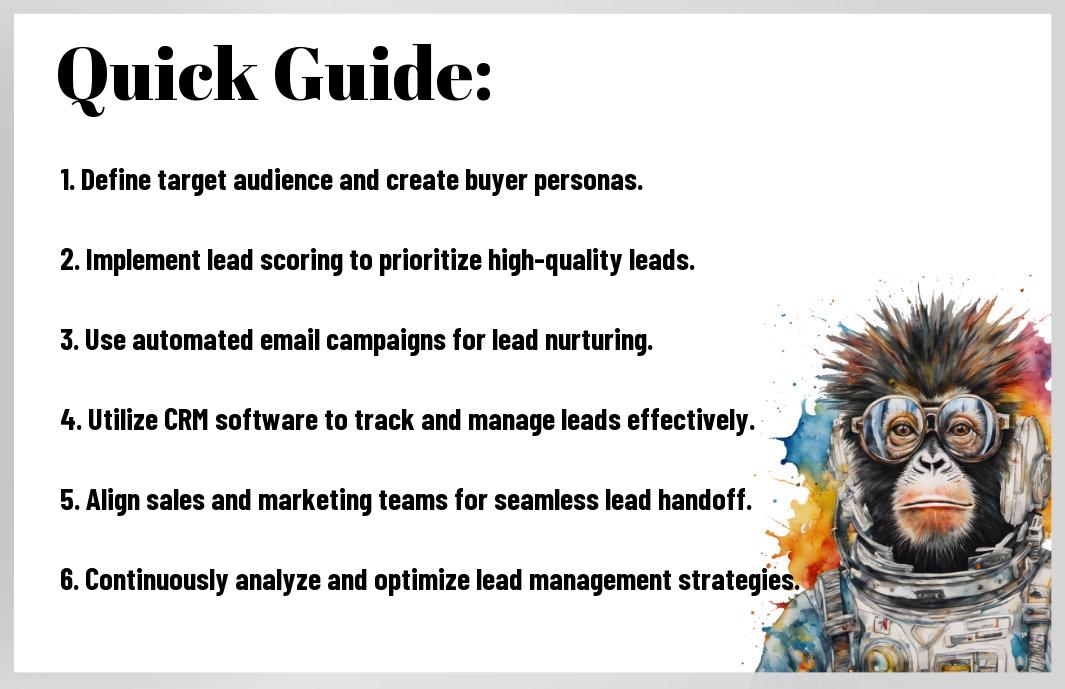
Some best practices for sustained success in leads management include setting clear goals and objectives, establishing a lead qualification process, nurturing leads through personalized communication, and leveraging marketing automation tools. It is vital to prioritize lead quality over quantity, engage with leads at the right time with relevant content, and collaborate closely with sales teams for seamless lead handoff and follow-up.
Maintaining a consistent focus on lead quality and engagement is crucial for sustained success in leads management. By continuously refining your lead generation tactics, nurturing strategies, and sales alignment processes, you can optimize the conversion of leads into loyal customers. Regularly tracking and analyzing performance metrics will help you identify opportunities for improvement and ensure that your leads management strategy remains effective in a dynamic business environment.
Strategies for maintaining leads management success involve a combination of data-driven decision-making, ongoing communication with leads, and iterative improvements based on performance analysis. By following best practices and staying adaptable to market changes, you can create a robust leads management strategy that drives business growth and revenue generation.
Conclusion
From above, it is clear that effective leads management is crucial for the success of any business. By implementing the strategies outlined in this guide, such as defining lead qualification criteria, leveraging technology for automation, and nurturing leads through personalized communication, businesses can significantly improve their lead conversion rates and ultimately drive revenue growth. Embracing a strategic and organized approach to leads management will set businesses apart from their competitors and help them achieve long-term success in today’s competitive marketplace.
FAQ
Q: What is leads management?
A: Leads management is the process of capturing, tracking, and nurturing potential customers or leads throughout their journey until they are ready to make a purchase.
Q: Why is leads management important for business success?
A: Leads management is crucial for business success because it helps streamline the sales process, improves conversion rates, and maximizes ROI on marketing efforts.
Q: What are the key components of a successful leads management strategy?
A: The key components of a successful leads management strategy include lead capture, lead scoring, lead nurturing, and lead tracking.
Q: How can businesses effectively capture leads?
A: Businesses can effectively capture leads through various channels such as website forms, landing pages, social media, email marketing, and events.
Q: What is lead scoring and why is it important?
A: Lead scoring is the process of assigning a value to leads based on their behavior and interactions with your business. It helps prioritize leads and focus on those most likely to convert.
Q: How can businesses nurture leads to increase conversions?
A: Businesses can nurture leads by providing relevant and valuable content, personalized communication, and timely follow-ups to build trust and keep leads engaged until they are ready to buy.
Q: What tools can businesses use for effective leads management?
A: Businesses can use customer relationship management (CRM) software, marketing automation tools, lead scoring tools, and analytics tools to streamline and optimize their leads management process.


