
Utilizing targeted email marketing campaigns is a powerful tool for businesses looking to engage with their customers on a more personalized level. Through the strategic use of data analytics and segmentation techniques, companies can create highly effective email campaigns that resonate with their audience. In this blog post, we will delve into the importance of targeted email marketing, how it can propel your business to new heights, and the key strategies for unlocking success with this powerful marketing tool.
Key Takeaways:
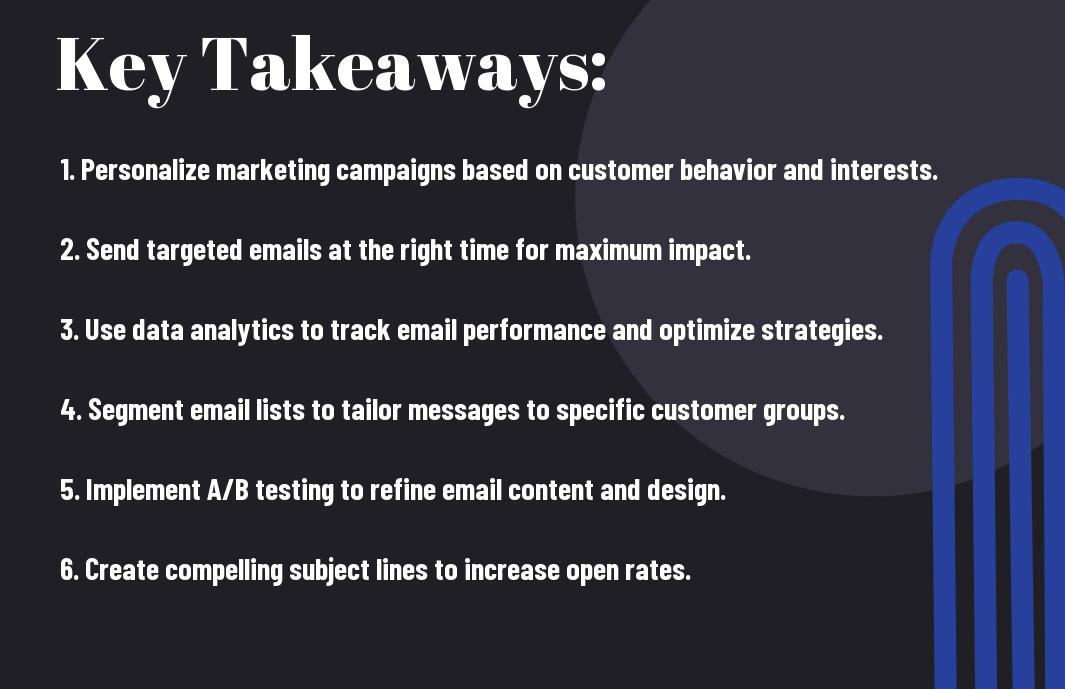
- Segment your audience: Create targeted email campaigns by dividing your audience into segments based on demographics, behavior, interests, etc.
- Personalize your content: Tailor your email content to each segment to increase engagement and provide value to your customers.
- Use automation: Implement automated emails based on customer actions such as welcome emails, abandoned cart reminders, and post-purchase follow-ups.
- Optimize for mobile: Ensure your emails are mobile-responsive to reach customers on the go and provide a seamless user experience.
- Test and analyze: A/B test different elements of your emails, such as subject lines, content, and CTAs, and analyze the results to continuously improve your campaigns.
- Provide valuable content: Offer exclusive discounts, useful tips, product recommendations, and other valuable content to keep your customers engaged and coming back for more.
- Monitor metrics: Keep track of key email marketing metrics such as open rates, click-through rates, conversions, and unsubscribe rates to gauge the success of your campaigns and make data-driven decisions for future initiatives.
Building the Foundations of Email Marketing
Any successful email marketing campaign is built upon strong foundations that are strategically planned and executed. The key to unlocking success with email marketing lies in understanding your audience, setting clear objectives and goals, and delivering targeted content that resonates with your customers.
Understanding Your Audience
To create effective email marketing campaigns, you must first understand your audience inside and out. This involves gathering data, analyzing customer behavior, and segmenting your audience into specific groups based on demographics, interests, and buying patterns. By knowing your audience on a deep level, you can tailor your emails to meet their needs and preferences, increasing engagement and driving conversions.
Setting Clear Objectives and Goals
Building the foundations of email marketing starts with setting clear objectives and goals for each campaign. Whether your aim is to increase brand awareness, drive sales, or nurture customer loyalty, defining your goals will guide your overall strategy and help you measure the success of your campaigns. By establishing clear objectives and goals upfront, you can create focused and targeted emails that deliver results.
Your email marketing strategy should align closely with your overall business objectives and be regularly reviewed and adjusted to ensure maximum effectiveness. Remember, clear objectives and goals are essential for driving successful email marketing campaigns that engage customers and deliver a strong return on investment.
Crafting Your Email Campaigns
The Anatomy of a Winning Email
Unlike generic email blasts, a winning email is carefully crafted to engage your audience effectively. It starts with a compelling subject line that entices the recipient to open the email. The body of the email should be concise and to the point, delivering valuable content that resonates with the reader. A clear call-to-action is essential to guide the recipient on the next steps to take.
Any successful email also pays attention to personalization. Addressing the recipient by name and segmenting your email list based on their interests and behaviors can significantly increase engagement. Furthermore, optimizing the email for mobile devices ensures that your message reaches your audience wherever they are.
Design Considerations for Increased Conversion
An effective email design is crucial for increasing conversion rates. Simple, clean layouts with eye-catching visuals and relevant content are more likely to grab the reader’s attention. Use of white space strategically can help focus the recipient’s attention on the key message and call-to-action. Additionally, creating a sense of urgency through limited-time offers or exclusive deals can drive immediate action from the recipient.
Considerations: When designing your email campaigns, it’s important to A/B test different elements such as subject lines, visuals, and call-to-action buttons to see what resonates best with your audience. Pay close attention to your email analytics to track the performance of your campaigns and make data-driven decisions to continuously improve your email marketing strategy.
Personalization and Targeting Techniques
Successful email marketing campaigns hinge on personalization and targeting techniques that engage customers and drive conversions. By tailoring content to individual preferences and behavior, marketers can increase open rates, click-through rates, and overall campaign effectiveness.
Data-Driven Personalization Strategies
Not all personalization is created equal. To truly connect with your audience, you need to harness the power of data-driven personalization strategies. By leveraging customer data and insights, marketers can create hyper-targeted campaigns that resonate with recipients on a personal level.
Advanced Segmentation and Tailored Content
Data-Driven segmentation allows marketers to divide their audience into smaller, more targeted groups based on specific criteria such as demographics, past purchase behavior, or engagement with previous campaigns. This enables marketers to deliver more relevant content to each segment, increasing the likelihood of engagement and conversion.
| Data-Driven Segmentation | Benefits |
| Demographics | Personalized content |
| Past Purchase Behavior | Increased engagement |
| Campaign Engagement | Higher conversion rates |
Segmentation is key to delivering relevant and timely content that resonates with your audience. By segmenting your email list based on specific criteria, you can ensure that each subscriber receives content that is tailored to their interests and needs. This personalized approach can help build customer loyalty and drive long-term success for your email marketing campaigns.
| Segmentation | Key Benefits |
| Behavioral Segmentation | Increased engagement |
| Demographic Segmentation | Higher conversion rates |
| Interest-Based Segmentation | Improved customer retention |
Integration with Other Marketing Channels
Email and Social Media Synergy
Keep your marketing efforts cohesive by integrating your email campaigns with your social media strategy. By syncing these two powerful tools, you can leverage the strengths of both platforms to reach a wider audience and boost engagement. Encourage your email subscribers to follow you on social media and vice versa, creating a seamless experience for your customers.
With the ability to share your email content on social platforms, you can extend the lifespan of your campaigns and increase their visibility. Utilize social media to spark conversations, drive traffic to your website, and foster a sense of community among your audience.
Coordinating with Content and Inbound Marketing
The key to successful marketing lies in the harmonious coordination of your email campaigns with your content and inbound strategies. The consistency in messaging across these channels is essential in building a strong brand identity and establishing trust with your audience. By aligning your content with your email campaigns, you can ensure a unified customer experience that resonates with your target market.
It is crucial to segment your audience based on their preferences and behaviors, allowing for highly targeted and personalized content delivery. By analyzing data from your email campaigns and content performance, you can continuously optimize your approach for maximum engagement and conversions.
Testing and Optimizing Email Campaigns
A/B Testing for Continuous Improvement
Unlike traditional marketing strategies, email campaigns offer a unique advantage in that they can be easily tested and optimized for better results. With A/B testing, marketers can compare two versions of an email by changing one element, such as the subject line, call-to-action, or images, to see which one performs better with the audience. This allows for continuous improvement based on real data and insights.
By experimenting with different elements and analyzing the results, marketers can unlock valuable information about what resonates with their audience and what drives engagement. With A/B testing, they can refine their email campaigns over time, ensuring that they are always delivering content that is relevant and impactful to their subscribers.
Analytics and Understanding Campaign Performance
Campaigns need to be tracked and analyzed to gauge their effectiveness. Email marketing platforms provide detailed analytics on open rates, click-through rates, conversion rates, and more. By leveraging this data, marketers can understand how their campaigns are performing and make data-driven decisions to optimize future campaigns for better results.
For instance, by identifying the best performing subject lines or content types, marketers can tailor their future campaigns to maximize engagement with their audience. It is also crucial to keep an eye on metrics such as bounce rates and unsubscribe rates, as they can indicate potential issues with the campaign that need to be addressed.
Compliance and Best Practices
Understanding and Adhering to Regulations
Keep in mind that when conducting email marketing campaigns, it is crucial to understand and adhere to regulations set forth by authorities such as the General Data Protection Regulation (GDPR) and the Controlling the Assault of Non-Solicited Pornography And Marketing (CAN-SPAM) Act. These regulations govern how businesses can collect, use, and store personal data, as well as dictate requirements for sending commercial emails.
Maintaining List Health and Deliverability
Adhering to best practices for maintaining list health and deliverability is essential for the success of your email marketing campaigns. The key factors to consider are regularly cleaning your email list to remove inactive or invalid subscribers, keeping engagement rates high by sending relevant and valuable content, and ensuring opt-in consent is obtained from all subscribers.
To maintain list health and deliverability, it is vital to monitor metrics such as open rates, click-through rates, and spam reports. By following these best practices, you can improve your sender reputation, increase deliverability rates, and ultimately maximize the success of your email marketing campaigns.
Advanced Strategies and Future Trends
Despite the rise of various digital marketing channels, email marketing remains a powerful tool for businesses to engage with their customers effectively. To unlock success with effective email marketing strategies, businesses need to implement advanced techniques and stay ahead of future trends in the industry.
-
Marketing Automation and Email Workflows
Strategies
Email marketing automation allows businesses to streamline their email campaigns, segment their audience, and send personalized messages at scale. By setting up automated email workflows, businesses can nurture leads, onboard new customers, and re-engage inactive subscribers effectively.
-
Anticipating Future Trends in Email Marketing
Email
This chapter delves into the emerging trends in email marketing and how businesses can leverage them to stay ahead of the competition. From interactive emails and AI-powered personalization to hyper-personalized content and omnichannel integration, the future of email marketing is filled with exciting possibilities.
This chapter provides insights into the future of email marketing and how businesses can adapt their strategies to thrive in a rapidly evolving digital landscape. By incorporating advanced techniques such as marketing automation and staying abreast of future trends, businesses can enhance their customer engagement and drive significant results.
Case Studies and Real-World Examples
To truly understand the power of targeted email campaigns for customer engagement, let’s take a look at some real-world examples and case studies that showcase the impact of strategic email marketing.
- Case Study 1: Company X saw a conversion rate increase of 25% after implementing personalized product recommendations in their email campaigns. Unlocking the Potential of Email Marketing
- Case Study 2: Organization Y experienced a 30% rise in click-through rates by sending targeted emails based on customer segmentation and behavior analysis.
- Case Study 3: Business Z achieved a 40% boost in revenue by re-engaging dormant customers through personalized reactivation campaigns.
Success Stories of Targeted Email Campaigns
For companies looking to boost customer engagement and drive sales, targeted email campaigns have proven to be a game-changer. By tailoring content and offers to specific audience segments, businesses can increase open rates, click-through rates, and ultimately conversions. Unlocking the Potential of Email Marketing is crucial for driving success in today’s digital landscape.
Lessons Learned from Failed Email Strategies
Success in email marketing isn’t guaranteed, and there are valuable insights to be gained from failed strategies. While targeted campaigns can yield impressive results, poorly executed or irrelevant emails can damage brand reputation and lead to unsubscribes. Companies must strategize carefully, monitor performance metrics, and continuously optimize their email campaigns to avoid pitfalls and ensure success.
Studies have shown that a targeted approach to email marketing can deliver significant returns on investment. By focusing on personalization, segmentation, and relevance, businesses can build stronger relationships with customers and drive long-term loyalty.
Summing up
Unlocking success with email marketing through targeted campaigns for customer engagement is a powerful strategy for businesses looking to connect with their audience and drive results. By harnessing the potential of personalized content, segmentation, and automation, companies can create impactful email campaigns that resonate with recipients and boost engagement levels. It is clear that investing time and effort into crafting targeted email campaigns can yield significant returns in terms of increased customer loyalty, brand awareness, and ultimately, sales.
FAQ
Q: What is the importance of email marketing for unlocking success with customer engagement?
A: Email marketing is essential for reaching customers directly in their inbox, allowing for personalized and targeted communication to drive engagement and conversions.
Q: How can targeted email campaigns enhance customer engagement?
A: Targeted email campaigns segment your audience based on preferences, behaviors, and demographics, ensuring that the right message reaches the right customer for improved engagement.
Q: What are the key elements of a successful email marketing campaign?
A: A successful email marketing campaign includes a compelling subject line, personalized content, clear call-to-action, mobile responsiveness, and tracking and analysis for optimization.
Q: How can businesses build an effective email list for customer engagement?
A: Businesses can build an effective email list by offering valuable content, incentives like discounts or exclusive offers, hosting webinars or events, and leveraging social media and website sign-up forms.
Q: What role does automation play in email marketing for customer engagement?
A: Automation streamlines the email marketing process by sending timely and relevant messages based on customer actions, such as welcome emails, abandoned cart reminders, or personalized recommendations.
Q: How can businesses measure the success of their email campaigns for customer engagement?
A: Businesses can track key metrics like open rates, click-through rates, conversion rates, and unsubscribe rates to measure the success of their email campaigns and make data-driven decisions for improvement.
Q: How can businesses ensure the effectiveness of their email marketing campaigns for customer engagement?
A: Businesses can ensure the effectiveness of their email marketing campaigns by testing different elements, optimizing for mobile devices, personalizing content, maintaining a clean email list, and continuously analyzing and refining their strategy based on data and customer feedback.


