Delve into the intricate world of lead management and uncover the best practices for effectively nurturing potential customers. In this comprehensive guide, we will explore the essential strategies and techniques to streamline your lead management process, increase conversions, and maximize your ROI. For a deeper dive into the topic, check out The Essential Guide to Lead Management for a more in-depth understanding of this critical aspect of business growth.
Key Takeaways:
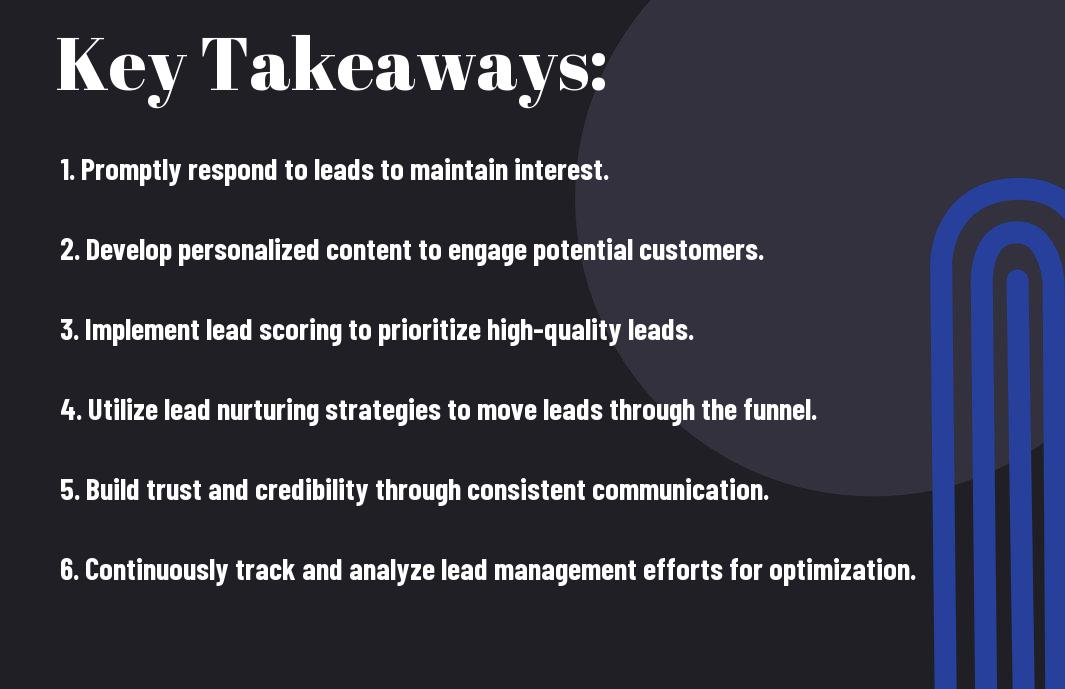
- Qualify leads effectively: Implement lead scoring to prioritize potential customers based on their engagement and interest levels.
- Personalize communication: Tailor your messaging to address the specific needs and pain points of each lead for a more impactful interaction.
- Use multiple touchpoints: Engage leads through various channels such as email, social media, and phone calls to stay top of mind.
- Provide valuable content: Offer educational resources and insights to demonstrate your expertise and build trust with your leads.
- Automate lead nurturing: Utilize marketing automation tools to streamline the nurturing process and ensure timely follow-ups.
- Track and analyze data: Monitor key metrics like conversion rates and engagement levels to continuously optimize your lead nurturing strategies.
- Align sales and marketing teams: Foster collaboration between departments to ensure a seamless transition from lead nurturing to sales conversion.
Understanding Leads
Some businesses struggle with effectively managing potential customers, primarily because they lack a clear understanding of what constitutes a lead. It is crucial to differentiate between a prospect and a lead to streamline your lead management process.
Defining a Prospect vs. a Lead
Leads are individuals or entities that have shown interest in your products or services by engaging with your brand in some way. They may have signed up for a newsletter, downloaded a whitepaper, or filled out a contact form. Prospects, on the other hand, are leads that have been qualified as potential customers based on certain criteria, such as budget, authority, need, and timeline (BANT).
The Lead Generation Channels
Prospect Finding quality leads requires utilizing a mix of lead generation channels, including inbound marketing, content marketing, social media marketing, email marketing, and paid advertising. Each channel has its strengths and weaknesses, so it is essential to analyze which channels are most effective for your target audience.
Channels When implementing lead generation strategies, consider factors such as target audience preferences, industry trends, and budget constraints. By diversifying your lead generation channels, you can reach a wider audience and increase your chances of capturing high-quality leads.
Qualifying Your Leads
Any successful lead management strategy involves qualifying leads to ensure that your sales team focuses their efforts on leads with the highest potential for conversion. Qualification criteria may vary depending on your business goals and target market, but commonly used methods include BANT (budget, authority, need, timeline) and demographic/psychographic profiling.
The By qualifying your leads effectively, you can prioritize your sales efforts and resources on leads that are most likely to convert into paying customers. This not only improves your conversion rates but also enhances the overall efficiency of your sales process, leading to higher ROI and business growth.
Setting Up an Effective Lead Management System
To Controlling Lead Leakage – Mastering The Art of Lead Management is crucial for any business looking to maximize its potential customer base. Establishing an effective lead management system is the first step towards converting leads into loyal customers.
Lead Capture: Best Practices
Lead capture is the initial stage of the lead management process, where potential customers’ information is collected. Utilizing forms on your website, landing pages, and social media channels is essential for capturing leads. It is imperative to keep forms concise and only ask for essential information to increase completion rates. Implementing lead magnets such as whitepapers, ebooks, or webinars can also entice visitors to share their contact details.
Additionally, leveraging tools like pop-up forms and exit-intent technology can help capture leads before they navigate away from your website. By optimizing your lead capture strategies, you can build a robust database of potential customers to nurture.
Lead Segmentation and Scoring
Scoring and segmenting leads allow businesses to prioritize and personalize their interactions with potential customers. Lead scoring involves assigning points to leads based on their perceived value or level of engagement. Segmentation categorizes leads into groups based on characteristics such as demographics, behavior, or interests.
By segmenting leads into categories such as hot leads, warm leads, and cold leads, businesses can tailor their marketing efforts accordingly, increasing the likelihood of conversion. Scoring leads based on criteria like website interactions, email engagement, and social media activity enables companies to focus on leads that are more likely to convert, optimizing their resources.
Management of lead segmentation and scoring is essential for guiding potential customers through the sales funnel efficiently. It allows businesses to deliver targeted messages and offers that resonate with each lead’s specific needs and interests, ultimately increasing conversion rates.
Using CRM Systems for Lead Management
System Incorporating a Customer Relationship Management (CRM) system into your lead management process can streamline operations and enhance efficiency. CRM systems allow businesses to store lead information, track interactions, and monitor lead progression through the sales pipeline. By centralizing all lead data in one platform, teams can collaborate effectively and ensure no leads fall through the cracks.
With automation features and integration capabilities, CRM systems can automate repetitive tasks, such as sending follow-up emails or assigning leads to sales representatives. This not only saves time but also ensures a consistent and personalized experience for potential customers. By utilizing CRM systems for lead management, businesses can optimize their processes, increase productivity, and drive higher conversions.
Lead Nurturing Strategies
Personalization in Lead Nurturing
AfterPersonalized emails, targeted content, and customized offers can create a more meaningful connection with leads, showing them that you understand their needs and are ready to provide value.
Multi-Channel Lead Nurturing
For maximum impact, implementing a multi-channel lead nurturing strategy is essential. This approach involves reaching out to leads through various platforms such as email, social media, and direct mail. By diversifying your communication channels, you can increase your chances of engaging with leads at the right time and place. Creating a consistent brand message across different channels can also help in building credibility and trust with potential customers.
Lead nurturing through multiple channels allows you to stay top-of-mind with leads, guiding them through the buyer’s journey towards making a purchase decision. By leveraging different mediums to deliver relevant content and offers, you can create a reliable and effective lead nurturing strategy.
Content Marketing for Lead Engagement
With the rise of digital marketing, content has become a powerful tool for engaging leads and nurturing relationships. Creating valuable and educational content that addresses the pain points of your target audience can attract and retain leads. By offering insightful blog posts, informative whitepapers, and engaging videos, you can establish yourself as a thought leader in your industry and build loyalty with potential customers.
Content marketing not only helps in capturing leads but also in nurturing them through the sales funnel. By delivering relevant content at each stage of the buyer’s journey, you can guide leads towards conversion and maintain their interest in your products or services.
For instance, by utilizing SEO strategies, email marketing automation, and social media promotion, you can amplify the reach and impact of your content, attracting more leads and engaging them effectively.
Automated Lead Nurturing Campaigns
Nurturing leads manually can be time-consuming and may not always yield the best results. Implementing automated lead nurturing campaigns can help in streamlining the process and ensuring that leads receive timely and relevant communication. By utilizing marketing automation tools to set up drip campaigns, trigger-based emails, and personalized workflows, you can automate repetitive tasks and focus on building stronger relationships with leads.
Nurturing leads with automated campaigns allows for consistent and strategic communication, ensuring that no lead falls through the cracks. By analyzing data and metrics from these campaigns, you can also gain valuable insights into lead behavior and optimize your nurturing strategies for better results.
Enhancing Lead Conversion Rates
Your ability to convert leads into customers is a critical aspect of successful sales and marketing strategies. Enhancing lead conversion rates requires a combination of effective strategies and practices that align sales and marketing efforts, leverage lead intelligence, and implement follow-up techniques.
Aligning Sales and Marketing Efforts
Conversion rates can significantly improve when sales and marketing teams work together towards a common goal. By aligning their efforts and communication, both teams can ensure that leads are handed over effectively and that the messaging remains consistent throughout the buyer’s journey.
The Role of Lead Intelligence
Sales teams can benefit greatly from lead intelligence, which provides valuable insights into a lead’s behavior, interests, and preferences. By understanding the prospect better, sales representatives can tailor their approach and messaging to align more closely with the lead’s needs, increasing the chances of conversion.
Any successful lead management strategy should incorporate lead intelligence to identify potential sales opportunities, personalize interactions, and prioritize leads based on their level of engagement and readiness to purchase.
Effective Follow-Up Techniques
One of the key factors in improving lead conversion rates is implementing effective follow-up techniques. Whether it’s through personalized emails, phone calls, or targeted content, timely and relevant follow-ups can nurture leads, build trust, and ultimately drive them towards making a purchase.
A systematic approach to follow-up, incorporating automation tools and tracking mechanisms, can help sales teams stay organized and ensure that no lead falls through the cracks. Consistent follow-up not only increases conversion rates but also showcases the company’s commitment to customer satisfaction.
Measuring and Analyzing Lead Management
Keep in mind that successful lead management goes beyond just attracting potential customers; it also involves measuring and analyzing key metrics to track the effectiveness of your efforts. By monitoring these metrics, businesses can gain valuable insights into their lead generation and nurturing strategies to make informed decisions for better outcomes.
Key Metrics to Track
Lead Conversion Rate: This metric shows the percentage of leads that convert into customers, indicating the effectiveness of your lead nurturing process. A high conversion rate signifies that your strategies are resonating with your target audience, while a low rate may indicate the need for adjustments.
Lead Velocity: This metric measures the rate at which leads are moving through the sales funnel. Understanding lead velocity helps businesses predict future revenue and identify potential bottlenecks in the nurturing process that may need to be addressed.
A/B Testing for Lead Management Optimization
To optimize lead management strategies, businesses can leverage A/B testing to compare different variations of lead nurturing processes, such as email cadence, messaging, or call-to-action buttons. By testing these variations with a random sample of leads, businesses can determine which approach resonates best with their audience and drives higher conversions.
This iterative process of testing and refining lead management strategies based on data-driven insights can lead to significant improvements in lead generation and conversion rates. A/B testing provides businesses with valuable insights that can help them optimize their lead management processes for maximum effectiveness.
Utilizing Analytics for Continuous Improvement
An essential aspect of mastering lead management is utilizing analytics to continuously evaluate and improve lead generation efforts. By analyzing data on lead sources, conversion rates, and customer engagement, businesses can identify trends, optimize marketing strategies, and enhance the overall customer journey.
It is crucial for businesses to leverage analytics tools to track and measure the performance of their lead management initiatives accurately. By identifying areas of improvement and capitalizing on successful strategies, businesses can drive sustainable growth and maximize their return on investment in lead generation.
Advanced Lead Management Tactics
For organizations looking to take their lead management to the next level, implementing advanced tactics can make a significant difference in conversion rates and overall success. Below are some key strategies to consider:
- Lead Scoring: Prioritize leads based on their behavior and engagement with your brand.
- Marketing Automation: Streamline and personalize communications with leads through automated workflows.
- Content Personalization: Tailor content to meet the specific needs and interests of individual leads.
- Multi-channel Engagement: Reach leads through various channels such as email, social media, and paid advertising.
- CRM Integration: Seamlessly track and manage leads within your customer relationship management system.
Lifecycle Marketing for Leads
With a focus on lifecycle marketing, organizations can map out the customer journey and deliver targeted messaging at each stage. By understanding where leads are in the buying process, businesses can provide relevant content and offers to guide them towards conversion.
By segmenting leads based on their behavior and interests, organizations can create personalized campaigns that resonate with each individual. This approach not only improves engagement but also drives higher conversion rates.
Account-Based Marketing Strategies
Any organization looking to target high-value accounts should consider implementing account-based marketing strategies. This approach involves creating personalized campaigns tailored to specific companies or decision-makers within those organizations.
Marketing to key stakeholders within target accounts can result in higher ROI and more impactful relationships with potential customers. By focusing resources on a select group of accounts, organizations can deliver highly personalized experiences that drive engagement and conversions.
Marketing automation and personalized content play a crucial role in the success of account-based marketing strategies, allowing organizations to deliver the right message to the right person at the right time.
The Impact of Lead Management on Customer Retention
Retention is crucial for long-term business success, and effective lead management plays a significant role in fostering customer loyalty. By nurturing leads through personalized and targeted communication, organizations can build stronger relationships with customers over time.
It is important to continue engaging with customers even after the initial sale, using insights gathered from lead management to deliver ongoing value and support. By prioritizing customer retention, organizations can increase customer lifetime value and drive sustainable growth.
Final Words
Summing up, mastering lead management is essential for effectively nurturing potential customers and increasing conversions. By implementing best practices such as timely follow-ups, personalized interactions, and data-driven strategies, businesses can improve their lead nurturing process and ultimately drive more sales. It is crucial to continuously analyze and optimize your lead management tactics to stay ahead in the competitive market and ensure long-term success.
FAQ
Q: What is lead management?
A: Lead management is the process of tracking and managing sales leads as they move through the sales pipeline. It involves capturing, nurturing, and converting leads into customers.
Q: Why is lead management important?
A: Effective lead management helps businesses to identify and prioritize potential customers, increase sales conversions, and improve ROI on marketing efforts.
Q: What are the best practices for lead nurturing?
A: Best practices for lead nurturing include personalized communication, timely follow-ups, providing valuable content, and using marketing automation tools to streamline the process.
Q: How can businesses improve lead qualification?
A: Businesses can improve lead qualification by implementing lead scoring methods, aligning sales and marketing teams, and regularly reviewing and updating lead data.
Q: What is the role of technology in lead management?
A: Technology plays a crucial role in lead management by providing tools for lead tracking, automation, analytics, and integration with CRM systems to effectively manage and convert leads.
Q: How can businesses measure the success of their lead management efforts?
A: Businesses can measure the success of their lead management efforts by tracking key performance indicators (KPIs) such as conversion rates, lead quality, sales cycle length, and ROI on marketing campaigns.
Q: What are the common challenges in lead management?
A: Common challenges in lead management include lead leakage, lack of lead nurturing strategies, poor data quality, ineffective communication between sales and marketing teams, and difficulty in tracking and analyzing lead behavior.