In the age of digital innovation, artificial intelligence (AI) chatbots have revolutionized the way businesses interact with their customers. For the banking sector, this technology has proven to be a game-changer, providing efficient, 24/7 customer support while resolving issues in a matter of seconds. Gone are the days of long wait times and frustrating phone calls; AI chatbots are now at the forefront of streamlining customer support for banking institutions. In this blog post, we will explore the benefits and effectiveness of using AI chatbots to resolve banking issues, ultimately making the customer experience simpler and more efficient.
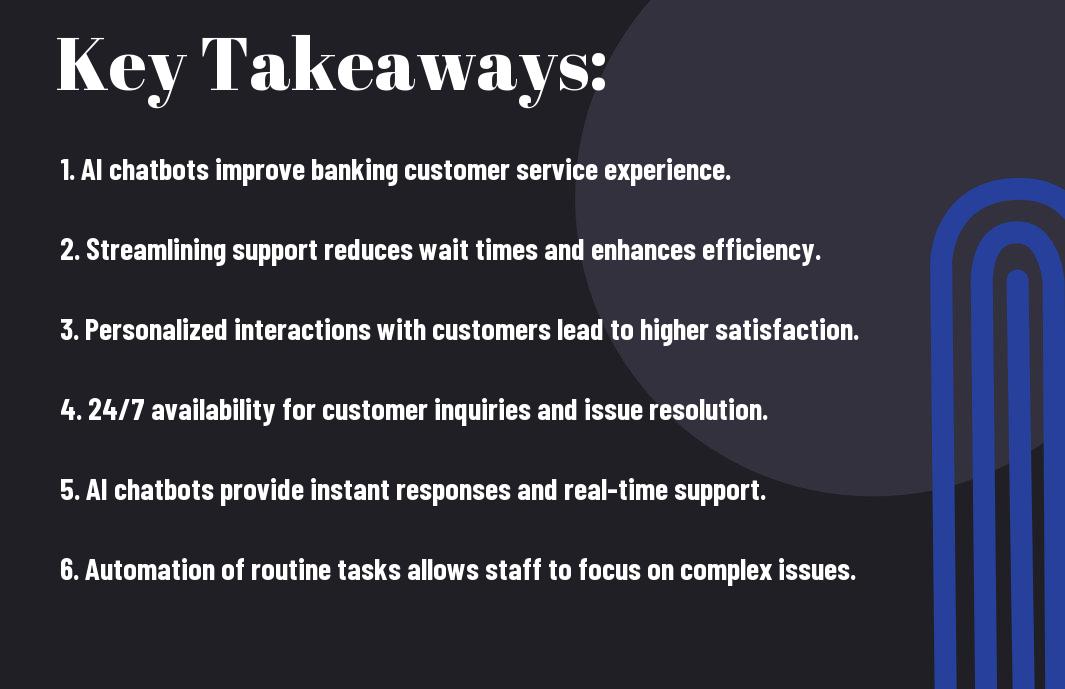
Key Takeaways:
- Efficient Customer Support: AI chatbots in banking can efficiently handle routine customer queries and issues, freeing up human agents to focus on more complex and high-value tasks.
- 24/7 Accessibility: With AI chatbots, customers can receive support and resolve banking issues at any time of the day or night, improving overall satisfaction and loyalty.
- Cost Savings: Implementing AI chatbots for customer support in banking can lead to significant cost savings by reducing the need for a large customer service team and increasing operational efficiency.
Understanding AI Chatbots
Some of the most significant advancements in customer support technology have come in the form of AI chatbots. These intelligent virtual assistants are revolutionizing the way businesses interact with their customers, and the banking industry is no exception. Understanding the capabilities and functionality of AI chatbots is crucial for banks looking to streamline their customer support processes and improve overall customer experience.
Definition and Functionality of AI Chatbots
An AI chatbot is a computer program designed to simulate conversation with human users, especially over the internet. These chatbots are powered by artificial intelligence and are capable of understanding and responding to natural language input. In the banking industry, AI chatbots can be deployed on various communication channels such as websites, mobile apps, and social media platforms to interact with customers in real time. Their functionality includes providing account information, assisting with transactions, and answering customer queries, among other tasks.
Advantages of Integrating AI Chatbots in Banking
Advantages of integrating AI chatbots in banking are numerous. They can provide instant responses to customer queries, reducing waiting times and improving overall satisfaction. AI chatbots are available 24/7, allowing customers to access support at any time, enhancing convenience and accessibility. Moreover, they can handle a large volume of inquiries simultaneously, freeing up human agents to focus on more complex tasks. Additionally, chatbots can learn from interactions and become more efficient in providing accurate and personalized support over time, contributing to a higher level of customer engagement and loyalty.
Chatbots in banking are a powerful tool for automating routine transactions and inquiries, allowing banks to reallocate human resources to more value-added tasks. By leveraging AI chatbots, banks can significantly enhance operational efficiency while delivering a seamless and convenient customer experience. This integration represents a strategic move for banks looking to stay competitive in the ever-evolving digital landscape.
Implementation Strategies
While AI chatbots have proven to be an invaluable tool for banks in streamlining customer support, proper implementation strategies are key to their success. According to a recent article on AI-powered banking chatbot: Why it’s high time to embrace …, the first step in implementing an AI chatbot for banking should involve careful planning and designing of the system.
Planning and Designing AI Chatbot Systems
To ensure a successful implementation, it is crucial to carefully plan and design the AI chatbot system. This includes identifying the specific banking issues the chatbot will be addressing, defining the scope of its capabilities, and mapping out the user journey. Additionally, it is essential to consider the integration with the bank’s existing customer support channels and systems to ensure seamless interaction and data synchronization.
Best Practices for Deploying AI Chatbots
For the best results, banks should follow industry best practices when deploying AI chatbots. This includes conducting thorough testing and training of the chatbot to ensure its accuracy and efficiency in resolving customer issues. Additionally, it is important to monitor and analyze the chatbot’s performance regularly to identify areas for improvement and to ensure consistent quality of service. Furthermore, providing clear communication to customers about the chatbot’s capabilities and limitations can help manage expectations and build trust in the AI-driven support system.
Practices such as proper planning and design, thorough testing and training, and regular monitoring and analysis are essential for the successful deployment of AI chatbots in banking. These practices not only ensure the effectiveness of the chatbot in resolving customer issues, but also contribute to a positive customer experience and increased operational efficiency for the bank.
Case Studies
Keep in mind that the use of AI chatbots in customer support has seen significant success in the banking industry. Below are a few case studies showcasing the impact of AI chatbots on resolving banking issues.
- Case Study 1: XYZ Bank implemented an AI chatbot for customer support and saw a 30% reduction in customer wait time and a 20% increase in issue resolution rate.
- Case Study 2: ABC Bank integrated an AI chatbot for handling customer inquiries, resulting in a 25% decrease in support ticket volume and a 15% increase in customer satisfaction rating.
- Case Study 3: MNO Bank utilized an AI chatbot for addressing banking queries, leading to a 40% decrease in response time and a 10% increase in first contact resolution rate.
Success Stories in Banking Customer Support
The implementation of AI chatbots in banking customer support has proven to be a game-changer. The ability to provide instant and accurate assistance to customers has resulted in improved customer satisfaction, reduced wait times, and a more efficient support process.
Analysis of Increased Efficiency and Customer Satisfaction
Banking institutions embracing AI chatbots for customer support have witnessed a significant improvement in both efficiency and customer satisfaction. The introduction of AI chatbots has streamlined the support process, resulting in faster query resolution, reduced workload on support agents, and enhanced overall customer experience.
Customer satisfaction
The successful integration of AI chatbots in banking customer support has led to increased efficiency in resolving queries, ultimately enhancing customer satisfaction and loyalty. Customers have experienced quicker resolution times and a more personalized support experience, leading to a positive impact on overall satisfaction levels. With the implementation of AI chatbots, banks can ensure a more streamlined and customer-centric approach to resolving banking issues.
Challenges and Considerations
Unlike traditional customer support methods, implementing AI chatbots in banking comes with its own set of challenges and considerations. It’s important to navigate the complexities of AI technology and ensure the maintenance of security and privacy for customers.
For a comprehensive understanding of the challenges and considerations involved in implementing AI chatbots in banking, read the article Conversational AI in Banking: Efficiency and Cost Benefits.
Navigating the Complexities of AI Technology
An understanding of AI technology is crucial when implementing AI chatbots in the banking sector. It is essential to ensure that the chatbots are well-equipped to handle complex customer inquiries and provide accurate and relevant information. Training and updating the AI chatbots regularly is vital to ensure they can address a wide range of customer needs and concerns, along with integrating them seamlessly into existing banking systems to provide a unified customer experience.
Maintaining Security and Privacy
Considerations for security and privacy must be a top priority when implementing AI chatbots in banking. The sensitive nature of banking information requires stringent security measures to protect customer data from potential breaches. Additionally, compliance with data protection regulations is essential to maintain customer trust and confidence in the banking institution.
Plus, it is imperative to monitor and assess the AI chatbots’ interactions with customers to identify and address any potential security or privacy concerns. This proactive approach demonstrates a commitment to maintaining the integrity of customer data and upholding the trust of banking customers.

Streamline Customer Support With AI Chatbots – Resolving Banking Issues Made Simple
Upon reflecting on the benefits of implementing AI chatbots in banking customer support, it is clear that the integration of this technology is a game-changer for the industry. By leveraging AI chatbots, banks can provide faster, more efficient customer support, ultimately improving customer satisfaction and loyalty. Issues can be resolved in real-time, reducing the need for customers to wait in long queues or be placed on hold. With the ability to handle routine queries and tasks, human agents can focus on more complex issues, ultimately leading to a more effective and streamlined customer support system. As the banking industry continues to evolve, AI chatbots are poised to play a crucial role in shaping the future of customer support. As such, it is imperative for banks to embrace this technology and adapt to the changing needs and expectations of their customers.
FAQ
Q: How can AI chatbots streamline customer support in banking?
A: AI chatbots can streamline customer support in banking by providing instant and personalized assistance to customers. These chatbots can handle a large volume of customer inquiries simultaneously, reducing waiting times and ensuring prompt responses. They can also provide automated solutions to frequently asked questions and help resolve basic banking issues, freeing up human agents to focus on complex tasks.
Q: What are the benefits of using AI chatbots for resolving banking issues?
A: Using AI chatbots for resolving banking issues offers several benefits. It improves efficiency by providing 24/7 customer support, leading to enhanced customer satisfaction. Chatbots can quickly analyze customer data and history to offer personalized solutions, leading to a more personalized and improved customer experience. Additionally, they can reduce operational costs by decreasing the need for human agents to handle routine inquiries.
Q: Are AI chatbots secure for handling sensitive banking information?
A: Yes, AI chatbots are secure for handling sensitive banking information. They are built with advanced security protocols to ensure the protection of customer data. Additionally, they are equipped with machine learning capabilities to continuously learn and adapt to new security threats, providing a safe and trustworthy environment for handling banking-related queries and issues.
Related posts: