Eliciting a response from your subscribers can be a challenging endeavor, but it is essential for maintaining a successful email marketing strategy. Understanding the most impactful words and phrases to use in your email campaigns can make all the difference in driving action. By carefully selecting compelling language, you can motivate, persuade, and entice your audience to take the desired action, whether it be making a purchase, signing up for a webinar, or simply engaging with your content.
When crafting your emails, it’s crucial to consider your audience’s needs and interests in order to tailor your language accordingly. By incorporating specific words and phrases that resonate with your target personas, you can establish a greater level of connection and increase the likelihood of them taking the desired action. In this blog post, we will explore the most effective language strategies for driving action in your email marketing efforts.
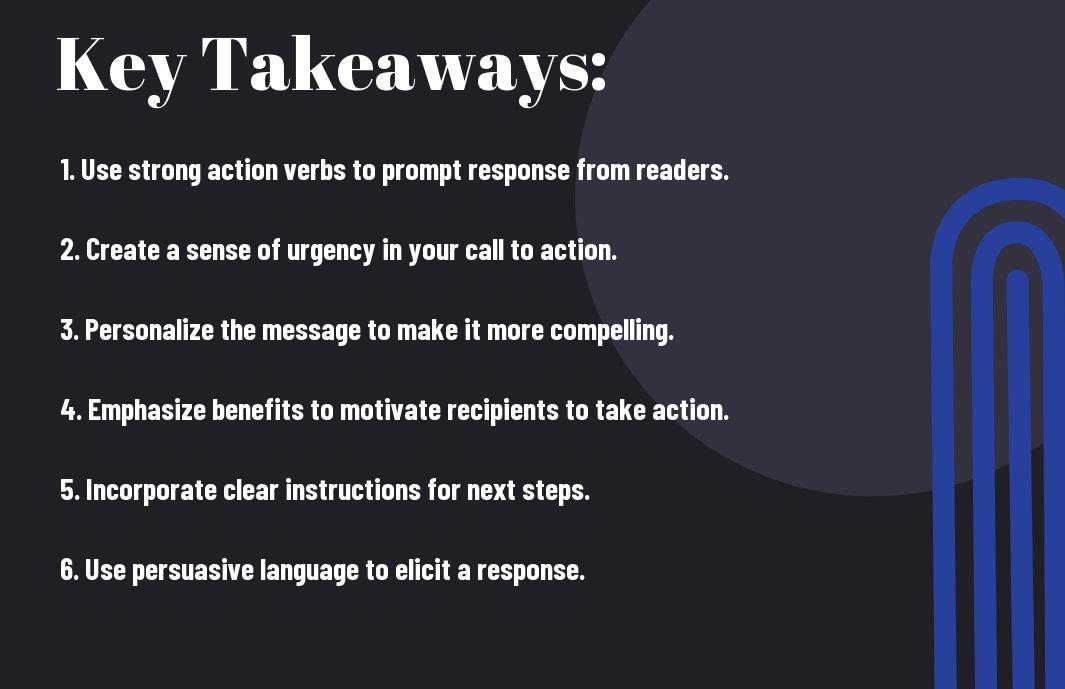
Key Takeaways:
- Clear and direct language: Use words and phrases that clearly communicate the desired action to the recipient.
- Action-oriented verbs: Choose strong verbs that prompt the reader to take a specific action, such as “buy,” “register,” or “download.”
- Urgency: Incorporate time-sensitive language to create a sense of urgency and encourage quick action.
- Personalization: Use the recipient’s name and tailor the language to make the email feel more personal and relevant.
- Benefits-focused language: Highlight the benefits of taking the desired action to motivate the recipient to act.
- Clarity and simplicity: Make sure the language is easy to understand and straightforward, avoiding jargon or complex terms.
- Conciseness: Keep the language focused and to the point, avoiding unnecessary words or phrases that could dilute the call to action.
Understanding Your Audience
Even before crafting your email message, it’s crucial to have a deep understanding of your audience. This involves knowing their preferences, pain points, and expectations. By gaining insights into your audience’s behaviors and characteristics, you can tailor your message in a way that resonates with them.
Identifying Your Target Recipients
An effective email marketing strategy begins with identifying your target recipients. This involves segmenting your email list based on demographics, behavior, and interests. By doing so, you can ensure that the content of your email is relevant to each group and increases the likelihood of driving action.
Personalizing Your Message
Recipients are more likely to engage with your email if it feels like it was crafted specifically for them. Personalizing your message by addressing recipients by their names and tailoring the content based on their past interactions can significantly improve open and click-through rates.
The use of personalization tokens, dynamic content, and targeted recommendations can further enhance the level of personalization and make your emails more compelling to recipients.
Crafting a Compelling Subject Line
Assuming you want your email subject line to stand out and prompt the recipient to take action, it’s crucial to craft a compelling subject line. This is the first thing your recipients will see, so it needs to be attention-grabbing and enticing enough to make them want to open the email.
Using Power Words to Grab Attention
Grab your recipients’ attention with powerful words that evoke emotion and action. Words such as “Exclusive,” “Limited Time,” “Free,” and “Now” can create a sense of urgency and entice your recipients to take action immediately. Incorporating these power words in your subject line can make your emails more compelling and drive higher open rates.
For instance, using a subject line like “Limited Time Offer: Get Your Exclusive Discount Now” can create a sense of urgency and exclusivity, prompting recipients to open the email and act fast.
Creating Urgency and Curiosity
An effective way to drive action in your emails is by creating a sense of urgency and curiosity in the subject line. Using phrases like “Last Chance,” “Don’t Miss Out,” and “Unlock the Secret” can captivate recipients and urge them to open the email to find out more. By creating a sense of urgency and curiosity, you can compel your recipients to take the desired action, whether it’s making a purchase or signing up for an event.
For instance, a subject line like “Last Chance: Don’t Miss Out on Our Exclusive Event” can create a sense of urgency and curiosity, driving recipients to open the email to secure their spot.
The Art of the Opening Line
Unlike other elements of your emails, the opening line is where you have the opportunity to make a strong first impression and immediately capture your subscribers’ attention. The best way to do this is by using compelling words and phrases that drive action. According to a study by Best Newsletter Sign-Up Call-to-Action Words, the right opening line can significantly increase your email open rates and click-through rates.
Establishing Relevance and Interest
Relevance is key when it comes to writing the opening line of your emails. Subscribers are more likely to engage with your content if they believe it is relevant to them. Using words and phrases that pique their interest and address their pain points can be highly effective. Consider personalizing the opening line to appeal to their specific needs, or highlighting a current trend or topic that is relevant to your target audience.
Building Rapport and Trust
The opening line of your emails is also an opportunity to begin building rapport and trust with your subscribers. The first impression you make can set the tone for the entire email and impact how your audience perceives your brand. The key is to use language that is genuine and empathetic, and to show that you understand your subscribers’ needs and challenges. By using empathetic language and offering valuable insights, you can begin to position your brand as a trusted authority in your industry.
Any email marketing strategy should focus on building rapport and trust with your subscribers. This involves using language that is genuine and empathetic, and offering valuable insights that position your brand as a trusted authority in your industry. By doing so, you can strengthen your relationships with your target audience and increase engagement with your emails.
Persuasive Email Body Content
Keep your email body content concise and focused on driving action from your recipients. Use words and phrases that appeal to their emotions and desires, encouraging them to take the next step.
Highlighting Benefits Over Features
For maximum impact, focus on the benefits of your products or services rather than just listing out their features. Highlighting how your offerings can positively impact the lives of your recipients creates a stronger emotional connection.
Overloading your email with technical details and specifications can overwhelm your recipients. Instead, tell a story about how your products have improved the lives of others, painting a vivid picture of the positive outcomes they can expect.
This approach will make your emails more relatable and engaging, ultimately driving greater action from your recipients. By emphasizing the benefits over features, you can tap into the emotional triggers that prompt your recipients to take the desired action.
Incorporating Social Proof
Features of your products or services are important, but showcasing how they have positively impacted others can be even more compelling. Incorporating social proof, such as customer testimonials and case studies, provides validation and builds trust with your recipients.
By including quotes from satisfied customers or statistics that demonstrate the success of your offerings, you can effectively illustrate the value of your products or services. This social proof reinforces the benefits you’ve highlighted, ultimately driving action from your recipients.
Benefits of incorporating social proof in your email body content extend beyond just providing credibility. It helps alleviate any doubts or concerns your recipients may have, and encourages them to take the next step with confidence.
“`html
Calls to Action (CTAs) that Convert
For emails to be effective, it’s crucial to include calls to action (CTAs) that drive action. CTAs are the key to converting readers into customers, so it’s important to use language and design that encourages interaction and conversion.
Placement and Design of CTAs
Action-packed CTAs should be strategically placed within the email, typically towards the beginning and end of the message. The design should make the CTA stand out, using contrasting colors and clear, concise wording to grab the reader’s attention and compel them to take action.
Language that Spurs Action
One of the most critical elements of a CTA is the language used. The wording should be clear, action-oriented, and compelling to encourage readers to click through. Using phrases like “Shop Now,” “Learn More,” or “Get Started” can motivate readers to take the desired action.
Convert readers into customers by using persuasive language that creates a sense of urgency and excitement, ultimately driving them to take the desired action.
Keeping the Momentum with Secondary CTAs
that Once the primary CTA has been displayed, it’s important to keep the momentum going with secondary CTAs throughout the email. These secondary CTAs can reinforce the primary action or provide alternative options for the reader to consider, keeping them engaged and driving them towards conversion.
Language in secondary CTAs should be encouraging and inspiring, with a focus on converting the reader.
“`
Testing and Refinement
Not sure if your email strategy is driving the desired actions from your audience? The key to refining your approach is testing and analyzing the data to make informed decisions for improvement.
A/B Testing for Email Optimization
Email A/B testing allows you to compare two different versions of an email to see which one performs better in terms of engagement and conversion. By testing various elements such as subject lines, call-to-action language, and design, you can gain insights into what resonates best with your audience.
On the path to email optimization, it’s essential to analyze and interpret the data from A/B testing to understand what drives action and what doesn’t. By optimizing your email content based on the results, you can improve open rates, click-through rates, and ultimately, conversion rates, making the most of your email marketing efforts.
When to Reassess Your Email Strategy
Testing your email strategy should be an ongoing process rather than a one-time task. As your audience evolves and market trends change, it’s crucial to reassess your email strategy regularly. This could involve testing new subject lines, refining your messaging, or experimenting with different calls to action to keep your emails effective and impactful.
Testing and refining your email strategy at regular intervals allows for continuous improvement and ensures that your emails are driving the desired actions. By staying proactive in reassessing your approach, you can adapt to the evolving needs and preferences of your audience, ultimately leading to more impactful email marketing campaigns.
Legal and Ethical Considerations
To ensure that your email marketing efforts are both legal and ethical, there are certain considerations that you must keep in mind. It’s important to understand the laws and regulations surrounding email marketing, as well as to maintain transparency and ethical practices in your communication with your email subscribers.
Complying with Email Marketing Laws
Email marketing is subject to various laws and regulations, including the CAN-SPAM Act and the General Data Protection Regulation (GDPR). It is important to familiarize yourself with these laws and ensure that your email marketing campaigns are compliant with them. This includes obtaining consent from your email subscribers, providing a clear way for them to opt out of your emails, and including your physical mailing address in your emails.
Balancing Persuasion with Transparency
Persuasion is an important aspect of email marketing, but it’s crucial to balance it with transparency. While you want to encourage action from your email subscribers, it’s important to be honest and transparent about your products, services, and offers. By providing clear and accurate information, you can build trust with your email subscribers and maintain ethical practices in your email marketing efforts.
Considerations such as honesty, consent, and transparency are essential in maintaining a positive reputation and building long-term relationships with your email subscribers. By balancing persuasion with transparency, you can drive action in your emails while maintaining legal and ethical standards.

Conclusion
Hence, when crafting emails to drive action, it is crucial to utilize words and phrases that will prompt the recipient to take the desired next step. By incorporating action-oriented language such as “act now,” “don’t miss out,” and “limited time offer,” you can create a sense of urgency and motivate the reader to engage with your message. Additionally, strong calls to action and clear instructions, such as “click here to learn more” or “reply to this email to reserve your spot,” can guide the recipient towards the desired action.
Ultimately, the words and phrases you use can greatly influence the impact of your emails and drive the action you seek from your audience. By carefully selecting language that conveys urgency, value, and clear direction, you can increase the likelihood of achieving your desired outcomes and engaging your recipients in meaningful and purposeful ways.
FAQ
Q: Why is it important to use words and phrases that drive action in email marketing?
A: Using action-driven language in emails can motivate recipients to engage with your content, click on links, make purchases, or take other desired actions, ultimately leading to improved conversion rates and ROI.
Q: What are some effective words and phrases for driving action in emails?
A: Action-oriented words and phrases include “act now,” “limited time offer,” “exclusive,” “get started,” “don’t miss out,” “take advantage,” and “try it today.” These terms create a sense of urgency and encourage immediate action.
Q: How should I incorporate action-driven language into my email subject lines?
A: To capture recipients’ attention and entice them to open your emails, consider using compelling phrases such as “unlock savings,” “explore new arrivals,” “seize the opportunity,” or “discover your exclusive offer.”
Q: Are there any words or phrases to avoid in email marketing to prevent appearing spammy?
A: While action-driven language is effective, it’s important to use it strategically and avoid overusing terms like “buy now,” “urgent,” “free,” or excessive exclamation points, as these can trigger spam filters and diminish the credibility of your emails.
Q: How can I personalize action-driven language to resonate with my audience?
A: Tailoring your calls to action and language to suit the preferences and needs of your audience can significantly increase engagement. Use insights from customer data to personalize phrases like “your exclusive offer” or “personalized recommendations” for a more targeted approach.
Q: Should I A/B test different action-oriented language in my email campaigns?
A: Yes, A/B testing can help you determine which action-driven words and phrases resonate best with your audience. Test variations of calls to action, urgency-inducing language, and personalized messaging to identify the most effective strategies for driving action in your emails.
Q: How can I ensure that my action-driven emails comply with relevant regulations and best practices?
A: When using action-oriented language, it’s essential to adhere to applicable laws and guidelines, such as the CAN-SPAM Act and GDPR. Ensure that your emails include a clear opt-out option, provide accurate sender information, and obtain proper consent for marketing communications to maintain compliance and trust with recipients.